
- Entertainment
- Style
- Lifestyle
- Food & Drinks
- Tech & Auto
- Culture

CAN SMART RINGS IMPROVE YOUR SLEEP QUALITY? Studies have shown they can certainly get you the data to make you act on it. What makes them slightly more appealing, especially for those who don’t want to look at screen as distraction, is their size and wearability. Not too bulky. These screenless rings work silently and have some impressive battery life compared to smartwatches.
While you may have already spotted the signature Oura silver on familiar fingers, it’s only now that the Finnish company has
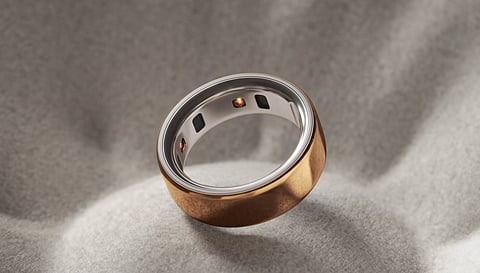
entered India with the Oura Ring 4 (starting at approximately ₹28,900). Forged in titanium, the Ring 4 can track more than 50 health and wellness metrics and works with the Oura App (iOS and Android). The ring also uses smart algorithms and research-grade sensors that adjust to every user’s unique body—including finger shape, skin tone and other variables.
With its launch, Oura also released a report the sleep quality of India. Turns out India is among the shortest‐sleeping populations in the Oura global dataset, with Oura members in India averaging 6 hours and 28 minutes of sleep per night. That’s around 40 minutes less than the longest‐sleeping countries.
For a market running on less sleep, the promise of more precise tracking becomes central to the pitch. Oura claims its multiwavelength sensing system and 18 signal pathways give a clearer, more reliable picture of a user’s body, turning the signals into more precise, personalised health insights. Whether it’s the right fit or not, smart rings are beginning to feel less like a novelty—and more like something worth trying.