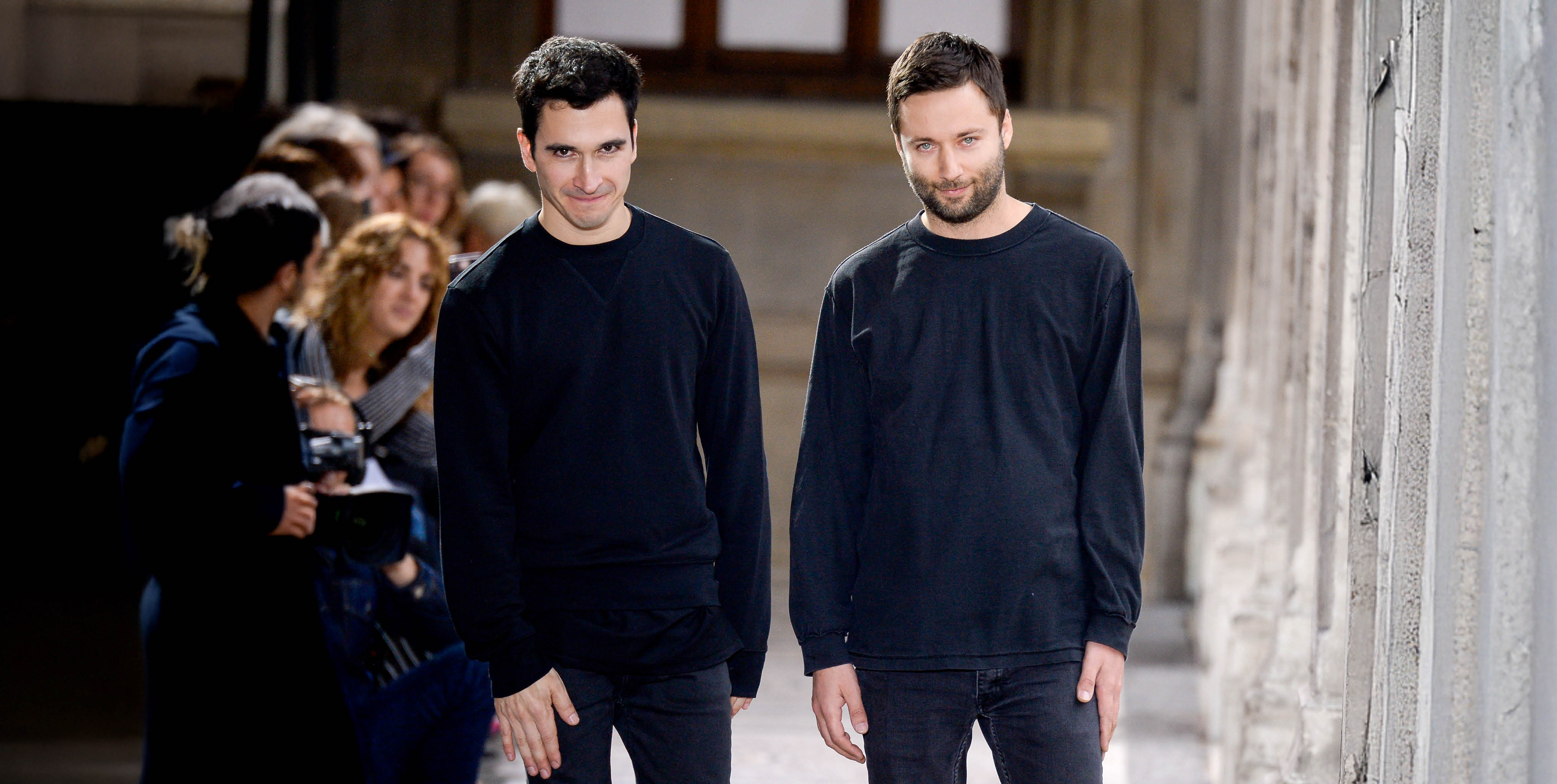
Loewe’s Next Creative Chapter: Meet The Schouler Duo
What does this mean for the brand’s future?
For more than a decade, Jonathan Anderson transformed Loewe from a quiet Spanish leather goods house into one of fashion’s most exciting brands.
But, if recent months have told us anything, it’s that the exhausting creative directors reshuffle is not over yet. And if you haven’t heard already, another chapter in the designer’s game of musical chairs was written recently.
Loewe has announced that Jack McCollough and Lazaro Hernandez, the duo behind New York’s Proenza Schouler, will officially take the reins at Loewe on April 7, succeeding Jonathan Anderson after his transformative 11-year tenure. This marks a significant moment for the Spanish house, which soared to new creative and commercial heights under Anderson’s direction.
You May Also Like: Best Homegrown Menswear Labels Right Now
But what does this change mean for Loewe? And why McCollough and Hernandez?
Meet Loewe’s New Visionaries
On paper, the appointment makes sense. McCollough and Hernandez have spent over two decades at the intersection of art, craftsmanship, and fashion, much like Anderson. The duo has been on the radar of top European fashion houses for a while now. The designers, who met at Parsons School of Design, launched Proenza Schouler in 2002, quickly earning recognition for their intelligent approach to fashion for the modern urban women. Their aesthetic has earned them five CFDA awards, collaborations with L’Oréal, Birkenstock, and Mercedes-Benz, and a cult following for their PS1 bag.
Their appointment at Loewe signals a shift—not a radical departure, but a continuation of craft-driven storytelling. To fully immerse themselves in Loewe’s legacy, they announced that they are relocating from New York to Paris, with plans to spend time in Madrid, the birthplace of Loewe.
Why Did Jonathan Anderson Leave?
Anderson’s exit was inevitable. For the last 11 years, his tenure at Loewe saw the house transform from a respected leather goods brand into one of fashion’s hottest names. Under his direction, Loewe became synonymous with craftsmanship, experimental silhouettes, and cultural collaborations, from Studio Ghibli partnerships to a revived appreciation for handcrafted textiles.
But many claim, including WWD reporters, that it’s an open secret that Anderson is up for a promotion at LVMH – most probably, Christian Dior. Anderson’s growing influence at Dior makes his move almost a conclusion. He has been widely speculated to take over Dior’s creative direction, following the anticipated departures of Kim Jones and Maria Grazia Chiuri. His departure from Loewe clears the way for this next phase, allowing him to bring his maximalist, intellectual approach to a house known for its legacy of femininity and elegance.
You May Also Like: From India To Moscow, With Love
What Can We Expect from McCollough and Hernandez?
Loewe is in a strong position, with reported annual revenues of over $1.5 billion and an ever-growing global footprint. McCollough and Hernandez inherit a brand with deep cultural resonance but they also have very big shoes to fill.
Their design language at Proenza Schouler leaned into tailored fluidity, sculptural silhouettes, and textured layers, often drawing inspiration from contemporary art and film. Their early work referenced the likes of Helen Frankenthaler, John Currin, and Harmony Korine—a lineage that aligns with Loewe’s artistic DNA.
While Anderson’s whimsical, surrealist approach to fashion will be a tough act to follow, McCollough and Hernandez are not newcomers to reinvention. Their tenure at Proenza Schouler proved they could balance commercial viability with avant-garde experimentation.
As luxury brands reposition themselves amid shifting consumer habits and economic uncertainty, creative reshuffles like this are becoming the norm. Kering has brought back Demna at Gucci, Chanel is bracing for Matthieu Blazy’s debut, and LVMH is restructuring its entire creative landscape.
For Loewe, the challenge for McCollough and Hernandez will be preserving Anderson’s cultural momentum while imprinting their own signature. The question remains: will they play it safe, or will they push the boundaries of Spanish luxury in their own, distinctly American way?