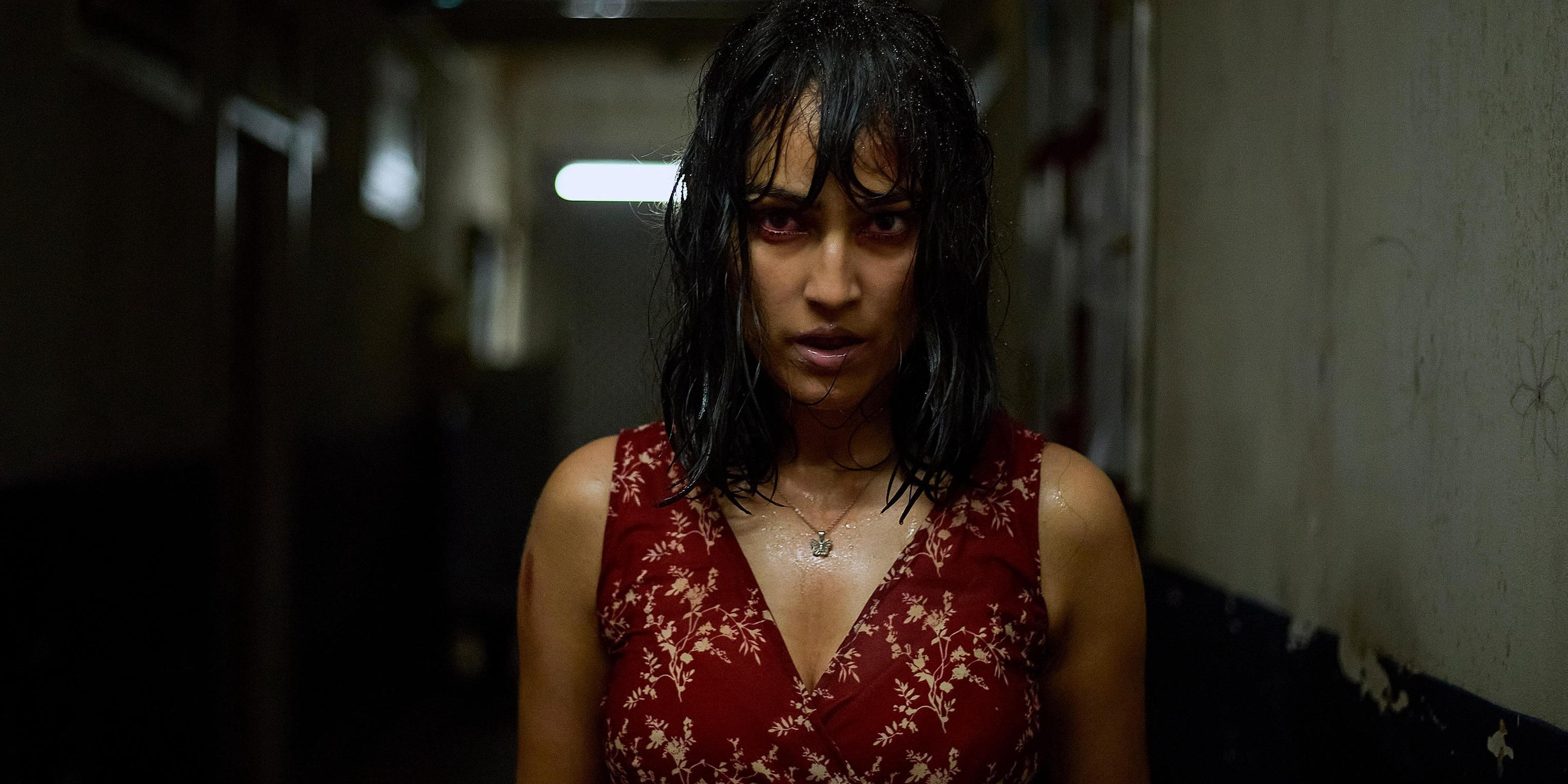
Khauf Review: The Prime Video Series That Brings Horror Home
Amazon Prime's 'Khauf' turns horror into a mirror, making the demon impossible to ignore
In Khauf, the scariest monster isn't hiding under your bed, it’s within you. The latest horror-thriller series by Amazon Prime Video released this week is an 8-episodic nightmare that blends blood-curdling terror with horror lurking just outside front doors.
Starring Monika Panwar as Madhuri (Madhu) in lead, Abhishekh Chauhan, and the brilliant Rajat Kapoor, the ensemble of Smita Singh's series builds its fear as the titular name suggests through the supernatural - a quintessential trope of most horror-inducing cinematic pieces. But what elevates the terror is something more chilling—reality.
Mainly an all-female led cast (Geetanjali Kulkarni, Chum Darang, Shilpa Shukla, Rahaao, Riya Shukla), the paranormal series makes its audience witness to the trauma and terror women in India face every day. But more than that, it cleverly says so much about the men that are witness, perpetrators, and benefactors.
You May Also Like: Tillotama Shome On Morally Ambiguous Characters, Production And Life-Affirming Stories
Khauf is set primarily in the ‘Pragati Working Women’s Hostel’ in Delhi, painting a dense, unnerving atmosphere that depicts the rotten and decaying. The cinematography by Pankaj Kumar is one of the strongest elements—every frame intentional, soaked with dread and ambiguity. The kind of storytelling Indian horror has been yearning for years!
The premise centres around Madhu who moves into a hostel in Delhi to start afresh, but her room hides a sinister presence that begins to get stronger each day, alarming the other women on her floor. They know what the room hides and desperately want her gone before it is too late for them all.
Panwar delivers a powerfully convincing performance as Madhu, a survivor of sexual assault. Her emotions feel raw, uncomfortably real, and her struggle terrifying. As do other cast members’ performances: Rajat Kapoor (Hakim), Geetanjali (constable), and Chum Darang (a girl from the hostel).
You May Also Like: 7 New Movies Releasing In April 2025
For viewers, Khauf attempts to layer social horror, personal trauma, and the paranormal all at once.
With a strong start, the result by the end of the series feels uneven. Somewhere, the quest to find the truth of it all takes precedence over supernatural making it feel a little dragged even though the audience is a little ahead on the big revelation the series wants to build up to.
At times, it makes us forget we are in for a suspenseful thriller and not an investigation of a missing person. But that’s where the series gives us a glimpse of patriarchal men wielding dominance on and off screen, dead and alive. Geentanjali Kulkarni as constable Ilu Mishra delivers a compelling performance grappling with her son: an absconded criminal.
Although not a lead character, Mishra’s lens is poignant to examine the entrenched notions of masculinity and its impact on women. She symbolises the pervasive influence of patriarchal expectations against male transgressions, the burden of consequences of male actions.
The series perfectly captures the essence of toxic masculinity breeding in Indian society, both the struggle to keep in check male dominance and the consequences of unchecked male dominance. It’s the ramifications that we have countlessly observed but hardly addressed let alone depicted on-screen well.
The horror beyond the literal extends into an uncomfortably effective metaphor which while doesn’t lead to a cathartic experience, depicts the root of the fear well. In Western cultures Will Madhu learn to extinguish fear or will she like many women in reality and around her in the hostel restrain from being truly free?
You May Like To Read: Bass, Bal, And Brown Magic: Indo Warehouse Debut At Coachella 2025
Khauf is rightly gory with really unexpected jump scares and thematically deep but where it falters is exploration of too many subplots that divert attention from the central narrative, leading to a diluted impact when the big blow lands. (Also, maybe a few trigger warnings could help, especially for the episode that mentions the horrifying 2012 Delhi gang rape and murder case.)
Overall, Smita Singh’s slow-burn horror directed by Pankaj Kumar and Surya Balakrishnan is definitely worth your time if you’re into stories with substance.