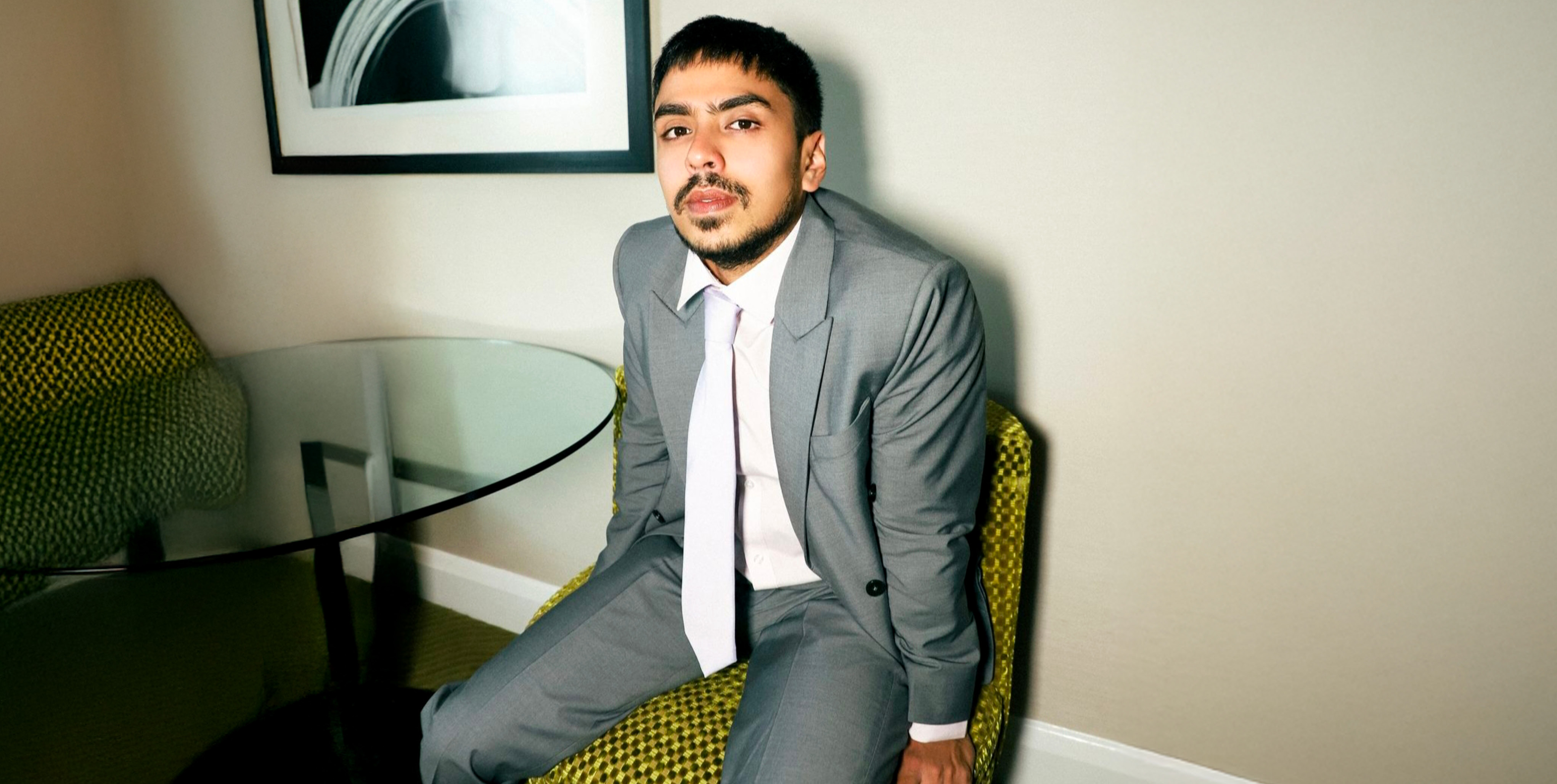
Adarsh Gourav On Superboys Of Malegaon And Why He Won't Do A Horror-Comedy
With Superboys on Malegaon receiving rave reviews, Adarsh Gourav also talks about his acting process and the filmmakers he wishes to work with next
There's something quite compelling about Adarsh Gourav.
An actor who doesn't hail from a family of cinema royalty, whose surname didn't open doors, whose fate wasn't pre-ordained in the world of cinema. All he had was raw talent and an unrelenting passion for the movies. He didn't break in. He walked in, slowly, purposefully—until the industry had no choice but to turn and glance.
Perhaps it's the ease with which he disappears into each role, slipping between class and dialects and even continents with a smooth facility. Or maybe it's the way he goes about it—unhurried, intensely inward, as if he's unlocking every character from the inside. The industry refers to him as an 'outsider,' but he's created a niche so uniquely his own that the term barely applies anymore.
You May Also Like: Hrithik Roshan: The Myth, The Man, The Moment
In a conversation with Esquire India, he sheds the layers of his odyssey, his phobias, his work, and the fluidity of cinema.
Esquire India: Did the success of The White Tiger mark the end of your 'struggle' or has it been hard even after to get the kind of work you'd want to do?
Adarsh Gourav: I believe it all comes down to definition. There's always going to be better individuals, more awesome filmmakers, and a different obstacle to overcome. In that context, it's limitless.
ESQ: Who are the filmmakers still on your wish list?
AG: I'm still looking forward to collaborating with Vikramaditya Motwane, Neeraj Ghaywan, Zoya Akhtar and Anurag Kashyap.
ESQ: Since your breakout role was in an OTT movie, what do you have to say about their recent shift towards established stars?
AG: It's true but we can't just blame the platforms. The audience needs to support smaller films. If people start watching and discussing them, producers will have no choice but to rethink their approach. I'm hopeful of another shift, to be honest.
ESQ: How do you come up with performances that feel so real?
AG: It stems from a natural curiosity about human beings. When you consciously store experiences in your memory, they always find a way to resurface in your work. From mannerisms to voices, you can gather it all, and use it to create your characters.
You May Also Like: Gulzar’s 10 Life-Changing Commandments
ESQ: Any genre of movies you would want to do next?
AG: Horror and comedy, but not the two together. I’m not really into horror-comedy. I love the kind of sharp, absurdist comedy of, say, Tanmay Bhat and Rohan Joshi. If they ever venture into fiction storytelling, I’d be eager to collaborate. They have such a distinctive perspective.
ESQ: How did the real-life Superboys of Malegaon inspire you as an artist?
AG: They made movies driven by sheer passion and determination. It brought back the reason I began acting in the first place - to understand people, to observe them, to capture their stories. With every new role I take on, I strive to reconnect with that original sense of purpose. There’s a certain purity in making films out of necessity, rather than for profit.
ESQ: You've gone about your career in a slow-but-steady manner - was it a conscious move?
AG: I wouldn’t have it any other way. If success comes too quickly, you might not fully grasp its significance. The journey is what gives it value. Every moment along the way makes it memorable. Even playing a minor role in Leila gave me the chance to work with Deepa Mehta, a filmmaker whose work influenced my views as a teenager. That experience made me understand—yes, I’m right where I’m meant to be.
You May Also Like: Interview with Nikhil Taneja of Be A Man Yaar! Podcast
ESQ: How do you decide on a project? What makes you say yes?
AG: If a story resonates with me, I'm usually on board. You must adapt, of course. Acquire new skills, learn different accents, explore new ways of working. But fundamentally, it’s always about that human experience.