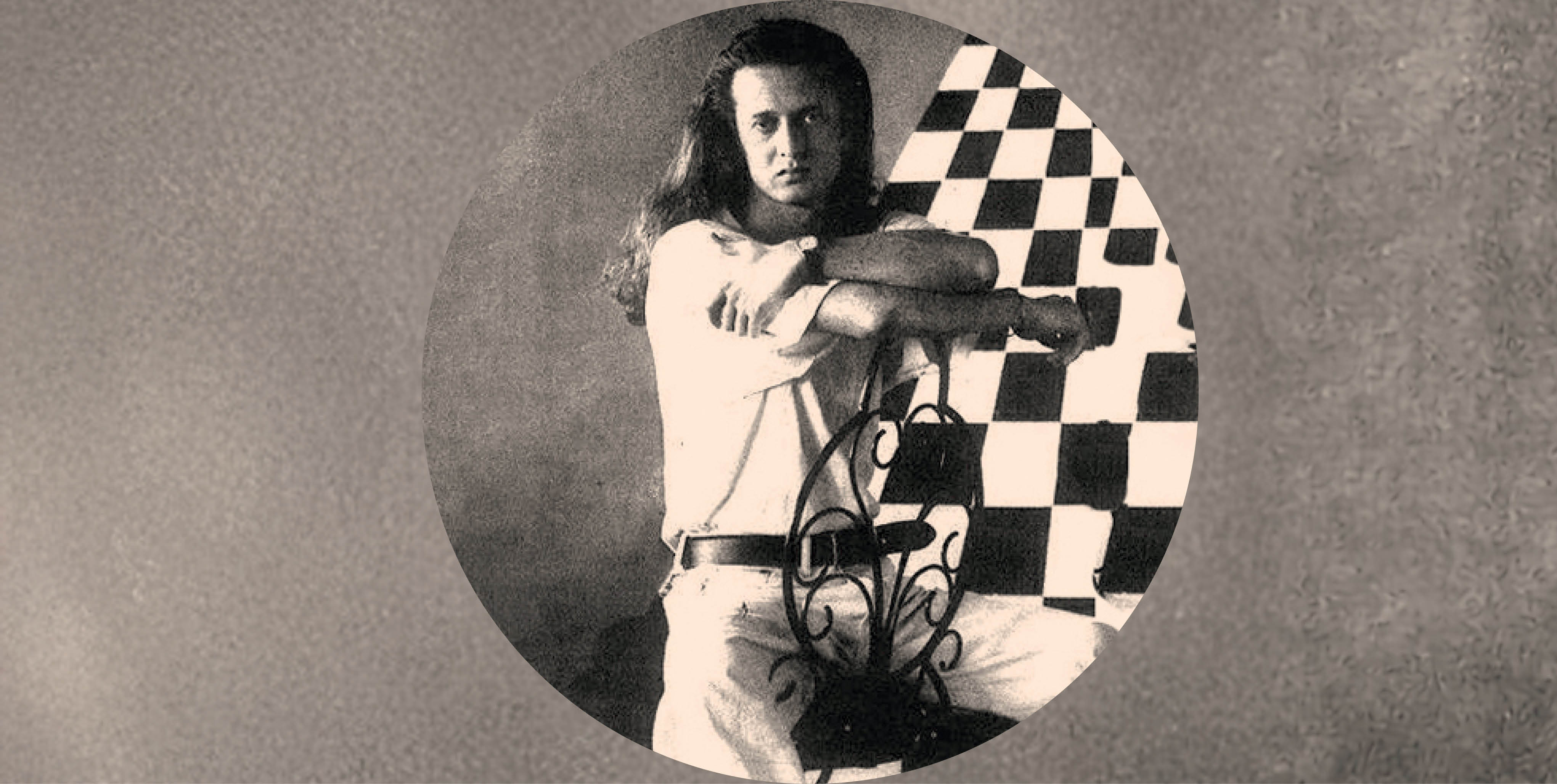
What Makes Rohit Bal Beautiful
Chipping away at the stiff, starched shell of Western formality, the late Rohit Bal liberated Indian menswear by unveiling a softer beauty that is unmistakably, unapologetically our own
To explain the outright neglect that menswear faced in India till at least the 1990s, you only need to know that one of the country’s foremost designers, Rohit Bal, showed his first lineup for men solely to accompany the more fabulous, important category—womenswear.
This was in 1989, then Bombay, for the fashion store Ensemble, where Bal was the youngest talent to participate, and had been prodded by his mentor, Rohit Khosla, to create a series of looks for the showcase. Five years later, for his Fall 1994-95 show at the Taj Palace Hotel, India’s top male supermodels—Milind Soman, Rahul Dev, Marc Robinson and, of course, Arjun Rampal, among others—made a case for the Indian man in everything from sherwanis to leather jackets, and even some less-than-ideal, transparent plastic sorts trimmed with faux fur.
You May Also Like: The Shantnu & Nikhil Man Is A Hardcore Romantic
Beyond the numerous celebrities—both Indian and global—that Rohit Bal dressed in his career spanning well over three decades, his countless collaborations across various product categories, and his love for the beauty of his homeland, Kashmir—it is Bal’s services in shaping Indian menswear almost single-handedly that we are quickest to forget. Remember his voluminous mul skirts that top models of the times would flounce around in? Rarely do we remark that he dressed even his male models in the same skirts, and more than once.
But before the boundary-pushing men’s designs that brought him fame and changed how Indian men dressed, it was with the simple sherwani that he shook up the system. Specifically, the ones he designed and created—out of heritage Jamawar shawls embellished with exquisite embroideries—for Anil Ambani’s wedding to Tina Munim. In 1991, this was a bold step, and pictures of the then-young Ambani scion opting for a traditional ensemble for one of the country’s most high-profile weddings created waves across a nation where grooms routinely looked like their brides’ ushers in their stiff, three-piece suits and wide, striped ties. No more, said Rohit Bal, and the desi man’s world changed almost overnight.
In 2014, on a cool autumn evening, the rooftop of Mohammed Quli Khan—son of Maham Anga, Mughal emperor Akbar’s wet nurse—in Mehrauli lit up with soft lights, and Rohit Bal’s guests, including myself, settled into our assigned seats. The show began with Shubha Mudgal’s resonant voice rising to the heights of the Qutub Minar in the far background. As a clear moon arose from behind the structure’s modest dome, about 30 male models, dressed in the softest mul angrakhas with colourful silk sashes and turbans, descended onto the ramp, each holding a silver gulaab-paash, a rose-water sprinkler. Recreating the ancient Mughal custom of welcoming guests by perfuming them with rose essence, Bal welcomed us all with this simple yet historic gesture.
We felt the cool drops falling all around and over us, releasing the scent of the Damask rose. And the show began. Bal later told me it had taken more than a year to manage just the requisite permissions for the venue from the Architectural Survey of India. No one else could have even dreamed of making this happen over a decade ago.
You May Also Like: Think Pink: Why Men Are Turning To The Boldest Hue In 2025
It is important to understand that everything Bal did came from deep within his understanding of not just modern sensibilities, but his abiding respect and love for the culture that shaped him.
Whether it was the rose-water-sprinkling, angrakha-wearing multitude of male models in 2014, or those who wore his languid, liquid, almost floor-length sherwanis embellished with motifs of dried chinar leaves two decades prior—open at the waist, and teasing glimpses of abs and navels—his designs for men always echoed how Indian men interacted with their garments before the strictures of colonialism and corporate culture stole our sexiness away. Rohit Bal’s designs were never ‘ethnic’ in the way subsequent expressions of ‘Indian-ness’ came to be defined. He was not reviving anything. He was simply celebrating something we had all forgotten—a truly Indian male beauty that only he remembered. And harnessed.
Asha Kochhar and Vidyun Singh—known industry-wide as Asha-Vidyun—recall meeting Rohit Bal first in 1983 at a dance competition organised by and at the famed nightclub, Ghungroo, at the Maurya in New Delhi. “He was one of the dancers for a show I’d done for Avis Jeans; he had also made some womenswear for the show at his brother’s export house. But yes, he did dance on stage for that one show,” Singh says and laughs at the memory.
“But from dancer to designer, our earliest memory of him as a designer for men is from the show we did for Ensemble in Bombay, the store’s first, in 1989. He created a line of menswear to accompany the women’s looks done by other [senior] designers.” It is widely accepted that it was the reaction to this show that pushed Rohit to begin designing in earnest. “It was Rohit who re-introduced the ‘feminine’ stylistic aspects of design—like drape, volume and embroideries—into menswear,” says Singh. “He even went as far as to send out male models on the ramp wearing sindoor and full ghaghra-skirts in his later shows,” adds Kochhar.
But for a designer who designed menswear—originally, at least—only to complement the womenswear (his own or others’), the true surprise was how naturally the line evolved from collections that honoured historical dress codes of pan-Indian royalty to pieces that challenged how Indian men had been trained to dress for decades.
Arjun Rampal does not shy away from choosing an image of himself wearing a skirt layered over trousers from the first Balance campaign lensed by Bharat Sikka. “He opened the doors of the design world to so many people. Whether it’s Bharat Sikka, Manish Arora, Abhishek Gupta and so many others who came later—we’ve all created our own careers off the springboard that Gudda provided,” says Rampal, reverting to Bal’s nickname out of sheer habit; after all, it was Bal who discovered Rampal right out of school, and gave him his first break, leading to a career for him in fashion as well as films.
“I don’t think anyone can do Indian menswear better. His clothes have a different meaning… the fabrics, the detailing, the finishing and buttons, or even his abstract, playful linings that could transform a simple, classic sherwani into something truly fashionable... He was a genius,” says Rampal, then pauses, and corrects himself in the very next breath: “He is a genius.”
Asha Baxi, former Dean of Academics at the National Institute of Fashion Technology, New Delhi, remembers meeting Bal in 1987, when the fledgling college’s campus was housed at Chanakyapuri’s Samrat Hotel. “He did the inaugural six-month course with Hilda Freidman, a faculty member from the Fashion Institute of Technology, New York. This was the capsule course that launched NIFT.”
His contribution to menswear in India, says Baxi, goes beyond the more obvious aspects like his bold designs, the crafts he utilised, and the textiles and techniques he chose. “It was his spirit of genderless beauty. He was unapologetic in the way he wanted to present his menswear. It was, on the one hand, the most elegant menswear, like the kind we saw at his show at the mausoleum of Quli Khan. On the other hand, it was also he who showed men wearing skirts on the ramp at fashion week. And sindoor! There was no containing him.”
You May Also Like: The New Rule For Men’s Denim? The Weirder, The Better
While Bal’s menswear designs often balanced on the razor edge of being camp, it is also noticeable that they were also powerful. There was no awkwardness about them, like the kind you see in the works of many designers today, especially when they dabble in what’s termed gender-fluid clothing. “But in his case, the elegance and power just seemed to be there, to flow naturally and tastefully, even if it was kind of bizarre at times,” admits Baxi. There was the right amount of tension between flamboyance and discretion that he employed so well. “While he worked extensively with master embroiderers, none of his embroideries looked like anything anyone else was doing,” she adds.
This was, of course, a far cry from his early days as an industry mentor who employed some of NIFT’s earliest graduates, arguing with Baxi and others on everything from courses being taught at NIFT to the calibre of successive graduates. As the professor puts it: “At the time, the industry wasn’t able to grasp what we were trying to do, educating designers to be original thinkers. Because factories needed garment-manufacturing professionals to cater to large-scale production and manufacturing for exports. And it helped us sharpen our focus, and to reject the existing narrow approach to design education,” she says.
A quick look at the designers who began their careers with Rohit Bal is more than enough proof that, on this matter, Baxi and Bal saw eye to eye. There was Ashish Soni, Manish Arora, Aparna Chandra, Pankaj & Nidhi, Puja Nayyar, Jenjum Gadi, Prashant Verma, Sahil Kochhar and, of course, Bal’s current successor within the company, Fraze Tasnim.
You May Also Like: Rajesh Pratap Singh's Love Affair With The Royal Enfield Classic 350
“Having worked closely with Rohit for 12 years,” says Tasnim, “I’ve studied his attention to detail, his use of rich Indian textiles, his love for handcrafted elements, and his deep respect for artisans and their craft. I have learned the importance of quality, the value of preserving traditional techniques and the power of creating garments that are more than just clothing—that are statements of art and identity.”
This is what Bal’s long-time friend, fellow designer Varun Bahl, also highlights. From the early 2000s, when Bal started pairing his long jackets with crushed silk skirts—on men—he has ‘owned’ that look. “Any designer today who plays with similar designs and proportions owes a creative debt, whether they realise it or not, to Rohit Bal,” says Bahl. This includes signature elements like men wearing jewellery, make-up and even sindoor.
“He was the first one in the country to experiment with menswear and its presentation at a time when everyone else was playing it safe,” says Bahl. “I think the word metrosexual applied to his style and designs way before anyone else even picked up on the term; he truly designed for the metrosexual man who didn’t think within the confines of the straight and narrow.”
What Rohit Bal accomplished for menswear in India did not happen all at once. It was a process that spanned decades, and included both ups and downs, creative risks and periods of lull, especially the past five years or so, where the label seemed to be running on its own steam without his helmsmanship, owing to his deteriorating health. He mentored a bevy of talented designers, all of whom are a credit to Bal as well as the profession today. And now, over three decades later, the luxury and fineness of Indian menswear in the ethnic and traditional categories rival the workmanship of its feminine counterparts.
Wherever you are, Rohit, I hope you can see the enormous implications of your work, and rest well in the knowledge that you captained well a change whose time had come.