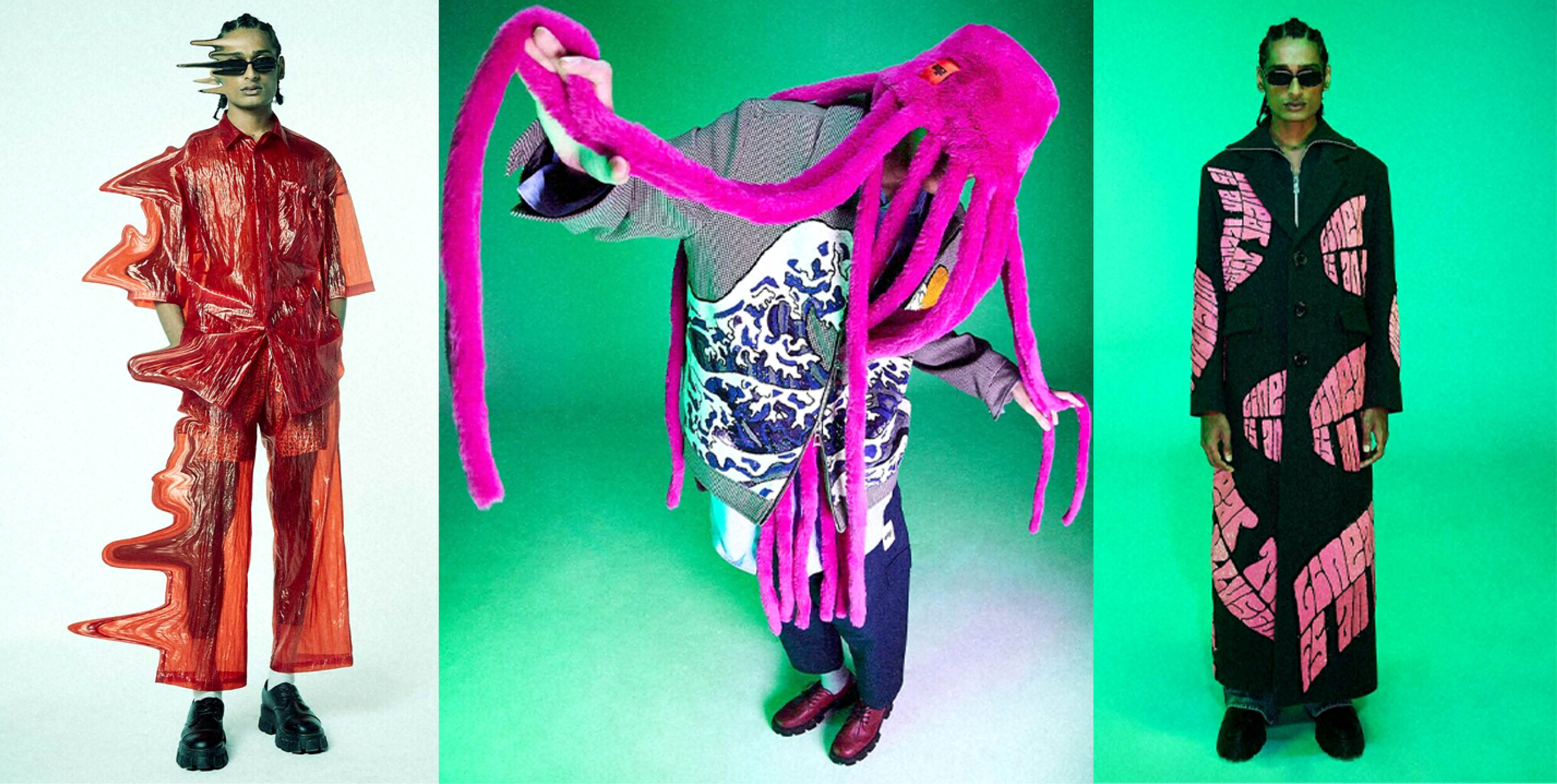
How Tech is Rewiring High Fashion
We’re talking humanoid robots on runways, 3D-printed couture, and AI-generated textiles.
Ameca blinks.
The audience holds its breath.
It is a glimpse into the future—where technology is more than just science integrated into our clothes. It’s wove into the very fabric of fashion’s storytelling.
A few days ago, Giuseppe Di Morabito made a bold statement with his Milan Fashion Week debut. The show opened with Ameca, the world’s most advanced humanoid robot, quoting Sartor Resartus, a philosophical novel on clothing’s deeper meaning.
You May Also Like: The New Rule For Men’s Denim? The Weirder, The Better
As Ameca adjusted its posture and delivered a quote from Thomas Carlyle’s book, Morabito’s show transformed into something beyond fashion. This moment was both eerie and mesmerising, framing Morabito's vision of fashion as a space where past and future, human and machine, can coexist.
Fashion is not just about smart fabrics or wearable tech anymore. The new era of fashion is one where the boundaries between man and machine, tradition and futurism, are getting tantalizingly blurred.
Luxury houses—once bastians of heritage—are designing experiences, while men and women find themselves at the precipice of a fashion-tech revolution.
When High-Tech Meets High Fashion
“Only with technology can you create new things in fashion – everything else has been done,” designer Hussein Chalayan said in an interview a few years ago.
Giuseppe Di Morabito’s robotic muse might have been one of the most overtly futuristic moments on a runway, but the fusion of fashion and technology has been brewing for years—evolving from gimmicky LED dresses and 3D-printed shoes into a more seamless integration of digital craftsmanship and wearable tech.
You May Also Like: South Korean Menswear Brands That Should Be On Your Radar
Morabito’s approach isn’t just about shock value; his use of technology extends beyond robotic theatrics. His catwalk debut, where history and modernity collided in baroque silhouettes and sculpted tailoring, Ameca served as both a narrator and a statement. His Fall/Winter 2025 collection explored the intersection of history and technology, intertwining medieval armor motifs with modern digital craftsmanship. Structured corsets with rigid boning, metallic roses crafted through intricate metalwork, and leather manipulated to appear gnarled and worn—all of these details created a sense of protection and transformation.
Daniel Roseberry’s Schiaparelli, on the other hand, takes a more surrealist approach to technology—infusing couture with a sense of mechanical fantasy. While Schiaparelli has long been known for its avant-garde embellishments, Roseberry has elevated the maison’s heritage into an almost dystopian dreamscape. His robotic baby bustiers, adorned with gilded anatomical structures, tap into our anxieties about artificial intelligence, automation, and what it means to create life. The infamous “motherboard” dress, structured like an abstract circuit board, transforms the human body into a technological artifact—equal parts sci-fi fantasy and cautionary tale. It’s a modern echo of Elsa Schiaparelli’s original ethos: using fashion as a medium for storytelling, satire, and societal reflection.
But the integration of technology into fashion isn’t just about spectacle. The idea of ‘hidden tech’ is becoming more pervasive, making its way into garments in ways that are less performative and more practical. Sandy Liang’s NYFW collection embedded NFC chips into phone cases and jewellery, allowing wearers to store encrypted digital messages—whether a playlist, a personal note, or a digital key. Meanwhile, AI-generated textiles, laser-cut fabrics, and adaptive materials are quietly becoming staples in high fashion.
The New Codes of Couture
High fashion has always thrived on spectacle, but today’s most daring designers are reprogramming boundaries.
You May Also Like: Iconic Men's Met Gala Looks Through the Years
At the forefront of this shift, is not just tech embellishments, but new experiences. For instance, At Paris Fashion Week, Jacquemus turned the runway into a cinematic experiment, filming his entire Spring 2025 collection exclusively on iPhone. Set within a stark, architectural apartment, the show felt intimate yet radical—a nod to how technology is reshaping the way we consume fashion.
Iris van Herpen recently used 3D printing to sculpt garments—a move blurring the lines between fabric and fantasy. Her latest pieces, created in collaboration with scientists and artists, almost defy gravity.
Most importantly, what was once the domain of master tailors is now being augmented by machine learning and material innovation, pushing the boundaries of what personalization really means. Once, the height of sartorial luxury was a bespoke suit—hand-cut, hand-stitched, and measured to perfection. Today, AI is redefining that tradition, not by replacing craftsmanship but by refining it.
Techwear: The Everyday Future
Beyond couture theatrics and designer-tech collaborations, the most immediate and tangible shift is happening in menswear itself. The rise of techwear—clothing that fuses performance-driven materials with sharp, utilitarian design—has redefined modern masculinity. No longer just the uniform of urban ninjas and cyberpunk enthusiasts, techwear has evolved into a sleek, considered aesthetic that prioritizes both function and form.
You May Also Like: Luxury Backpacks That Are Actually Worth The High Price Tag
Brands like Acronym, Stone Island, and Veilance are leading the charge, crafting garments that are as technically advanced as they are sartorially refined. Water-repellent textiles, thermo-regulating fabrics, laser-cut precision seams, and modular designs are the new standard for men who demand performance from their wardrobes. We’re talking hidden compartments, jackets that adjust to shifting temperatures, and a blazer that repels both rain and wrinkles. Some clothes have now become tools for men who want to move through the world with intent.
This evolution isn’t merely functional—it’s philosophical. Fashion has always been a mirror to its era, and in an age where technology dictates how we communicate, work, and even think, it was only a matter of time before it reshaped how we dress.