
- Entertainment
- Style
- Lifestyle
- Food & Drinks
- Tech & Auto
- Culture

Every year, travel lists promise discovery. And every year, they quietly deliver the same places, repackaged with a new adjective. The result is a strange flattening of the world: cities reduced to backdrops, countries condensed into a single neighbourhood, whole cultures filtered through a café table and a caption.
I’m bored of travel that feels like homework. Of cities reduced to three landmarks and one restaurant everyone tells you to book months in advance. Somewhere between surge pricing and “hidden gems” that are no longer hidden, the joy of discovery has been replaced by logistics. And frankly, I’m done organising my holidays like a military operation.
So, these are my top picks for 2026.
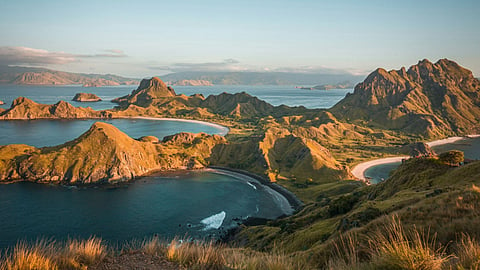
I mean, yes, you do find the Komodo monitor lizard here and that’s how it earns the name. But Komodo Island is so much more than that. It’s earned it’s keep and it’s not another Bali 2.0. In fact, it’s on the list because it’s exactly the opposite. Indonesia attempted something rare here: slowing tourism down before it collapses under its own weight. The government has introduced sharper visitor caps, higher park fees and tighter controls on trekking routes to avoid overtourism and crowding. And that’s actually helped maintain most of its beauty. The reefs here sit at the crossroads of the Pacific and Indian Oceans, making them among the most biodiverse on the planet; manta rays, reef sharks, and coral systems thrive here.
Chefchaouen’s blue-washed medina has been flattened into visual shorthand by social media, but the town’s relevance lies in its past. Founded in 1471 as a defensive settlement, it absorbed Muslim and Jewish refugees from Andalusia, shaping its architecture and closed-off character. The blue came later. Step away from the main square and you’ll find functioning local markets and access points into the Rif Mountains, where hiking routes thin the crowds quickly. It’s worth visiting before northern Morocco’s expanding road infrastructure folds it more tightly into mass itineraries.
Tsum Valley sits outside Nepal’s mainstream trekking economy by design. Opened to foreigners only in 2008 and still requiring special permits, it lies along the historic Tibet–Nepal trade route and remains culturally closer to Lhasa than Kathmandu. The valley is dotted with centuries-old monasteries like Mu Gompa and Rachen Gompa, where Tibetan Buddhist traditions continue. Unlike Everest or Annapurna circuits, there’s no commercial trekking sprawl here—lodging is basic, walking days are long, and cultural access is earned.
Zanzibar matters because it refuses to be just a beach destination. Stone Town—now a UNESCO World Heritage Site—was once a major Indian Ocean trading hub, shaped by Omani sultans, Swahili culture, Indian merchants, and European colonial powers. Its narrow alleys, carved wooden doors, and former slave markets tell a far more complicated story than most island escapes care to engage with. Beyond town, spice farms, mangrove forests, and reef systems offer substance.
Verona survives Italy’s tourism crisis by being stubbornly functional. While Rome and Florence strain under visitor numbers, Verona’s Roman arena still hosts opera, its medieval streets still house offices and schools, and its wine culture—Valpolicella and Amarone country—is treated as agriculture. Shakespeare may have borrowed the setting, but the city’s real identity comes from two millennia of uninterrupted urban life.
Oaxaca belongs on this list because it hasn’t been flattened into a capital-city proxy. Power here has always been decentralised — politically, culturally, gastronomically — and that matters in a country where indigenous systems are often treated as heritage rather than infrastructure. Zapotec and Mixtec communities still shape foodways, markets, and local governance, which is why Oaxaca’s culinary reputation doesn’t feel like a trend cycle. It’s continuity. In a global food culture obsessed with reinvention, Oaxaca’s refusal to reinvent itself is the point.
Yes, San Sebastian continuously punches above its weight. But the city is not only interesting because it eats well, but because it institutionalized taste. Nowhere else will you find the highest concentrations of Michelin-starred restaurants per capita in the world. This city has truly built an ecosystem where casual pintxos bars coexist with experimental kitchens and neighbourhood bars. That flattening of hierarchy is very Basque, and very deliberate. The city’s confidence comes from repetition, not novelty, which is why it has outlasted every food-world hype cycle thrown at it.
Hampi resists narrative. Although it was once the capital of the Vijayanagara Empire, one of the wealthiest cities of the 16th century (before being violently sacked and abandoned), today it’s a sprawling amalgamation of temples, marketplaces, and even vineyards. It’s also a UNESCO site that still feels under-interpreted, allowing visitors to engage directly with scale and ruin rather than curated narrative. Few places in India offer this degree of historical openness.
Chongqing matters because it breaks the mental model most outsiders have of Chinese cities. This is not imperial, not coastal, not legible at ground level. Built into mountains at the confluence of the Yangtze and Jialing rivers, it grew vertically out of necessity. The city can literally break your brain because of how confusing it is to navigate. Its density, infrastructure, and food culture — especially its famously punishing hotpot — are some of the few best reasons to visit.
Kraków surprises people who arrive expecting solemnity. Yes, it carries the weight of history — but it’s also one of Central Europe’s most energetic nightlife cities, fuelled by a massive student population and cheap, very good alcohol. What makes Kraków interesting is the tonal whiplash: medieval architecture by day, aggressively alive after dark. And yes, it’s absurdly affordable. Five-star hotels at three-star prices. Michelin-acknowledged dining without the Michelin attitude. You can eat extremely well, drink better, and still wake up without financial regret.
Paros benefits from proximity without proximity fatigue. Well-connected by ferry but largely ignored by cruise traffic, it offers Cycladic architecture, swimmable beaches, and agricultural villages that still produce their own food. Tourism exists, but it hasn’t displaced daily life.
This is old money Europe on holiday. Also dubbed the “billionaire’s playground”, Sardinia is where Italy goes when it wants privacy. The Costa Smeralda is unapologetically wealthy — think Porto Cervo marinas lined with superyachts, private beach clubs, and villas owned by European royalty and discreet billionaires. Along the Costa Smeralda, beaches like Spiaggia del Principe, Capriccioli, and Cala Brandinchi deliver that almost-unbelievable shade of blue, backed by private villas and Porto Cervo’s superyacht scene.
Sitting in Nagano Prefecture, this small lakeside town was once a post station on the Nakasendō route connecting Kyoto and Edo, but today it’s quietly relevant for a different reason: sake. Several historic breweries operate here, fed by alpine water and colder climates that favour slow fermentation. It’s also one of the few places where Shinto shrines, industrial workshops, and everyday domestic life still sit side by side. There are no Kyoto-heavy crowds here.
Hoi An gets written off as quaint, which misses the point. This was one of Southeast Asia’s most important trading ports between the 15th and 19th centuries, linking Japan, China, Europe, and the subcontinent. That layered mercantile history still shows up—in architecture, food, and the fact that the town works best after dark, once day-trippers leave. Tailor shops aside, Hoi An rewards slow nights, long dinners, and river walks.
Atacama doesn’t care whether you’re comfortable. It’s one of the driest places on Earth, used by NASA to test Mars rovers. The appeal isn’t just stargazing—though it’s world-class—but the confrontation with scale. Salt flats, geysers, and lunar valleys stretch without concession. There’s no urban distraction here. You go because you want the world stripped down to physics.
Bled looks ornamental, but Slovenia has quietly become one of Europe’s most competent small countries. Lake Bled is the entry point: glacial water, a medieval castle, and just enough restraint to avoid Alpine kitsch. What makes it work is access—Ljubljana’s creative scene, Triglav National Park’s serious hiking, and wine regions like Brda within easy reach. It’s picturesque, yes, but also refreshingly unsentimental.
It’s famous for the largest surfable waves on the planet, created by an underwater canyon that funnels Atlantic swells into absurd vertical walls of water. But beyond the spectacle, it’s still a working fishing town, stubbornly intact beneath the global surf economy layered on top.
Rebuilt entirely after the 1693 earthquake, it’s one of Europe’s most cohesive Baroque cities—honey-coloured stone, theatrical staircases, and proportions that make even a short walk feel deliberate. What elevates it is restraint: fewer crowds than Taormina, better access to vineyards, beaches, and the Val di Noto hinterland.
Salento sits inside Colombia’s coffee axis, where agriculture still structures daily life. The surrounding Valle de Cocora, with its towering wax palms, is visually dramatic, but the real interest lies in how openly the region integrates tourism into production. Coffee farms remain farms first, experiences second. Evenings are quiet, social, and local. No one is trying to turn this into Medellín’s countryside extension.
Wadi Shab feels almost confrontational in how untouched it is. A narrow gorge carved by water through rock, leading to emerald pools and a hidden waterfall cave, it’s one of Oman’s most accessible natural sites—and still largely uncommercialised. There are no cafés, no ticket counters, no guardrails. Oman’s tourism model prioritises preservation over volume, and Wadi Shab is the best example of that.
Kotor is medieval drama set against Adriatic excess. The old town is compact, heavily protected, and hemmed in by mountains that make expansion impossible. Cruise ships dock, yes—but stay overnight and the city changes entirely. Locals reclaim the streets, bars fill quietly, and the Bay of Kotor becomes glassy and still. Montenegro’s appeal lies in this contrast: Balkan grit wrapped in Venetian architecture and yacht money.
Jeju operates as South Korea’s pressure valve. Volcanic terrain, black sand beaches, lava tubes, and a matriarchal diving culture (the haenyeo) define the island far more than its resort infrastructure. Domestic tourism dominates, which keeps the rhythm grounded and the food uncompromised.
Vík is less a town than a threshold. Black sand beaches, basalt columns, and violent Atlantic weather define the landscape, with human settlement feeling almost incidental. Iceland’s tourism boom has passed through here aggressively, but the environment remains dominant.
Madeira is Portugal’s most underrated destination. A subtropical Atlantic island with brutal hiking routes, old-money hotels, and a tax structure that quietly attracts European wealth. Funchal balances cruise traffic with residential calm, while the island’s levadas—irrigation channels turned walking paths—cut through cliffs and forests with alarming beauty.