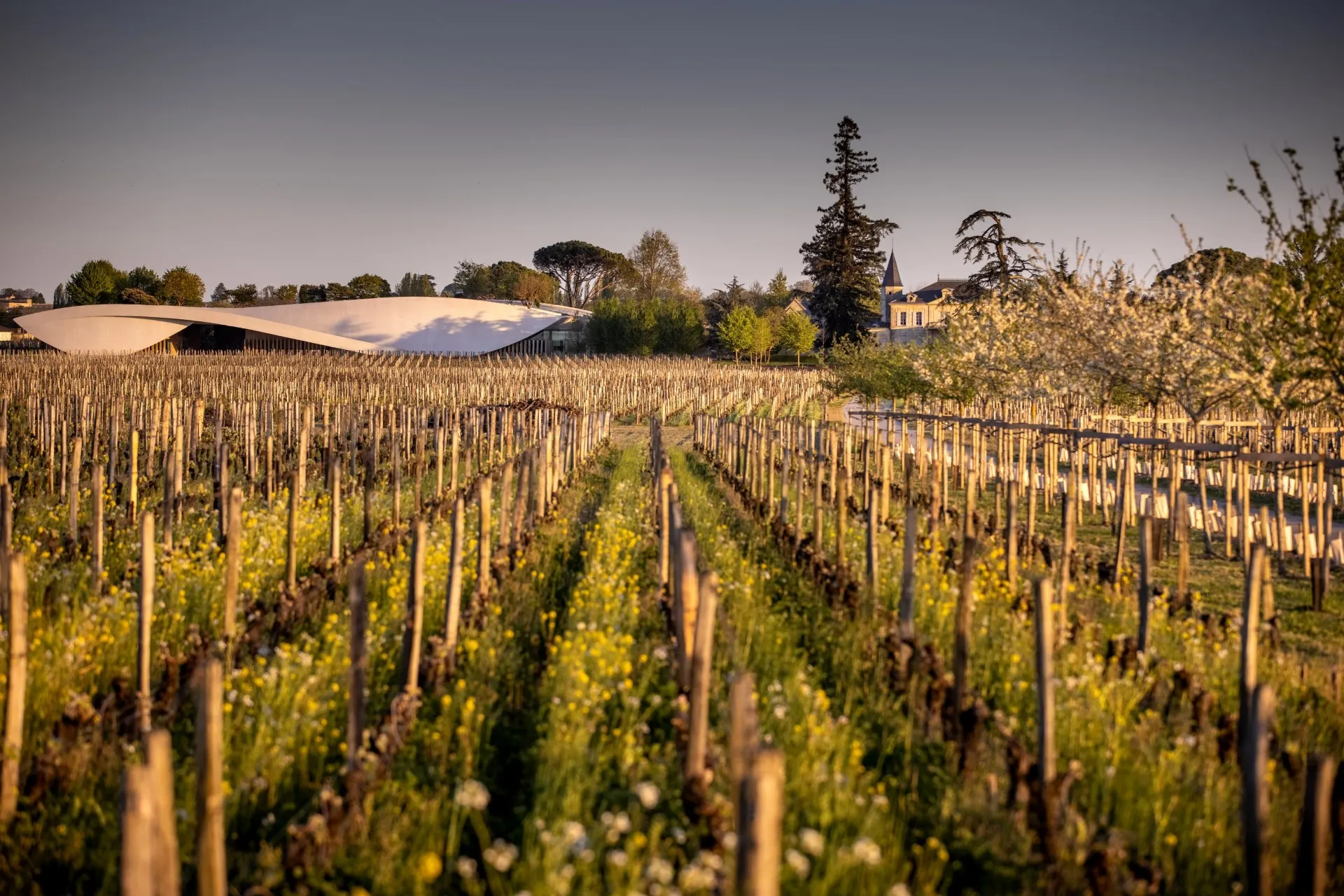
The Art Of Fine Wine, Courtesy The Experts At Château Cheval Blanc
In conversation with Mathieu Julian, CEO, LVMH Vins d'Exception and Carol André, Cellar Master, Château Cheval Blanc
To wine or not to wine, that isn’t the question.
Because in which sane world is no wine even an option!
A glass (or more) of vino is what gets you through everything, ensuring a sombre night at home turns into so much more. Wine makes everything better. A casual catch-up becomes a celebration. What more can one ask for? I’d say, more wine. From chateaus both in India and across the world. If you’re an avid wine lover, you’d know how the market is expanding – wines from all over the world find place of pride in menus everywhere. The Indian consumer knows good wine and won’t have anything that’s not worth his palette. But if the wine is good, let it pour. And then some more.
Speaking of good wine, there are the ones from Château Cheval Blanc. It’s part of LVMH Vins d'Exception, the division founded in 2019 to unite four wine estates owned, fully or partially, by the LVMH group: Domaine des Lambrays, Château d'Yquem, Colgi, and, of course, Château Cheval Blanc. Their wines are spectacular – I should know for I had taste – and they’re making inroads into India so naturally, a conversation was warranted. We sat down with Mathieu Julian, CEO, LVMH Vins d'Exception and Carol André, Cellar Master, Château Cheval Blanc to chat about fine wine and the art of savouring it.
Edited excerpts:
There’s a lot happening with wine in India. But from the outside, how do you view the Indian wine market?
Julian: I certainly do have an insight into the Indian wine market, as I’ve spent a large part of my career where there’s a significant Indian population. There’s a lot of curiosity, a lot of interest and a lot of knowledge about fine wine. And a lot of them have had our wine in London, Dubai, Paris or somewhere else. Not here though which is an exciting possibility, especially now with India’s new trade deal with the EU.
Is there any difference between the way the young generation looks at wine compared to the previous ones?
Julian: I have been thinking a lot on the subject because the future of the industry relies upon creating a new generation of consumers every generation. The previous one was very focussed on learning and getting the facts right, but I find a lot more curiosity in the new generation. They are ready to come and meet us at the winery. They are ready to experience wine from all over the world. They're more experimental, more curious. The previous generations were perhaps more academic; the younger ones go with their instincts. Which is more fun. And wine is fun. When you sit down with your friends over a glass or two, it’s not to discuss its details but make memories together instead. To share. And that appeals more to this new generation.
André: Do you need to be educated or have a big knowledge about wine to appreciate it? Absolutely not. You have to just enjoy the moment and share it with people, that’s it.
Have you found any difference between the way men enjoy wine compared to women?
Julian: This is also a question that we spend a lot of time thinking about because today, we see a huge potential in terms of business, if we start addressing the other half of the global population, the animal moment. Back in November 2024, I put together a group of 12 industry experts from around Europe and even one from the US, to do a think tank over 2 days, pretty much on that specific question. Basically, how do we expand the consumer base to women. And they all agreed that so far, every euro or dollar invested in marketing towards men is a lot more rewarding than towards women. Women, like men, like to share a good time over wine, but it appears that they aren’t into collecting wines as much as men. The enjoyment part is the same between the two genders but collecting wine is still predominantly a male bastion.
André: When it comes to drinking wine and having a good time, I can’t say there’s much of a difference. In fact, I think both genders can complement each other in that respect. They both have their own singularity. For me that’s very important because when I’m having wine, as a woman, I taste it with my experience, with my female singularity and sensitivity. And that's why, as a cellar master, it's super important for me to taste wine with my male colleagues. Do you know what I mean? It's exactly the same when we do the blends, we each have our own singularity, our own sensitivity, and to share it is super important.
Julian: Nowadays, at our wine events, it's pretty much 50-50. But when I started working in the wine industry 20 years ago, it was 99% male.
André: Same for wine makers too.
Julian: Today, it's 50-50 men and women. But who is collecting wine? There's a difference that exists.