
- Entertainment
- Style
- Lifestyle
- Food & Drinks
- Tech & Auto
- Culture
Navigating the world of wine can often feel like stepping into uncharted territory. It’s extensive, intimidating, and a little overwhelming. Whether you’re swirling your first glass of Merlot or bravely tackling a wine list that rivals the page count of an encyclopaedia, knowing exactly where to begin is half the battle. From mastering the delicate art of sniffing and swirling to evading rookie mistakes such as serving red wine at room temperature (a cardinal sin, we’re told), this crash course will have you sipping smarter and savouring better in no time!
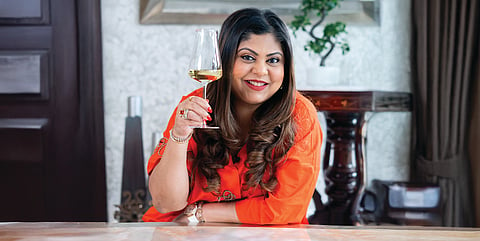
Let’s for a second, compare wine to a Hinge date - one wrong swipe (or sip), and you’re stuck with something you didn’t want for the rest of the evening. That’s where Sonal C Holland, India’s first and only Master of Wine, steps in as your guide. A trailblazer in the industry, she’s a leading consultant for international wine brands, is founder of the Sonal C Holland Wine & Spirit Academy, is the force behind the India Wines and Spirits Awards, and has recently been appointed as a wine consultant for Air India. With her treasure trove of expertise, Holland has all the tools to help you conquer the vineyard-scape.
Myths Busted
One of the biggest myths about wine that we’re all too familiar with is that the older it is, the better it tastes. But in fact, “a very small percentage of wines produced worldwide are meant to be aged, giving them complex flavours and a smooth texture – and it’s these wines that command a high price,” explains Holland as she sips a glass of vino. The vast majority of wines are meant to be had young and fresh, she continues, “so don’t store your everyday drinking wines for longer, or buy their older vintages, thinking that they will taste better. Choose a younger vintage and make sure you finish your wine within six months of buying it.”
Skip the Rookie Phase
One of the most common mistakes people make is not drinking wine at the correct temperature. People tend to have white wines too cold, which masks their flavours and makes them taste harsh and acidic. Similarly, people drink red wine too warm, accentuating the bitterness of tannins and the alcohol burn. Holland’s golden rule is to chill whites and rosés to 8-13°C and keep reds at a cozy 15-18°C. Kitchen refrigerators will get the job done if you want to speed-chill a bottle of wine or store it for a couple of days. For longer durations, wine should either be stored in a wine chiller or a wine cabinet. For the uninitiated, a wine chiller is like a kitchen refrigerator, but stores wine at a higher temperature (12 to 14° Celsius, as compared to your kitchen refrigerator’s 2 to 4° Celsius). “These chillers are great if you want to store everyday drinking wines for six months to a year. However, if you are a wine collector who invests in expensive age-worthy wines, then you must invest in a wine cabinet, which maintains ideal humidity and temperature for long-term storage of these wines,” Holland says.
The second faux pas? Monogamy - with your wine, that is. “When it comes to choosing wines, people often drink the same wine again and again, not allowing their palate to explore other styles, grape varieties or countries,” Holland explains. And since life is too short for a boring Merlot every Friday night, she suggests experimenting. Her team at SoHo Wines curates tasting events where one can explore wines from all over the globe and lets you fall in love with different varieties.
The 5S Method: Your Cheat Code to Becoming a Wine Snob
If you want to look like you know your Sauvignon Blanc from your Chardonnay, the 5S Method is your secret weapon, which stands for ‘see,’ ‘swirl,’ ‘sniff,’ ‘sip,’ and ‘savour.’ It’s the best way to improve your nose and wine palate. “See the colour to observe age and grape characteristics, Swirl to aerate and release aromas, Sniff to identify fruity, floral, earthy, or spicy notes, Sip to analyse structure, balance, and body, and Savour to appreciate the wine’s finish and nuances without rushing,” explains Holland. For more of a deep dive, consider enrolling in a professional wine course, where enthusiasts gain insights into wine styles, winemaking, storage, service, and food pairing - making you a confident and informed wine lover and an assertive buyer who knows what they want.
Wine Rules? There Are None
Holland shares an interesting perspective on wine pairings when it comes to a variety of nosh, elaborating that “How we experience wine with food is subjective as we all have different preferences when it comes to taste and flavours. Therefore, there are no rules to pair wine with food.” However, there are certain guidelines on wine-friendly flavours may come in use. “Sour foods with high acidity, such as tomatoes and lemons enhance a wine’s flavours, making it taste fruitier and richer. Salty foods like salted cod or salted nuts on the other hand, pair well with high-tannin wines including Shiraz or Malbec, as salt softens the wine’s tannins,” she explains.
“Spicy foods are slightly challenging to pair with wine, so pair them with slightly sweeter and fruit-forward wines like a German Riesling or Chenin Blanc. Bitter foods like green vegetables or lentils go with fruity white wines or light-bodied red wines like Pinot Noir. Foods with umami flavours, such as eggs, aged cheeses etc., too are tricky to pair wine with – but you can serve them alongside light white wines such as Pinot Gris and rosé,” Holland divulges with a smile.

Old versus New
Old World wine regions including Italy, France, Spain, Portugal, Greece, Germany, Hungary, etc., are where the process of winemaking was tested and perfected, to make it what it is today. On the other hand, New World wine regions consist of countries that adopted Old World wine traditions and adapted them to suit their regions’ climate, culture and cultivation methods. The US, Chile, Argentina, Australia, New Zealand and China are some popular New World wine regions. Elaborating further, Holland says, “Since the Old World consists of mostly European countries, which have unpredictable climates, the focus of winemaking is on how climate, nature of soil and terrain affect the taste of a wine. Meanwhile, the New World regions focus more on innovative winemaking techniques. While Old World wine labels tend to mention names of regions where they are produced, New World wines have simpler labels, with more emphasis on mentioning the grape variety.”
Wine on a Budget (Yes, It’s Possible)
Wine is a high-tax item in India, so you need to spend between ₹ 2000- ₹ 4000 to get your hands on a good quality wine. There is a wide variety of well-made wines available in this budget - from Chilean Merlots, Argentinian Malbecs or an Australian Shiraz to Italian Pinot Grigios, South African Sauvignon Blancs and Languedoc Chardonnays or a Spanish rosé. “Affordable sparkling wines like Spanish Cava and Italian Asti Spumante or Prosecco too, offer great drinking experiences,” adds Holland.
Old Isn’t Always Gold
“People often buy expensive wines thinking they are better in terms of taste and quality, but that’s not true,” clarifies Holland. The cost is not a reliable marker of a wine’s quality. There are thousands of wine producers in both the Old World and New World wine regions, who are making wines with a lot of innovation and passion, but do not necessarily have a large marketing budget or big distribution muscle. These wines provide great value for money. “For instance, the Côte-d'Or region in Burgundy commands a hefty price as the region is well known, but if you move down south to the Côte Chalonnaise region, you’ll find hundreds of vineyards in the appellations of Givry, Mercurey, Montagny and Rully, that produce excellent value for money labels,” she divulges.
How to Recover From “Wine Overwhelm” at a Restaurant
Finally, the best way to navigate a wine menu at a restaurant is to simply ask the in-house sommelier for their recommendations without shying away from mentioning your budget and what styles of wine you like. “No one knows the wine and food menu better than the in-house sommelier and they’ll be more than happy to create a memorable wine experience for you,” Holland signs off reassuringly.