The Most Gripping Courtroom Dramas of All Time
High-stakes trials, moral dilemmas, and unforgettable performances.
"Truth? You can't handle the truth!" Colonel Jessup's thunderous proclamation in A Few Good Men still echoes through cinema history, encapsulating the raw power of the courtroom drama.
Courtroom dramas strip life down to its bare bones: power, prejudice, ethics, and the fragile balance between law and justice. Whether it's the slow-burn intensity of a jury deliberating a man’s life, a slick defence attorney dismantling a case with precision, or a judge delivering a verdict that echoes long after the credits roll, the genre has given us some of cinema’s most electrifying moments. These films capture the moral battleground where justice, honour, and human nature collide, often leaving us to question where we’d stand if we were in the dock, on the jury, or behind the bench.
You May Also Like: True Crime Movies Worth Watching
Most Gripping Courtroom Drama Movies
From the claustrophobic deliberations of 12 Angry Men to the explosive final act of A Few Good Men, these 20 films don’t just portray the law in action—they dissect human nature, bias, and the lengths to which people will go to prove their case.
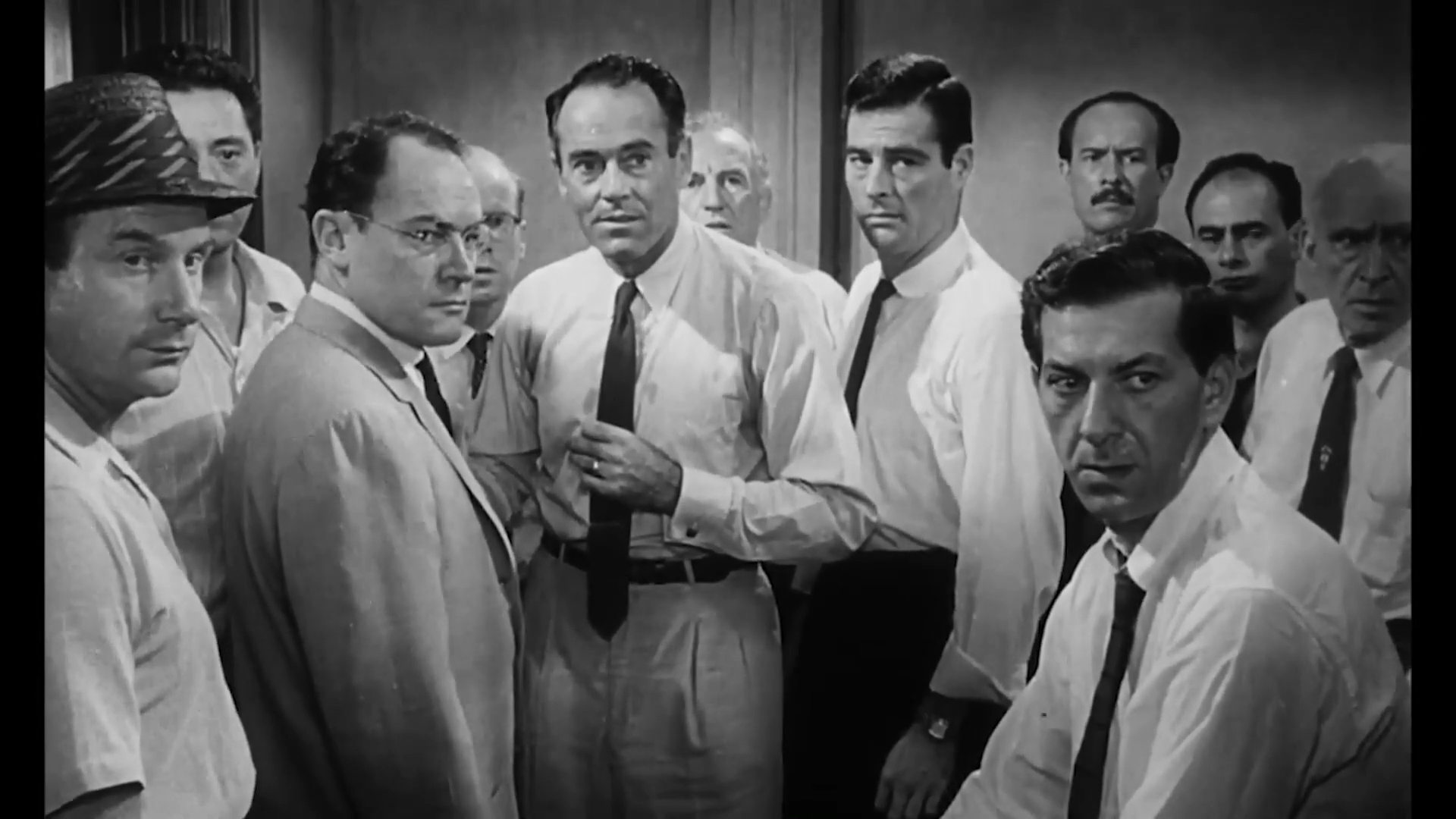
12 Angry Men (1957)
Sidney Lumet's simmering masterpiece strips the legal drama to its bare essentials – twelve men, one room, and the fate of a young defendant hanging in the balance. Henry Fonda's Juror #8 stands as the lone voice of reasonable doubt against a room of men eager to convict and escape their civic duty. As the temperature rises both literally and figuratively, we witness the slow, meticulous dismantling of certainty – revealing how easily justice can be corrupted by bias and hasty judgment.
The genius of Lumet's direction lies in his ability to transform a claustrophobic setting into a moral battleground where prejudice, apathy, and personal demons must be confronted before justice can be served.
A Few Good Men (1992)
Aaron Sorkin's razor-sharp dialogue fuels this military courtroom drama that pits Tom Cruise's cocky young lawyer against Jack Nicholson's intimidating Colonel Jessup in a battle that has become cinematic legend. Beyond the oft-quoted climactic exchange, the film offers a nuanced exploration of military culture, blind obedience, and the moral compromises made in the name of national security. Cruise delivers one of his career-best performances as Daniel Kaffee, a reluctant crusader who must overcome his own fear of failure to pursue justice. The film's brilliance lies in its ability to make legal procedure thrilling while simultaneously examining the conflict between institutional loyalty and individual conscience.
You May Also Like: Classic Films Every Man Must Watch
The Judge (2014)
Robert Downey Jr. and Robert Duvall deliver a masterclass in the complexities of father-son relationships in this emotionally charged legal drama. Downey's slick city lawyer Hank Palmer returns to his small-town roots to find his estranged father – a respected local judge – accused of murder while battling terminal cancer. Beyond the procedural elements, the film excavates the painful terrain of familial wounds and the task of reconciliation. What elevates this beyond standard legal fare is the raw authenticity of its emotional core – the palpable tension between a son desperate for approval and a father whose principles have always superseded his parental instincts. The film’s strength lies in its portrayal of how justice can be clouded by personal relationships, and how, sometimes, the hardest cases to fight are the ones that hit closest to home.
Witness for the Prosecution (1957)
Billy Wilder's adaptation of Agatha Christie's play stands as one of cinema's most exquisitely crafted legal thrillers, featuring Charles Laughton as an ailing barrister who takes on one last case defending a man accused of murdering a wealthy widow. The intricate plotting unfolds with Wilder's characteristic precision, building to one of the most satisfying twist endings in film history. The film transcends its courtroom setting to become a meditation on the nature of truth itself, suggesting that justice is ultimately a performance where the most convincing actor often prevails. If you think you know how it ends, you don’t.
Philadelphia (1993)
One of the most emotionally charged courtroom dramas ever made, Philadelphia was a landmark film in its portrayal of AIDS discrimination. Tom Hanks plays Andrew Beckett, a high-powered lawyer fired from his firm after his diagnosis is revealed. Denzel Washington, as the initially reluctant attorney who takes on his case, undergoes a transformation that is just as compelling as the trial itself. While the legal battle is about wrongful termination, the real fight is for recognition, dignity, and breaking down prejudices. Hanks delivers one of his career-best performances, making Philadelphia a courtroom drama that lingers long after the verdict.
You May Also Like: Add These Indie Gems to Your Watchlist
Anatomy of a Murder (1959)
Otto Preminger's audacious legal thriller pushed the boundaries of censorship with its frank discussions of sexual violence and its morally ambiguous portrait of the legal system. Jimmy Stewart subverts his wholesome image as the defense attorney Paul Biegler, whose clever maneuvering to secure an acquittal raises profound questions about the nature of justice. The film's genius lies in its refusal to provide clear answers about the defendant's guilt or innocence, instead focusing on how the legal system often prioritizes procedural victories over absolute truth. The film's lasting impact comes from its bold suggestion that the legal system itself may be incapable of accessing unvarnished truth – a cynical but profound observation that continues to resonate in an era of trial by media.
To Kill a Mockingbird (1962)
Robert Mulligan's adaptation of Harper Lee's beloved novel transcends the courtroom drama genre to become a searing indictment of racial injustice in America. Gregory Peck's portrayal of Atticus Finch stands as one of cinema's defining expressions of principled masculinity. The genius of the film lies in its perspective, filtering the harsh realities of racism through the innocent eyes of Scout Finch, whose coming-of-age story becomes inseparable from her growing awareness of society's prejudices. The courtroom scenes, particularly Tom Robinson's testimony, achieve a devastating power through their restraint, allowing the injustice to speak for itself rather than relying on melodramatic flourishes. The film's enduring power comes from its suggestion that true justice requires more than legal procedure – it demands a fundamental shift in the human heart.
Primal Fear (1996)
Gregory Hoblit's twisted legal thriller delivers one of cinema's most memorable bait-and-switches, anchored by Edward Norton's breakthrough performance as an altar boy accused of murdering an archbishop. Richard Gere's slick defense attorney Martin Vail initially takes the case for publicity, only to find himself drawn into a labyrinth of church corruption and psychological manipulation. The film subverts expectations at every turn, using the courtroom as a stage for elaborate deceptions that force us to question our assumptions about innocence and guilt. The film's cynical view of justice as a game played by skilled manipulators provides a darkly entertaining counterpoint to more idealistic legal dramas, while its shocking denouement forces a reevaluation of everything that came before.
You May Also Like: Star Wars Watch Order: The Right Way to Binge
Anatomy of a Fall (2023)
Justine Triet's Palme d'Or-winning drama uses the courtroom to dissect the complexities of a troubled marriage after a man falls to his death from the attic of his home. Sandra Hüller delivers a tour-de-force performance as the accused wife, whose literary celebrity and unapologetic intelligence make her a complex figure for the jury to evaluate. The film's brilliance lies in its refusal to provide definitive answers, instead using the trial as a prism through which to examine how relationships can become battlegrounds where truth is constantly negotiated. The linguistic complexities – with testimony moving between French, English, and German – add another layer of ambiguity, suggesting how easily meaning can be lost in translation.
The Burial (2023)
Maggie Betts' crowd-pleasing legal drama transforms a battle between a small funeral home owner and a corporate giant into a rousing examination of racial and economic justice. Jamie Foxx delivers a performance of incredible charisma as attorney Willie Gary, whose flashy style and unconventional tactics mask a razor-sharp legal mind. What begins as a straightforward contract dispute gradually evolves into an exploration of how justice is influenced by race, class, and corporate power. Through its expert pacing and performances, The Burial demonstrates how legal dramas can tackle serious issues while still delivering the visceral satisfaction of watching underdogs triumph against overwhelming odds.
The Lincoln Lawyer (2011)
Matthew McConaughey's career renaissance arguably began with this stylish legal thriller, where he plays defense attorney Mick Haller, a man who operates his practice from the back of a Lincoln Town Car – a mobile embodiment of his moral flexibility. The narrative takes a dark turn when Haller, defending a wealthy real estate heir against rape charges, discovers disturbing evidence that his client may be guilty of far worse crimes. What begins as a slick character study evolves into a morally complex exploration of legal ethics and the defense attorney's dilemma: how to navigate a system that demands zealous representation even when representing potential monsters. The film thrives in its examination of privilege and power, suggesting that the law serves those who can afford to manipulate it.
You May Also Like: Movies Team Esquire India's Really Looking Forward To In 2025
The Trial of the Chicago 7 (2020)
Aaron Sorkin’s The Trial of the Chicago 7 transforms a historical courtroom battle into a whip-smart, high-energy legal drama that feels eerily relevant today. Chronicling the infamous trial of anti-Vietnam War protesters accused of inciting riots at the 1968 Democratic National Convention, the film crackles with Sorkin’s trademark dialogue, layered performances, and a deep sense of injustice. The ensemble cast—featuring Sacha Baron Cohen, Eddie Redmayne, and Yahya Abdul-Mateen II—brings the chaotic trial to life, balancing moments of levity with the weight of a political reckoning. It’s not just a courtroom drama; it’s a portrait of rebellion, idealism, and a legal system tested by the era’s turbulent politics.
Just Mercy (2019)
Michael B. Jordan brings quiet determination to his portrayal of Bryan Stevenson, a Harvard-educated lawyer who moves to Alabama to represent death row inmates without proper legal representation. The film centers on his fight to free Walter McMillian (Jamie Foxx), sentenced to death for a murder he couldn't possibly have committed. What makes this true story so powerful is its methodical exposure of how racism corrupts every level of the justice system – from police investigation through prosecution and conviction. Rather than relying on courtroom theatrics, the film builds its case through small details and human connections, particularly in the death row scenes where condemned men maintain dignity despite their circumstances. The courtroom becomes just one battleground in a larger struggle against systemic injustice. It's a sobering reminder that for many Americans, particularly Black men in the South, legal rights have historically been theoretical rather than practical.
Judgment at Nuremberg (1961)
Stanley Kramer's monumental drama tackles one of history's most significant trials – the prosecution of Nazi judges who perverted their legal system to serve Hitler's genocidal aims. What makes the film so powerful is how it refuses easy moral clarity, focusing not on obvious monsters but on respected legal professionals who chose complicity. A film that doesn’t just ask “what happened?” but “how could this have happened?”—and perhaps more crucially, “could it happen again?” Stanley Kramer directs with an unflinching eye, bringing together a heavyweight cast to wrestle with the moral ambiguity of post-war justice.
You May Also Like: 6 Shows To Watch While You Wait For The Next White Lotus Episode To Drop
The Verdict (1982)
Paul Newman gives one of his finest performances as Frank Galvin, a washed-up alcoholic lawyer who gets one last chance at redemption with a medical malpractice case. Rather than the typical legal movie trajectory of triumphant courtroom speeches and clear moral victories, Sidney Lumet’s direction is taut and unshowy, letting the moral weight of the case take center stage. It’s a film that understands that in the real world, justice isn’t always about what’s right—it’s about what you can prove.
Dark Waters (2019)
The best courtroom dramas don’t just entertain—they unearth, expose, demand attention. Dark Waters does exactly that, chronicling the real-life battle of corporate attorney Rob Bilott against the chemical behemoth DuPont. Mark Ruffalo delivers a performance of quiet intensity, portraying a man whose transformation from company lawyer to whistleblower is both gradual and profound. Director Todd Haynes resists the temptation to dramatize for the sake of spectacle, instead letting the suffocating weight of systemic corruption speak for itself. The result is a legal thriller that doesn’t just tell a story—it issues a warning.
Mangrove (2020)
Steve McQueen’s Mangrove is a searing courtroom drama that transcends the genre, telling the true story of the Mangrove Nine—Black activists in 1970s London who stood trial after peacefully protesting police harassment. Before stepping into the courtroom, McQueen immerses us in the heart of Notting Hill’s Caribbean community, making it clear that this is not just a legal battle but a fight for dignity and survival. The film uses the courtroom to show how justice systems can be tools of oppression but also, when challenged correctly, venues for historic change. It's a necessary reminder that landmark civil rights victories weren't just won in America but in courtrooms across the world.
You May Also Like: Korean Films That You Need To Watch Right Away
Erin Brockovich (2000)
Steven Soderbergh’s Erin Brockovich turns a real-life environmental lawsuit into a compelling David-versus-Goliath legal battle, powered by Julia Roberts in a career-defining performance. Playing a sharp-witted, tenacious legal assistant who takes on a corporate giant accused of poisoning a town’s water supply, Roberts commands the screen with charm, grit, and unshakable determination. The film sidesteps legal jargon in favor of a more personal, character-driven approach, making the stakes feel deeply human. More than just a courtroom drama, Erin Brockovich is an inspiring testament to the power of perseverance and the unlikely heroes who take on the system.
Silenced (2011)
Few courtroom dramas have had as seismic a real-world impact as Silenced, a harrowing South Korean film that exposes institutional corruption and systemic abuse. Based on true events, it follows a teacher (Gong Yoo) who arrives at a school for the hearing-impaired, only to uncover shocking crimes against the students—crimes that the legal system seems disturbingly willing to overlook. Directed with unflinching honesty, Silenced is not just a gripping legal thriller but a scathing indictment of power structures that fail society’s most vulnerable. Its release sparked national outrage, leading to legislative changes in South Korea’s child protection laws—proof of cinema’s ability to inspire real justice.
Juror #2 (2024)
Clint Eastwood’s Juror #2 reimagines the classic courtroom drama with a tense moral dilemma at its core. The film follows a juror who, while serving on a high-profile murder trial, begins to suspect that he may have played an unintentional role in the crime. As the case unfolds, he grapples with whether to manipulate the verdict or come forward with the truth, setting up a slow-burn thriller that challenges notions of justice, conscience, and personal responsibility. With Eastwood’s signature restrained direction and a tightly wound narrative, Juror #2 is a gripping, psychological legal drama that turns the genre on its head.