Best Biopics Of All Time
The bold, brilliant biopics we love
Making biopics is probably filmmaking’s most arrogant act. It’s the cinematic equivalent of playing god—you take a real, once-breathing human being, pin them under a spotlight, and dare to say: this is what they were like. This is how it felt to be them. It’s a huge gamble, and also probably a huge responsibility.
Because let’s be honest: biopics are tricky. Too reverent, and you end up with a sanctified statue where a person once stood. Too revisionist, and you’ve pissed off an entire fandom, family, or country. Still, when they hit that sweet spot—when the performance cuts through the artifice, when the storytelling doesn’t just imitate life but unravels it—that’s when the genre transcends. It’s when Denzel becomes Malcolm X. When Cillian Murphy practically dissolves into Oppenheimer. When Jamie Foxx doesn’t play Ray Charles, he is him.
And cinema loves that gamble. We, as an audience, love to watch fame and failure unravel in two neatly edited hours.
Biopics To Add In Your Watchlist
These are the biopics that we absolutely love.
Amadeus (1984)
I mean, this is the gold standard. This movie isn’t just a simple biopic. It’s a whole opera about envy, ego, and the unbearable lightness of genius. Milos Forman takes Mozart’s life and refracts it through the jealousy of Antonio Salieri, a man crushed by the weight of his own mediocrity. F. Murray Abraham’s Salieri narrates the story like a man slowly losing his mind over someone else’s brilliance, and it’s glorious. The film’s genius lies in that dynamic: envy versus talent, mediocrity versus madness. It’s absolutely perfect.
Oppenheimer (2023)
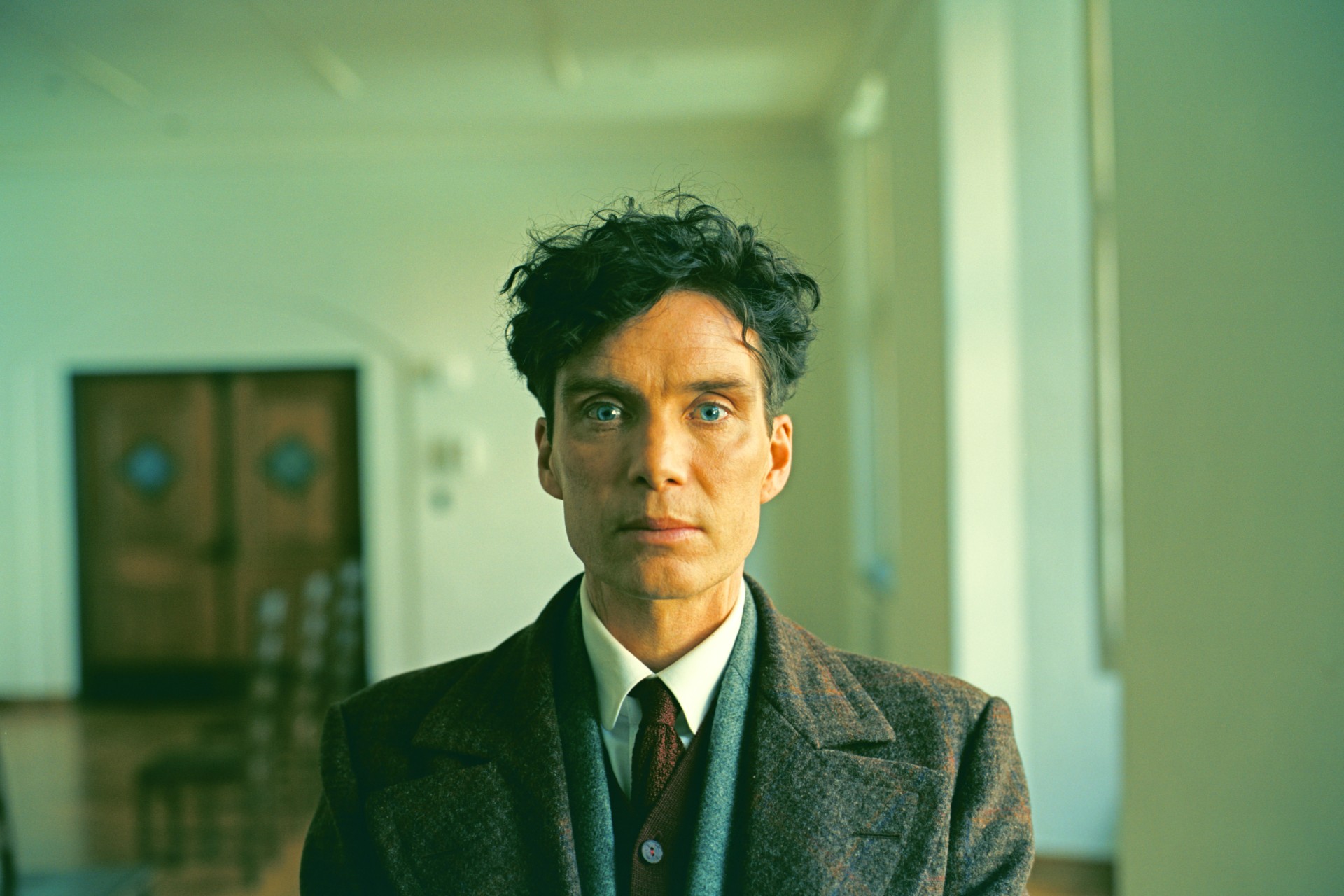
Call it bias if you want – in my eyes, Cillian Murphy can take no bad script. Oppenheimer might be recent, but it has entered the canon. Christopher Nolan finally loosened his tie and made something that’s not just brainy but deeply human. Cillian Murphy looks like a man physically eroding under the weight of his own invention, and the film lets him. There’s grandeur here, sure—atomic blasts, chain-smoking scientists, moral fallout—but the real explosion happens in that haunted, hollow stare. And no one else could’ve communicated the weight of this story except Nolan.
Malcolm X (1992)
Spike Lee’s Malcolm X is a cult classic, and when I was younger, I thought X had reincarnated on the screen in front of me. You watch Malcolm go from street hustler to revolutionary, and it’s never clean, never simple. Lee’s direction is bold but grounded, and Denzel’s performance is so precise it almost feels dangerous. This isn’t a movie you just happen to “like”, it fully reels you in. Completely.
A Beautiful Mind (2001)
Russell Crowe’s Nash isn’t the poster boy for genius, but a man haunted by it. The film’s depiction of schizophrenia (controversial though it was) forces you to question what brilliance costs, and who gets to define “normal.” Four Oscars later, A Beautiful Mind remains one of the few films that turns the biopic formula inside out: it’s not about triumph, or glorifying, but just about survival.
Paan Singh Tomar (2012)
Not that Irrfan Khan needs any validation, but this is one of his best roles, and this movie hits harder than most of the Hollywood biopic fluffs out there. In Tigmanshu Dhulia’s hands, Paan Singh Tomar becomes more than the tale of a national athlete turned rebel—it’s a searing indictment of how India treats its forgotten heroes. It’s one of those rare Indian biopics that refuses to romanticise its subject. Instead, it exposes the very system that betrayed him. The movie is brutal and makes you furious.
The Social Network (2010)
“The internet’s not written in pencil, Mark. It’s written in ink.” This is our favourite antihero story. Under Aaron Sorkin’s script and Fincher’s direction, the story of Facebook is presented like a modern Shakespearean tragedy. Zuckerberg, as played by Jesse Eisenberg, isn’t a villain or a genius—he’s just the worst human. In between the lawsuits, betrayal, and hoodie-clad loneliness, The Social Network becomes less about Facebook and more about the birth of a new kind of isolation: the Internet.
Bohemian Rhapsody (2018)
It’s messy, sure. Historically loose, yes. But Rami Malek is Freddie Mercury, and that alone earns Bohemian Rhapsody its spot here. The film soars when the music does—especially in that near-perfect Live Aid recreation that gives you chills even if you’ve never sung along to “Radio Ga Ga.” It’s loud, flawed, and larger than life. Just like Freddie.
Sardar Udham (2021)
There are plenty of patriotic biopics out there, but Sardar Udham plays on a completely different frequency. Vicky Kaushal plays Udham as a man drowning in grief. The Jallianwala Bagh massacre scene is absolutely gutting. It’s the kind of film that reminds you heroism isn’t glamorous, but often lonely and painful.
The King’s Speech (2010)
I wasn’t really that interested to watch a movie about the king’s stammer. After all, how many royal dramas will we watch? But it works. The King’s Speech turns the story of King George VI’s speech impediment into an exploration of vulnerability, masculinity, and duty. Colin Firth and Geoffrey Rush make a perfect odd couple—one a king terrified of his own voice, the other a man who doesn’t care about titles. Their chemistry carries the whole film. It’s Oscar bait, sure, but it earns every bit of it.
Ferrari (2023)
Adam Driver plays Enzo Ferrari, a man juggling family, his empire, and self-doubt. He also gives Enzo a weird charima. You’re never sure if you like him, but you get why people orbit him anyway. Penelope Cruz as his wife brings grit to the film. It’s a film that understands speed as both seduction and self-destruction. Criminally underrated, and a must-watch.
Lawrence of Arabia (1962)
Every director you’ve ever loved worships this film—and for good reason. David Lean’s Lawrence of Arabia is the biopic that made the biopic mythic. Peter O’Toole’s hypnotic performance anchors a film about adventure, introspection, and colonial critique. Watch it once and you’ll understand why Spielberg walked out of the theatre mid-film—just to process it.
12th Fail (2023)
Based on the life of IPS officer Manoj Kumar Sharma, Vinod’s 12th Fail is not all loud and boisterous. It had no big stars, no over-the-top direction. I don’t think anyone even expected it to work. But it’s a story that really earns your respect. It’s jut a simple movie about perseverance. Vikrant Massey is phenomenal. In a genre often obsessed with grandeur, 12th Fail finds beauty in simplicity.
The Iron Lady (2011)
Say what you will about Thatcher, but Meryl Streep did what Streep does best: she walks in, obliterates the room and amazes you. The Iron Lady takes the former Prime Minister’s legacy—divisive, towering, complicated—and filters it through the haze of memory. Streep doesn’t glorify; she humanises. And that, ultimately, is the hardest trick a biopic can pull off.
Sanju (2018)
Rajkumar Hirani’s Sanju is chaotic, indulgent, and revisionist—but you can’t deny it’s watchable. Ranbir Kapoor’s transformation into Sanjay Dutt is amazing, and the film’s self-aware tone flirts dangerously close to parody. It’s a spectacle, sure, but it’s also a fascinating meditation on fame, myth, and self-destruction.