
- Entertainment
- Style
- Lifestyle
- Food & Drinks
- Tech & Auto
- Culture

So, we have yet another biopic amidst us. Scott Cooper’s film about Bruce Springsteen with Jeremy Allen White playing the American rock musician, recently had its trailer launch. In 2019, YouTuber-filmmaker Patrick Willems’ video essay took a shot at the way music biopics formulise the way these stories are told. “Instead of stories, these feel like cinematic Wikipedia articles,” said Willems.
And that’s just music biopics. Too often, films in the genre start feeling episodic and predictable, and unfold along very similar lines—often hurtling towards tired and clunky second halves that leave you utterly dissatisfied. They are riddled with potential for legal hassles and roadblocks, so very often, makers clearly seem to play it safe.
In short, if you really love the movies—the biopic could be a hard genre to digest. And, so, whenever someone gets it right, it takes a special story and an even more special film.
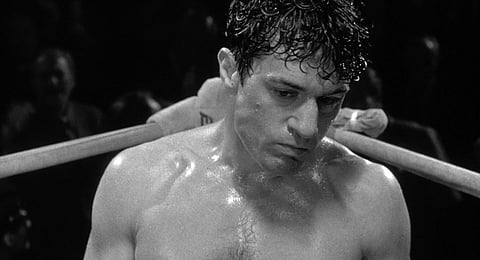
A rousing, gripping but tragic film about the life of immigrant boxer Jake LaMotta, Raging Bull revived the career of filmmaking colossus Martin Scorsese. Shot in black and white—partly to echo classic boxing reels and partly to lend the story an air of myth—it delivered a visceral, like-never-before portrayal of violence, jealousy and emotional implosion. If Mean Streets and Taxi Driver were to stand beside it and judge which film features Robert De Niro’s greatest performance, they’d hand the belt to Raging Bull without a moment’s doubt (his crazy transformation for the role—gaining 60 pounds—to play an aged LaMotta). Another huge reason to watch is Thelma Schoonmaker’s editing: the heightened operatic violence redefined fight cinematography in a way you wouldn’t have seen before.
A blistering character study, Steve Jobs doesn’t track the arc of a life so much as it traps you in its engine room. Okay, Michael Fassbender kind of doesn’t look like Jobs, but once the words start flying (courtesy of Aaron Sorkin’s script), it wouldn’t matter. What makes this film special is its form: each act unfolds in the moments before a major product launch, compressing years of ambition, resentment and fractured relationships into backstage confrontations. The sound of glass, circuitry and ego colliding—orchestrated with Danny Boyle’s kinetic visual energy—makes this a rare tech biopic.
It will haunt you your whole life. As with Rosemary’s Baby, Knife on the Water and Chinatown, Roman Polanski directs with the cool detachment of someone who doesn’t want to intrude on terrible stuff. Adrien Brody, gaunt and hollow-eyed, barely speaks as Wladyslaw Szpilman, a Jewish pianist in Nazi-occupied Warsaw, whose survival begins to feel like a curse. The film takes away all musical sentiment and martyrdom, letting long silences, ruined cityscapes and half-heard Chopin fragments haunt you instead. What could be more horrible than the slow unspooling of a man’s humanity in real time? It will haunt you your whole life.
Before you even meet the man, you’re hit with the stars and stripes. The film opens with a full-screen flag and George C. Scott delivering a monologue like a sermon from Olympus. What follows is less a biography than a military psychodrama, tracking Patton’s brilliance and delusion across European campaigns like a slow-burning war opera. Franklin J Schaffner directs with old-school sweep, but it’s Scott who keeps you riveted—magnetic, deranged, and always on the verge of slipping into parody. That he doesn’t is the miracle. If you ever wanted to understand the strange, operatic ego behind American military glory, this film doesn’t flinch.
Tonya Harding never stood a chance—not from the judges, not from the media, and definitely not from the people around her. I, Tonya tells her story like a fist fight in a funhouse mirror. Margot Robbie, gritted teeth and all, delivers a performance full of rage, swagger, and desperation, breaking the fourth wall as if to wrest control of the narrative. Craig Gillespie directs like he’s spinning plates: domestic abuse, trash TV, Olympic ambition and true crime all crash into each other, scene after scene. And through it all, Harding keeps skating—bruised, brilliant and born for a sport that never wanted her.
What does guilt sound like? In Oppenheimer, it sounds like ticking, echoing footsteps and the roar of silence after the bomb drops. Cillian Murphy plays J. Robert Oppenheimer not as a man who changes history, but as someone swallowed by it. Christopher Nolan builds the film like a nervous system—synaptic, overloaded, jumping across timelines and perspectives—until what’s left is a man watching himself become myth. The Trinity test scene is cinema at its most breath-stopping, but the real detonation happens later, in a fluorescent-lit hearing room where Oppenheimer's ideals are picked apart like state secrets. It’s not a science film. It’s a psychological thriller in disguise.
There’s a tremor in Joaquin Phoenix’s voice from the start—not just in the singing, but in the way Johnny Cash holds himself, haunted by the sound of trains, death, and his father’s disappointment. Walk the Line traces the rise of the Man in Black through pills, prison gigs, and the slow-burning romance with June Carter, played with luminous precision by Reese Witherspoon. What James Mangold does so well is keep the film from becoming just a greatest hits parade. Instead, it finds its rhythm in the pauses—in the ugly, longing-filled silences between applause. You don’t just hear the music, you feel the ache behind it.
A film about a man making a film, Aparajito recreates the feverish, near-impossible birth of Pather Panchali through the eyes of its stand-in protagonist, Aparajito Ray. But this is no bland tribute. It captures the desperation, self-doubt, and near-delirious vision that goes into making something original—especially when no one around you thinks it matters. Director Anik Dutta folds in winks to Ray’s iconography without getting lost in reverence. The struggle to shoot on a shoestring, the pushback from gatekeepers, the occasional grace of chance—all come alive in sequences that remind you why cinema itself is sometimes the subject worth filming.
If six different actors—including Cate Blanchett—play Bob Dylan, it’s not because Todd Haynes is being clever. It’s because Dylan himself refused to ever play just one version of Bob Dylan. I’m Not There doesn’t trace a life—it fractures it. One Dylan is a black folk singer, one’s a cowboy, one’s a poet dissolving into his own fame. None are “true,” all are real. Haynes shoots in different styles, tones, even timelines, as if the film were channel-hopping through Dylan’s soul. It’s messy, oblique, sometimes pretentious—but always alive. You don’t walk away knowing Dylan. You walk away knowing why you never could.
A film about a man obsessed with beauty, discipline and death, Mishima doesn’t just recount the life of Japanese author Yukio Mishima—it stages it like a fever dream. Directed by Paul Schrader and scored by Philip Glass, the film braids together three timelines: Mishima’s final day, scenes from his novels, and flashbacks from his life. But it’s the stylised theatricality—neon sets, brutalist interiors, sudden monologues — that turns it into something stranger and more operatic than biography. The contradictions of Mishima himself—nationalist, queer, aesthete, zealot—are never resolved. They clash, blur, collapse. You don’t get a portrait, but an explosion framed in gold leaf.