Karan Aujla Isn’t Explaining Himself Anymore In 'P Pop Culture'
In his latest video, Karan Aujla strips down to something quieter
Punjabi music has been travelling well for a while now. Bigger audiences, louder stages, international co-signs. None of that is new. What is new—or at least feels freshly confident—is how little Karan Aujla seems interested in proving any of it. P-POP Culture doesn’t over-explain. It simply exists with the kind of assurance that suggests the argument was settled long ago.
This isn’t Aujla positioning himself as the next big thing. That ship has sailed. Instead, the video plays like a calm assertion of where he stands now—grounded, unhurried, and quietly in control.
From the opening chant of “P-Pop, P-Pop,” the message is clear: this isn’t a song built to impress, it’s built to assert. The lyrics circle familiar Aujla territory—status, loyalty, patience, self-belief—but they’re delivered without urgency. There’s no frantic flexing, no need to shout over the beat. Power here comes from restraint. Experience matters more than noise.
One line does most of the heavy lifting:
“Jithe galliyan sikhaun, faida book da ni hunda.”
(Where the streets teach you lessons, books don’t help.)
That’s P-POP Culture in a sentence. This isn’t theory; it’s lived-in knowledge. The kind that comes from watching, surviving, falling, and getting back up without an audience. Aujla isn’t trying to intellectualise his journey or dress it up as inspiration—he’s just stating facts as he knows them.
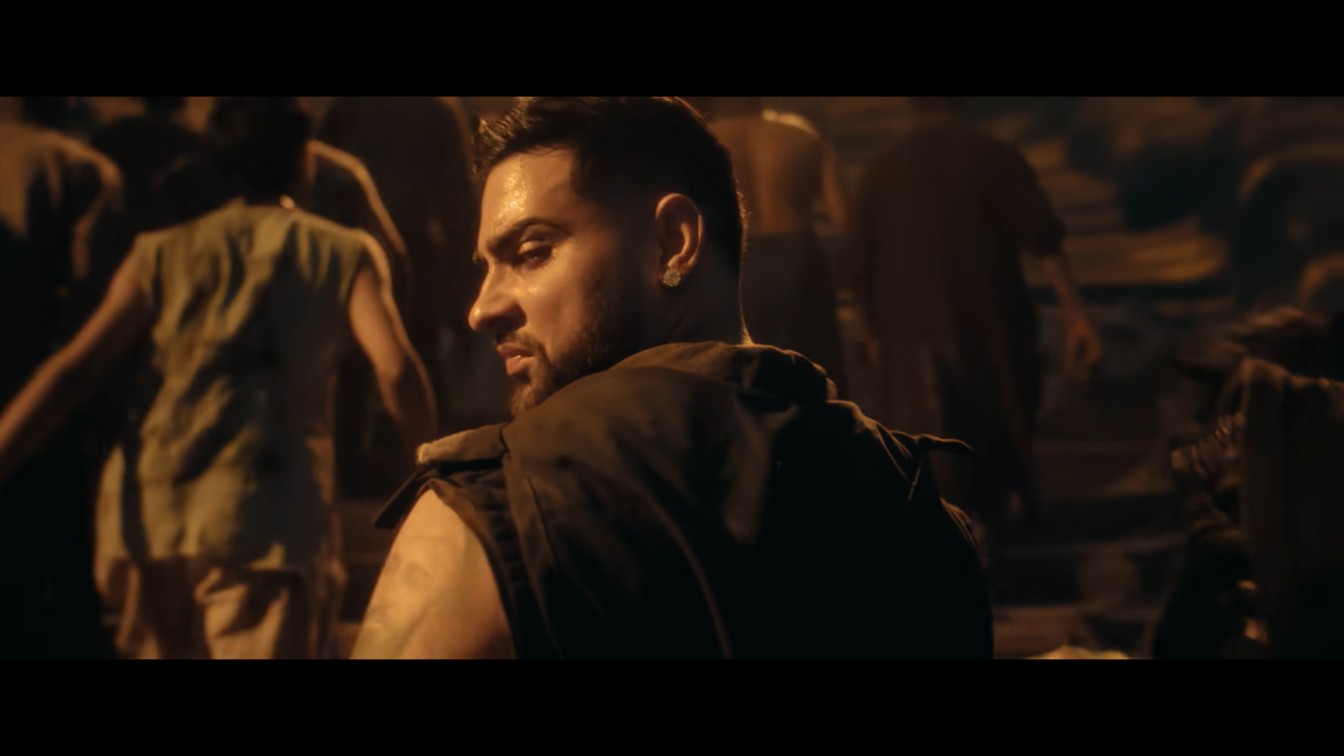
Visually, the video mirrors that mindset. Directed by Agam Mann and Aseem Mann, the imagery thrives on contrast: crowds pushing forward while Aujla moves steadily through them; chaos brushing up against stillness; the repeated climb upstairs that quietly becomes the backbone of the narrative. You’re meant to feel the ascent, not admire it from a distance.
The palette stays earthy and real—cold concrete, weathered faces, sun hitting corners at the right moment. Nothing glossy, nothing over-produced. Even the styling resists spectacle. Confidence comes from presence, not wardrobe.
The opening sequence sets the tone. A young boy locks eyes with a fatherly figure, receives a small nod of reassurance, and steps into a crowd that’s restless, impatient, desperate to move ahead. It’s uncomfortable in a way that feels familiar. As the video unfolds, the boy gives way to Aujla—not as a transformation, but as a continuation.
People shove him. Block him. Take shots when he’s vulnerable. He keeps moving. Every fall sharpens him. When he finally reaches the top, the pause isn’t triumphant—it’s reflective. He looks back not with arrogance, but recognition. Then the road resets. Taller. Steeper. Unfinished. The same fatherly figure appears again, with belief in his eyes and then off he goes.
It’s a simple idea executed with restraint: growth doesn’t end at success. That’s where it restarts.
By the time Aujla references his pen—sharp, dependable, unmissable—it doesn’t sound like ego. It sounds earned. This is a writer who knows his voice and trusts it enough not to dilute it. Somewhere between ambition, betrayal, ego, and loneliness, his songs increasingly feel like internal monologues rather than chart chasers.
P-POP Culture isn’t a flex or a victory lap. It’s a reminder that resilience, humility, and roots are what keep you moving once the applause dies down.
Credits:
P-POP Culture is written, composed, and performed by Karan Aujla, with music by Ikky. The video is directed by Agam Mann and Aseem Mann. Digital marketing handled by LA Music Promotions Co.