
- Entertainment
- Style
- Lifestyle
- Food & Drinks
- Tech & Auto
- Culture
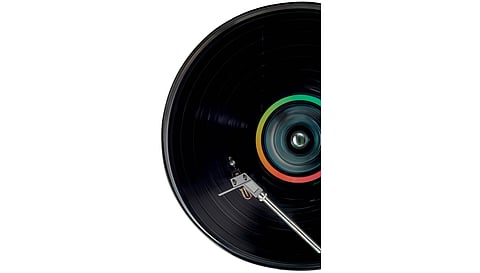
ON A SWELTERING AFTERNOON IN BANDRA, INSIDE an old heritage bungalow with a heat wave warning in effect, nearly 2,000 vinyl records from around the world were laid out for browsing at The Vinyl Pop Up, and the room was full. If buying physical music in the age of Spotify seems like an anachronistic pursuit, what’s even more surprising was the number of under-30s flipping through the crates.
After twenty-one-year-old Aaryan Jogina heard his first Daft Punk record at a vinyl cafe in Singapore during a layover, he carried that newfound obsession back to Mumbai, where he tracked down listening sessions across the city and grew close with the people organising them. The first record he ever bought was Pink Floyd’s The Dark Side of the Moon.
“I can’t listen to just any artist on vinyl,” he says. “Music that was originally pressed and produced for analogue—that’s what sounds best to me.” He cites Pyotr Ilyich Tchaikovsky, Fiona Apple and Wendell Pond among his favourites.
Rhys Fernandes’ first encounter with vinyl was at a friend’s house, where the friend’s father had spent years assembling a collection of more than a hundred records, many carried back from Australia. “When I heard it, I fell in love with the sound quality,” says the 20-year-old, who has since laid claim to his grandfather’s collection and is here, in Bandra, to buy his first brand-new record today. “I’m not collecting vinyl because I think the records will become financially valuable or rare collectibles. I care about experiencing and loving the album itself—listening to it fully, as a complete work, instead of skipping tracks,” he says.
The first time I truly reckoned with what sound quality even meant was when a close friend spent three times my internship stipend on a home theatre speaker. I thought he had lost it. But for many Gen Z listeners, growing up with everything available at all times has also meant discovering that abundance doesn’t always translate to satisfaction. Vinyl offers a different kind of relationship with music. For a generation that sees cultural awareness, caring about the right things and owning objects with a sense of history as markers of a life well lived, the vinyl record, with its scratches, rituals and refusal to be skipped, fits that logic perfectly.
For Viyoma Jain, 19-year-old design student with a long-held fascination with old media, dug out her mom’s old collection of records and cassettes. “There’s something different about the way music sounds and feels when you listen to it with a player or when you listen to it with your headphones,” says the fan of Connie Francis and The Ronettes.

The appeal of vinyl goes back to an image of her grandparents dancing in the living room every Friday, a ritual her mother and her uncle grew up around without ever thinking to name it. “More than nostalgia, listening to music in its most authentic form transports you into a different world,” she says, her face lighting up. “I just look for that feeling in everything.”
“Part of the appeal is that vinyl offers something tactile and authentic in an otherwise digital-heavy world,” says Rohan Mangalorkar, founder of Gaijin, a Japanese restaurant in Mumbai that regularly hosts vinyl sessions. The crowd at his events, he says, skews younger than most people would expect. “People want to feel like they’re part of something curated and intentional, rather than passive consumers,” he says, of the growing interest in niche cultural experiences.
Interestingly, many of these young aficionados don’t yet own record players themselves. And yet, vinyl remains a serious passion, one they already imagine as part of their legacy. For Avani Tambe and Prerna Topre, both 25, records are less a hobby than an heirloom, something meaningful enough to one day pass down to their children.
Vinit Thakkar, Managing Director of Sony Music India, sees all of this as part of something larger and well underway. He believes we are three to five years into the death of monoculture, where everyone’s community is essentially their feed, built from niches and self-selected taste. As a direct consequence, people are craving the opposite.
“All these people love having offline experiences,” he says. “That’s where they find their own community. The world is moving back to analogue. That is how it’s always been and it is happening again now.”
To read more stories from Esquire India's July 2026 issue, pick up a copy of the magazine from your nearest newspaper stand or bookstore. Or click here to subscribe to the magazine.