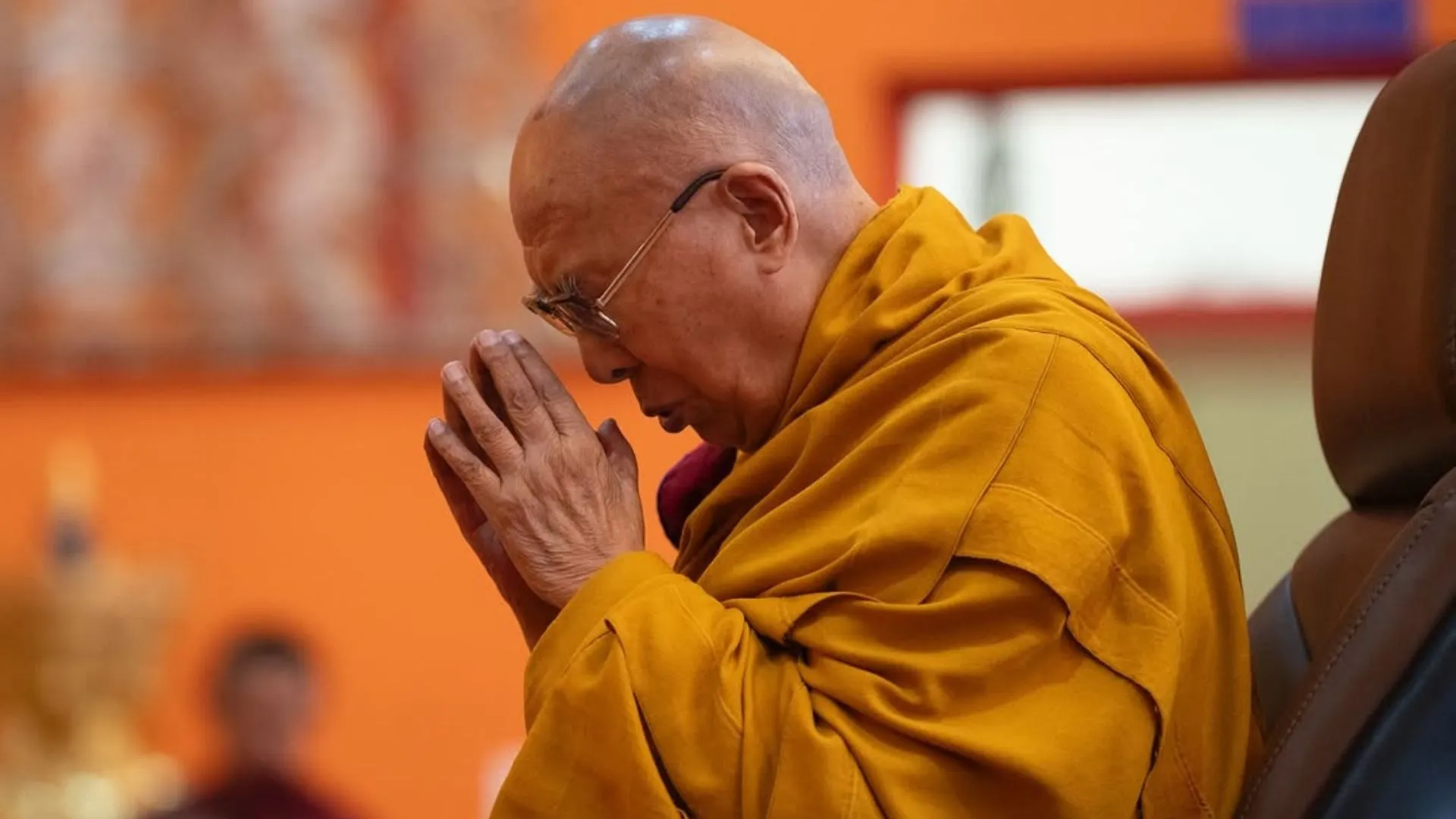
The Dalai Lama Is Now A Grammy Winning Artist, Here's How
The Dalai Lama’s Grammy win proves the stage is bigger than the charts
At 90, the Tibetan spiritual leader Dalai Lama was awarded his first Grammy at the 68th Annual Grammy Awards in Los Angeles, a result that caught plenty of viewers off guard. People are used to seeing pop stars, rappers, and producers on that stage. A Buddhist monk in maroon robes is a different visual.
But wait, the Grammys are not all about pop stars with massive fan following winning the awards. There are many, many categories at the Grammys, and a lot of them are devoted to music and audio projects beyond Billboard chart toppers, which is how the Dalai Lama was nominated in the first place.
What Did The Dalai Lama Win A Grammy For?
We get it, you’re probably confused. The Dalai Lama doesn’t really strike as a music artist, but that doesn’t disqualify him from the Grammys. The Tibetan leader won the award in the Best Audio Book, Narration and Storytelling Recording category. This field honors spoken-word works where voice, message, and production matter as much as any musical element. Past winners have included memoirs, literary narrations and political reflections, such as Michael J. Fox’s Always Looking Up, and Carrie Fisher The Princess Diarist (yes, the Star Wars actress won a posthumous Grammy in 2018, completing her EGOT status).
The Dalai Lama’s winning project, Meditations: The Reflections of His Holiness the Dalai Lama, consists of his spoken teachings with music, turning decades of talks into a structured listening experience. It competed against names from very different worlds, including memoirs by Fab Morvan of disgraced R&B duo Milli Vanilli and US Supreme Court Justice Ketanji Brown Jackson, Grammys host Trevor Noah’s children’s audiobook Into the Uncut Grass, and actor Kathy Garver’s narration of Elvis, Rocky & Me: The Carol Connors Story.
Meditations is built around the Dalai Lama’s voice. Across the tracks, he speaks about his experiences and teaching on compassion, peace, environmental responsibility, and shared humanity. On the track Water, he reflects on environmental changes he has seen since childhood in Tibet and the need to protect natural resources. On Peace, he focuses on compassion as a need for both personal growth and collective survival.
Each spoken segment is supported by composed music, centred around his words. Speaking of music, the backing vocals and background tracks are composed by some of the biggest names in music out there.
The Artists Behind The Sound
For starters, the album was produced by Kabir Sehgal, an accomplished author, composer and musician, 13 Grammy Awards, 5 Latin Grammy Awards, and multiple Emmy Awards wins to his name.
Rufus Wainwright, known for blending pop with classical influences, adds his voice to the project, along with folk and electro-pop artist Maggie Rogers. Andra Day, recognized for her soul and R&B work and her Oscar-nominated acting role as Billie Holiday, lends her vocals as well.
You'll also find Indian classical music spread throughout the album’s sound. Sarod maestro Amjad Ali Khan, one of the most respected figures in Hindustani classical music, worked on the project with his sons Amaan Ali Bangash and Ayaan Ali Bangash.
This year's grammy was a major year in terms of international representation in music. Bad Bunny took home the Album of The Year Award for Debí Tirar Más Fotos, the first time an all-Spanish album achieved the feat. Golden, a song from the movie K-pop Demon Hunters, became the first K-pop song to win a Grammy. Meanwhile, Kendrick Lamar shattered Jay-Z’s record as rapper with most awards for his album GNX.