Disney Bets $1 Billion on AI With Its New Deal With OpenAI
When the house of mouse courts the house of machines
Why does every AI innovation feel like a shortcut around humanity? Disney's billion-dollar waltz with OpenAI is only the latest reminder of where we are increasingly heading. Almost a familiar pattern since its launch in recent years, every time a corporation announces a dazzling new Artificial Intelligence partnership, you can practically hear a distant chorus of artists- animators, writers, designers, actors, voice-over-artists collectively bracing impact.
Somehow, the promise of innovation feels like a warped way of saying intervention. Disney’s freshly inked $1 billion partnership with OpenAI is complete with an equity stake, warrants, and enough licensing rights to give Mickey Mouse a migraine.
On paper, it’s pitched as a forward-thinking leap toward “responsible” storytelling in the age of generative media. But the subtext, to anyone who has lived through even one corporate reorganisation, is loud and unmistakable: AI isn’t just a new tool; it’s a new justification. And the rhetoric is familiar:
This will empower fans!
This will streamline workflows!
This will unlock boundless creativity!
And somewhere, carefully sandwiched between two slides of an investor deck, sits the real point: This will make production cheaper.
The Pretence of “Just Fan Content”
Disney insists this deal is about enabling harmless, low-stakes fan-generated shorts for Sora and ChatGPT. No one is losing their job, we are told; no one is being replaced; no one is sneaking an AI model into the animator’s chair while the artists are at lunch. According to the announcement, OpenAI is not allowed to use Disney IP to train its models, the deal is time-boxed to three years, and it specifically excludes talent likenesses and voices, something that has been a flashpoint in recent strikes and contract talks. At least that's protected for the next 3 years!
But anyone with even a passing familiarity with industry patterns knows that the first step toward replacing human labour is to prove, visually, financially, algorithmically, that you do not strictly need it in the first place. Though Disney is not licensing a single show or a small test library, it is giving Sora and ChatGPT access to hundreds of characters, plus costumes, props, vehicles and settings, from the company’s most valuable universes.
We are talking Mickey and Minnie, Lilo and Stitch, Ariel, Belle and Beast, Cinderella, Baymax, Simba and Mufasa. On top of that come characters from Encanto, Frozen, Inside Out, Moana, Monsters Inc., Toy Story, Up, Zootopia and more, plus Marvel and Lucasfilm icons like Black Panther, Captain America, Deadpool, Groot, Iron Man, Loki, Thor, Thanos, Darth Vader, Han Solo, Luke, Leia, the Mandalorian, stormtroopers and Yoda.
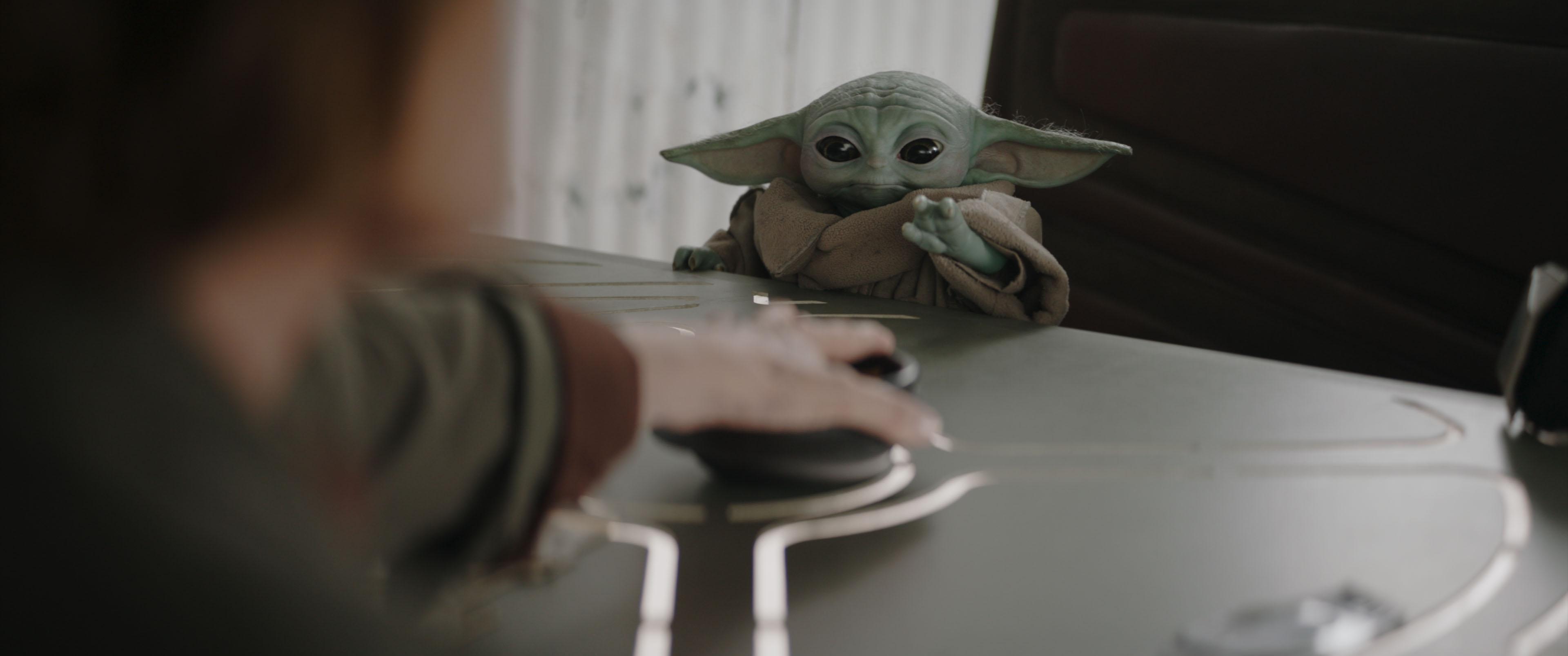
If Sora can conjure up a 15-second clip of Baymax and Baby Yoda having a snowball fight in the time it takes an animator to stretch, somewhere a studio executive is already calculating how many marketing shorts, pre-viz sequences or kids’ content blocks could be off-loaded to generative systems instead of real artists. Not because the AI is better. But because the AI is cheaper. And because its feelings will not be hurt when asked to redo a scene fifteen times.
Why AI in Entertainment Always Feels Like a Layoff in Disguise
There is something profoundly human about hand-drawn frames, about the way artists breathe life into characters through tiny, ineffable choices—weight shifts, micro-expressions, the emotional logic of movement. And it literally takes you back to the Ghibli argument everyone was in on earlier this year.
Animation has always been about the craft, the long hours, the communal grind. Studios trumpet this heritage every time awards season rolls around. Yet when AI enters the chat, all that romance quickly evaporates. The conversation shifts from artistry to efficiency; from expression to optimisation; from the human spirit to GPU utilisation. No matter how often executives insist that AI is merely a “tool,” it is never sold to shareholders as a tool. It is sold as leverage. AI is always framed as a friend of creativity, but suspiciously, it keeps showing up in spaces that are already underfunded, understaffed, or undervalued. It never seems to appear in the executive suite.
Once the world grows used to AI-generated animation bearing the Disney imprimatur even if it's only in bite-sized fan content, the psychological barrier is bound to be broken. The public eventually will become used to it if not comfortable. As we have seen happen so far. And the slow, silent erosion of human-made animation may become easier to justify in the future for many companies.
It’s not that AI itself is evil. Or even that generative tools can’t coexist with human artists. They can, and they should. But the pattern in corporate behaviour is so repetitive, so glaringly transparent, that the unease is entirely justified. Studios do not adopt AI to expand artistic possibilities. They adopt AI to shrink payrolls.
Disney, of all companies, built its empire on the backs of artists and storytellers who gave the world something ineffably human. For a century, Disney taught us that magic was handmade. Now, for a billion dollars, we are being told that magic can be automated.
Perhaps it can.
But should it?