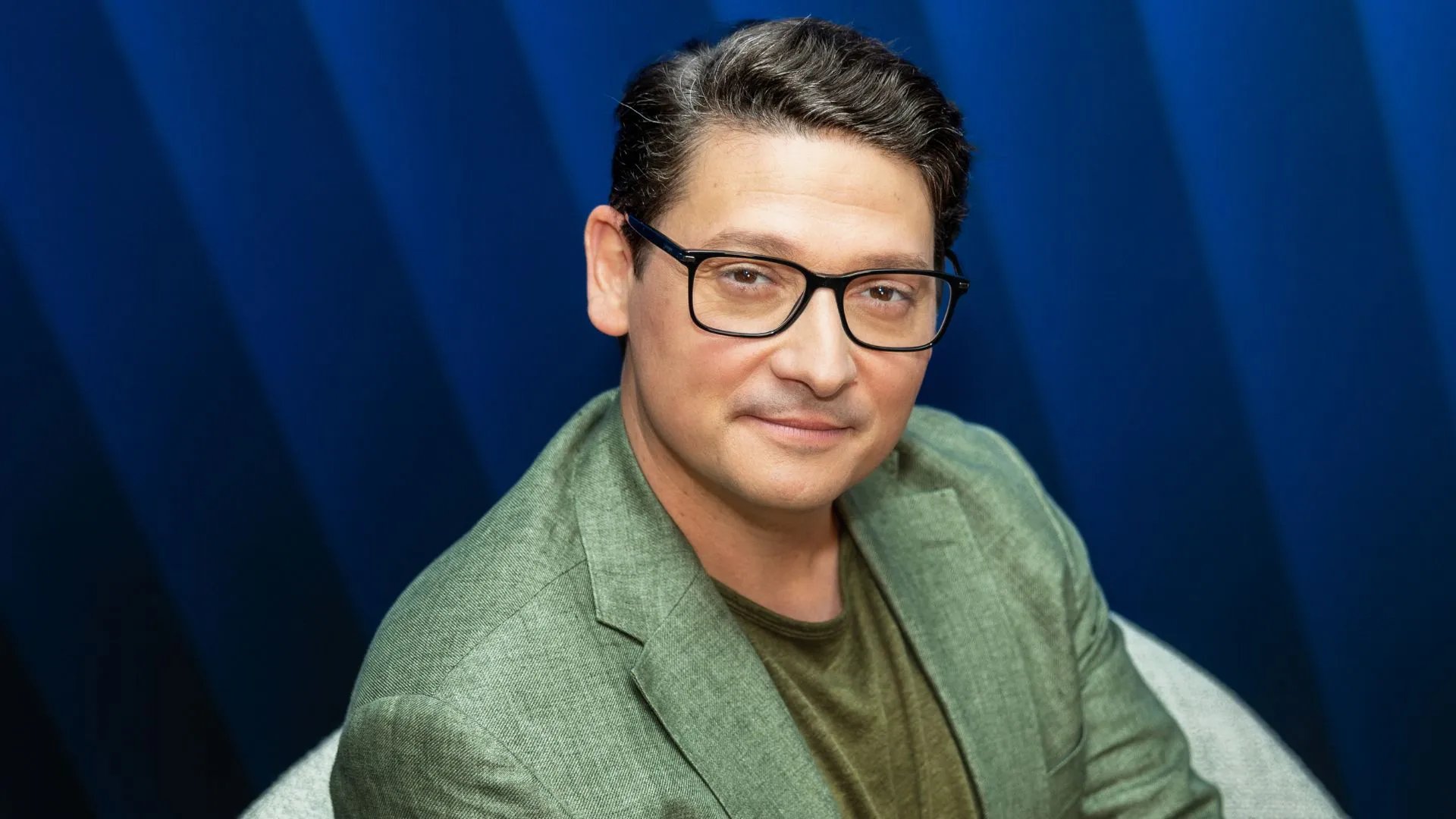
Mickaël Marin On How India Is Shaping Global Animation
Mickaël Marin, Director of the Annecy Animation Film Festival and MIFA, highlights India's storytelling shift
Much like in the luxury, fashion, and hospitality sectors, the world is looking to India when it comes to animation and gaming. Not just as a base to outsource production to (labour in India is still more cost-effective as compared to other regions), but as a partner with equal stakes. AniMela Festival 2026, which is to be held from the 19th to the 22nd of February at Whistling Woods in Mumbai, offers a timely lens on this shift.
International animation bodies are engaging with India like never before, committing to multi-year collaborations which are focused on original IP development and, of course, cultural exchange. Nothing highlights this more than the festival’s continued collaboration with Mickaël Marin, Director of the Annecy Animation Film Festival and MIFA.
“For a long time, India was mainly seen as a place where animation was made for others. A country of skills, scale, and subcontracting capacity. What we’re seeing now feels like a real shift. India clearly wants to tell its own stories, develop its own IP, and speak directly to the world through animation. That change is cultural as much as industrial. It means India is no longer positioned behind the scenes, but increasingly at the creative centre. Animation is a very good lens to observe this, because it combines storytelling, technology, and young audiences. And today, India is stepping into that space with confidence,” Marin tells Esquire India in an exclusive interview.
What convinced Marin and his team was time and consistency. India has been a part of Annecy for years now, with strong representation when it comes to films and artists. In fact, India was Annecy’s guest country in 2008, and over the years, the country’s works have been regularly selected — and awarded — at Annecy, across various categories. “That kind of recognition doesn’t happen by chance. It reflects a long-term artistic dialogue,” says Marin.
India has been making a significant impact even on a personal level. Consider Upamanyu Bhattacharya’s film, Heirloom. Marin notes that from the outset of Bhattacharya’s residency at Annecy a few years ago, the director demonstrated a distinct personal voice and a clear ambition to showcase Indian culture through his work. While his philosophy was deeply rooted in his motherland, Bhattacharya aimed to design the project in a way that would resonate with international audiences.
“When you see both things together, long-standing recognition at a festival like Annecy, and new projects growing from development to international presentation, you realise that India is no longer only participating in global animation. It is starting to shape it,” Marin explains.
Excerpts from our interview with Mickaël Marin:
When Indian creators start developing original animation IP for international audiences, what feels most distinctive to you? The stories being told, the visual language, or the worldview behind them?
For me, it’s really the worldview. There’s often a deep sense of history and cultural memory in these projects. Even when the visual language is contemporary or hybrid, the stories feel grounded. They deal with transmission, identity, family, and change. What’s striking is that the stories are very specific, very rooted, and yet they don’t feel closed or local. On the contrary, that specificity is what allows them to connect with international audiences.
Soft power often works quietly. Do you see festivals like AniMela and Annecy as cultural diplomats – subtly influencing how countries like India are perceived globally through storytelling?
Yes, very much so, but in an organic way. Festivals don’t promote countries directly. They create spaces where stories and artists circulate freely. Over time, that shapes perceptions. That’s exactly why Annecy believed in AniMela from the very beginning. We became partners early on because we believed in the project and in the team behind it. AniMela is building something meaningful for Indian animation, with a clear international outlook.
The support of France, through the French Institute, was also essential. This support was first made possible thanks to the work and commitment of Juliette Grandmont, who was the audiovisual attaché at the time and who helped build the project from the outset. It was then carried forward thanks to the trust and vision of Mathieu Béjot, Cultural Attaché for film, audiovisual and digital content at the French Institute in India, who understood how important it was to support this initiative over the long term.