Apple Turns 50: The Top 10 Products That Defined Apple
As the Cupertino giant turns 50, we revisit the defining hits that didn’t just shape Apple’s story but made Apple, well, Apple
Their product history reads like a timeline of modern consumer technology itself. Apple has perfected the art and science of turning hardware into objects of desire, everyday tools into cultural milestones and touchstones. As the Cupertino giant turns 50, let’s rewind the tape and revisit the defining hits that didn’t just shape Apple’s story, but many of ours as well.
Best Apple Products of All Time
These are the products that made Apple…well, Apple.
Apple II (1977)
Apple’s first computer -- the Apple I -- was designed as a bare circuit board for hobbyists, but it was the Apple II that really put Apple on the mass-market map for the first time, offering a ready-to-use design with built-in keyboard, colour graphics and VisiCalc – the first spreadsheet program. Overnight, Apple went from being a scrappy experiment to a company selling personal computing to homes and classrooms.
Macintosh (1984)
Launched alongside Apple’s famed 1984 Super Bowl commercial, the OG Mac was the first personal computer that popularised the graphical user interface, icons and a mouse-driven “point and click” experience that we use (and echoes in every screen we touch) even today. Macintosh’s all-in-one design, the mouse accessory, the 3.5-inch floppy disk drive, the typography: this was a trailblazer in so many ways, one that made computing visual, tactile and friendly.
iMac G3 (1998)
Credited as the product that saved the company after its near-bankrupt phase in the mid-90s, the iMac G3 rejected the prevalent “dull beige box” look and brought in a bold, translucent and unapologetically playful design that reminded us that design wasn’t just decoration, it was differentiation. A distinctive coloured CRT display, easy Internet connectivity and courageous decisions (no floppy drive), the iMac announced to the world that Apple was back and that design and technology could coexist beautifully.
iPod (2001)
"1,000 songs in your pocket". The iPod didn’t just reinvent the music/MP3 player of the time but along with its partner in crime iTunes, it changed our relationship with music, portable electronics and media consumption. Suddenly, your entire library, curated and controlled, travelled with you, solving the chaos of digital media and, almost accidentally, pivoting Apple as a gatekeeper of mainstream culture. Apple wouldn’t be the phenomenon it is today without the iPod.
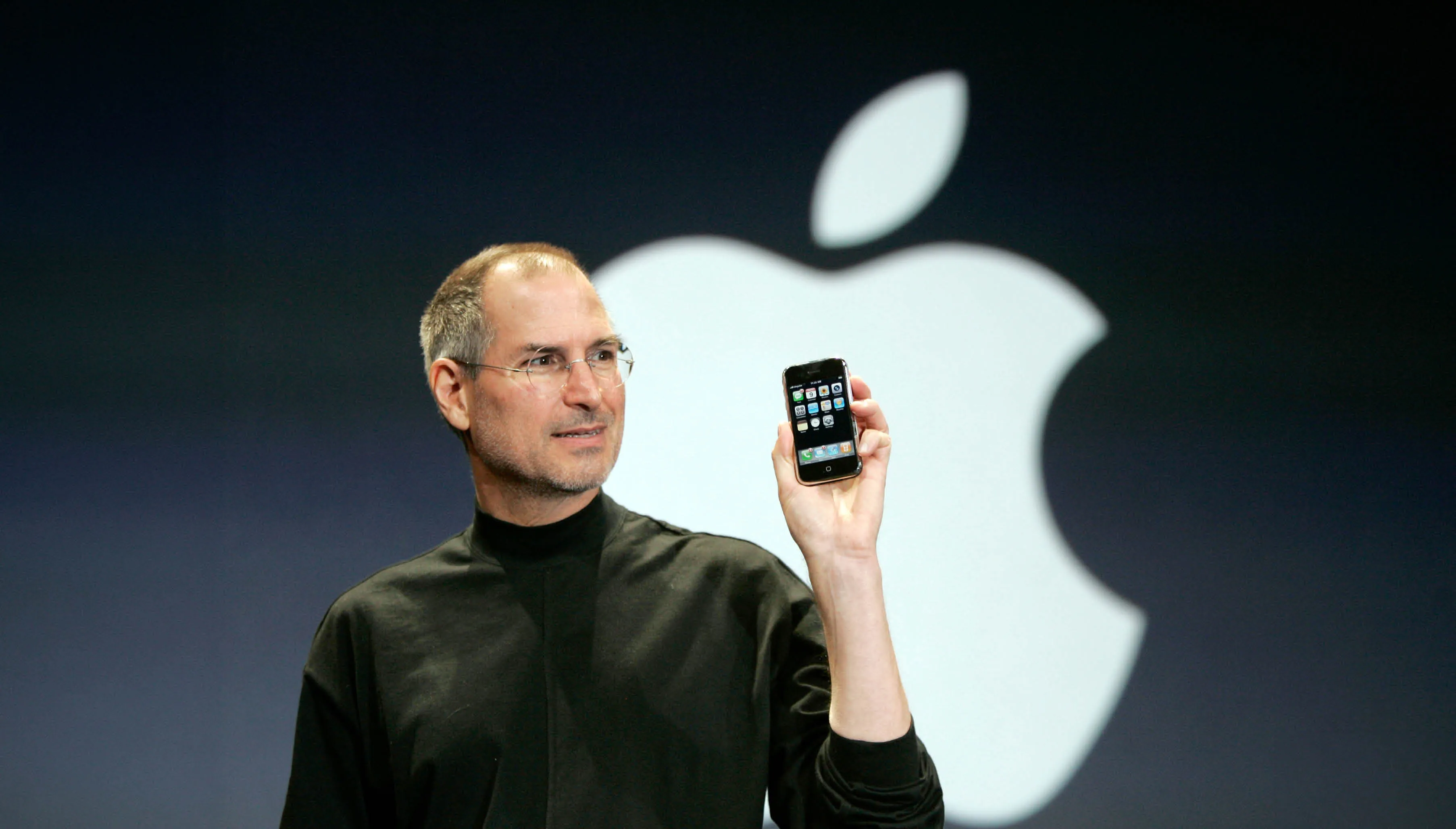
iPhone (2007)
With the first iPhone, Apple did what it does best: it arrived late and changed everything. The multi-touch screen, a tiny 3.5-inches in size, the software keyboard, mobile internet and the strong iPod touch roots collapsed communication, computing and entertainment into a single slab of glass that continues to be the template smartphones are following more than two decades later.
App Store (2008)
Launched just the year after, the App Store unlocked the iPhone’s full potential and assured its place not just in smartphone history but also fundamentally changed how software is distributed globally. “There’s an app for that” made Apple a platform as much for democratised software distribution as it did for sowing the seeds of ecosystem lock in.
iPad (2010)
To many, the iPad felt unnecessary at launch, a “big iPhone” with a questionable, often ridiculed name, but over time and software refinements, the iPad created a new kind of computing altogether, one that was tactile yet casual. In doing so, it re-invented the modern tablet category and found devoted audiences in education, healthcare, creative industries and many of us looking for a lean-back consumption device. The iPad proved that entirely new computing form factors could exist between a phone and a laptop, and that Apple could create (and dominate) them.
Apple Watch (2015)
It began life as a sleek iPhone accessory and evolved into something more meaningful -- a health companion – with Apple as a steward of wellbeing. The runaway success of the first-gen Watch revitalised the hitherto confused smartwatch segment and played a big role in driving smartwatches towards what they are today – quasi medical tools capable of detecting heart irregularities, stress levels, sleep patterns while also tracking fitness across a range of activities. This opened up an entirely new dimension for what Apple products could mean to people's lives.
AirPods (2016)
AirPods are peak Apple: take something fiddly like wireless Bluetooth earphones, remove every ounce of friction and make it feel inevitable and invisible. No wires, no setup, no thought. Contrary to popular opinion, Apple didn’t invent wireless personal audio, but they did make it the default, the ambient - always there when you need it, gone when you don’t. More importantly, they turned wearables into a mass-market habit, not a niche, and quietly built a business that rivals entire companies.
MacBook Air M1 (2020)
Steve Jobs may have pulled the original MacBook Air out of a manila envelope in 2008, but it was the 2020 revamp that truly allowed Apple to realise its full potential: a lighter than air slimline laptop that didn’t forsake performance or battery life. Crucially, the laptop ushered in the Apple Silicon era, allowing Apple to take control of its destiny at the most fundamental level, setting a power and efficiency benchmark that, till this day, the entire PC industry has scrambled to match.