Skoda’s Latest Electric Motorcycle Is Nostalgia, Rewired
The futuristic Slavia B also nods to the original machine’s sporting heritage
Sometimes it’s vinyl records, sometimes it’s film cameras, sometimes it’s men rediscovering the appeal of motorcycles. Only this time 'round they might fancy an electric motorcycle by the Czech automobile manufacturer, Skoda.
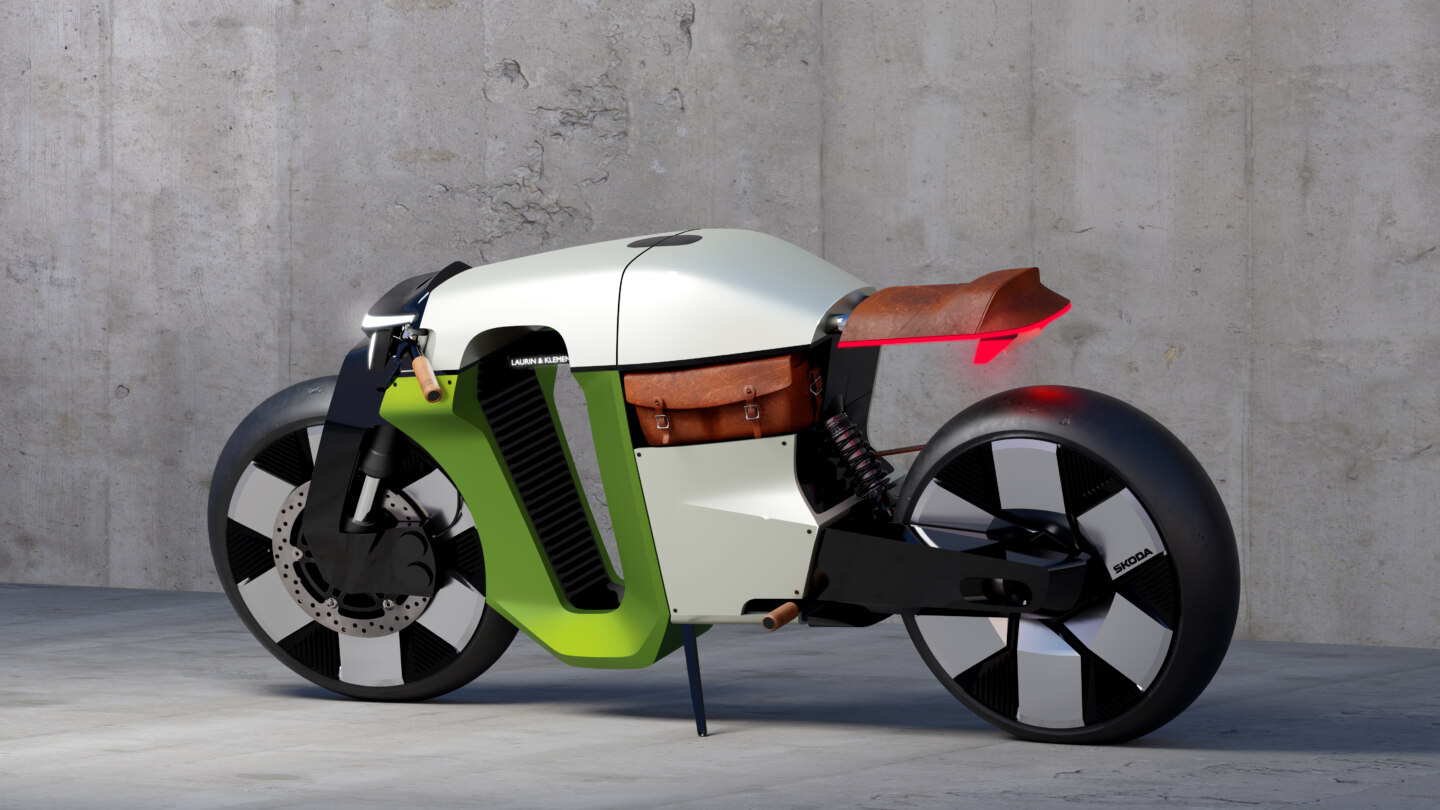
The latest concept drop by the company is the newly unveiled Slavia B concept. It isn’t chasing Ducati, it isn’t threatening Harley-Davidson, and it certainly isn’t trying to win an EV arms race. Instead, it looks inward—back to a time when two wheels were not lifestyle accessories but radical tools of independence.
More than a century after building its first two-wheeled machine, Czech automaker Skoda has looked to its origins to imagine the future of electric mobility. The newly unveiled Slavia B concept is a striking, all-electric motorcycle that reinterprets one of the company’s earliest creations with modern restraint, design purity, and historical reverence.
Designed entirely in-house, the Slavia B marks the first in what Skoda hopes will become a series of tributes to its heritage models. The concept takes its name and inspiration from the original Slavia B, a motorcycle produced at the turn of the 20th century by Laurin & Klement—the bicycle and motorcycle manufacturer that would eventually evolve into today’s Skoda Auto.
While Skoda is now globally recognised for its cars, its story began in 1895 with two wheels, not four. That legacy is central to the Slavia B concept, which does not attempt to overwhelm with performance figures or futuristic theatrics. Instead, it focuses on proportion, minimalism, and storytelling.
The project was led by Romain Bucaille, a designer typically tasked with shaping Skoda’s car exteriors. For him, the motorcycle offered a refreshing creative detour.
“I began with pencil sketches—it had been a while since I’d drawn a motorcycle,” Bucaille said in a statement. “But the great thing about sketching on paper is that it’s instant. No need for a screen, just ideas flowing freely.”
That hand-drawn sensibility is evident in the final form. One of the Slavia B’s most distinctive features is what isn’t there: the engine. In place of the traditional powertrain such as the V-twin commonly associated with classic motorcycles sits a deliberate open space. This visual void becomes the heart of the design, emphasising the bike’s electric nature while reinforcing its minimalist ethos.
The absence is intentional. It recalls the simplicity of early motorcycles while aligning with contemporary electric design language, where mechanical complexity is replaced by architectural clarity. Subtle heritage cues are woven throughout. A built-in leather tool bag references the sporting legacy of the original Slavia B and pays homage to Narcis Podsedníček, the rider who famously competed on a Slavia motorcycle in the gruelling Paris–Berlin race of 1901. These details ground the concept in history without turning it into a retro pastiche.
Bucaille describes the motorcycle as a “futuristic café racer in Modern Solid style.” The café racer reference nods to the stripped-back, speed-focused motorcycles that emerged in the UK during the 1960s machines defined by their lightness, minimal bodywork, and purposeful stance. In the Slavia B, that philosophy is reinterpreted through contemporary materials and electric architecture.
Despite its visual completeness, the Slavia B remains firmly a concept. Skoda has not confirmed whether it will ever reach production, positioning it instead as a design exercise and a statement of intent. Yet even as a one-off, the motorcycle carries symbolic weight.
Laurin & Klement began life as a bicycle manufacturer before producing motorcycles and, eventually, cars. Its first automobiles appeared in 1905, and the brand became part of Skoda in 1925. Today, Laurin & Klement survives as a luxury trim level on models such as the Skoda Superb, a quiet reminder of the company’s pioneering roots.
At the dawn of the 20th century, hundreds of manufacturers competed to define personal mobility. Most disappeared. Laurin & Klement endured—and so did Skoda, now a key member of the Volkswagen Group. The Slavia B concept underscores that continuity. After more than 125 years, the brand is still imagining new ways to move on two wheels.