Favre Leuba’s Patrik Hoffmann On Why A Watch Is Like Your Second Skin
The luxury Swiss watch brand’s chairman on India’s importance in the global market, the true value of vintage watches and what you should look out for when picking out your next timepiece
Years ago, I came across a small watch shop in Delhi’s Nizamuddin area. The shop was attracting many takers among those who loved sourcing vintage Swiss watches. Through word of mouth, I found out more about its location.
The shop owner, a gentle soul who has since been covered extensively, was strict about how much he charged for the refurbished models that he had collected after much toil. Among all the Roamers and Titonis I saw behind a faded glass case, was a beautiful mechanical timepiece from Favre Leuba. Though I was never able to pick one up, the name remained in my watchkeeping subconscious.
Like many Swiss luxury watch brands, Favre Leuba holds a special place—not to mention a recall value—among other watch collectors and enthusiasts too. It also has a unique India connection. In 1865, it became the first Swiss watch brand to enter the Indian market.
Last year, after decades of challenges, ownership changes and reinventions, the brand celebrated a grand revival at the Geneva Watch Days, launching three new collections that are a blend of impeccable timekeeping, vintage feel and modern requirements.
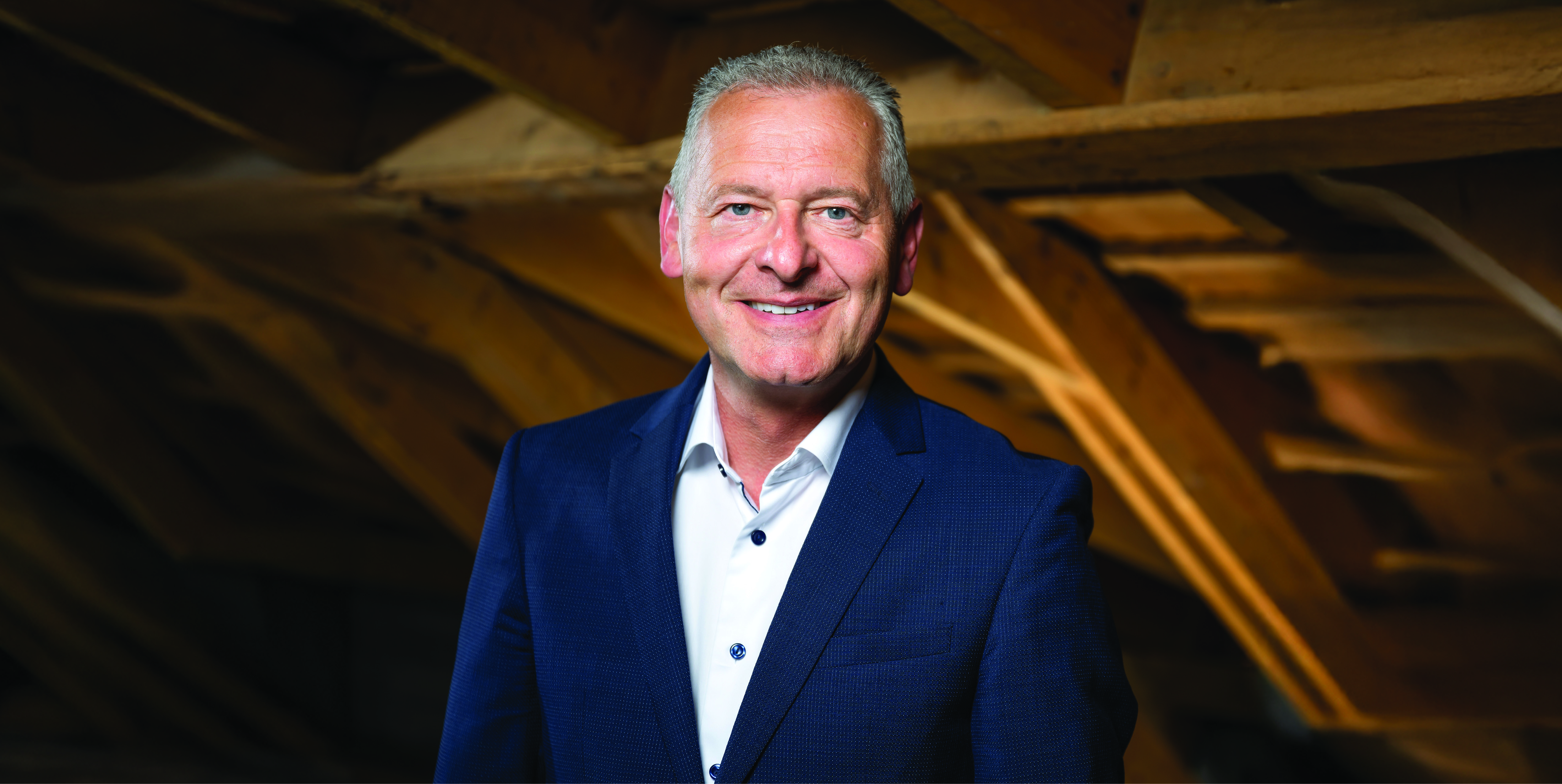
Patrik Hoffmann, chairman of Favre Leuba, says the brand’s revival is now slowly picking up pace in 2025 as it starts delivering timepieces to the customers. “The time is now,” says Hoffmann, who has a three-decade career in the watch industry and is a former CEO of Ulysse Nardin.
In an interview with Esquire during a recent visit to New Delhi, Hoffmann admitted that the watch wearer of today is reading up and consuming a lot of information on watches. They cannot be fooled anymore. They know the value of a timepiece. “I'm a person who has always believed in India,” Hoffmann adds, as we admire some new and vintage timepieces from the brand during our conversation. Edited excerpts:
Esquire India: Where is the brand now in terms of its new direction after the relaunch?
Patrik Hoffmann: We're still at the beginning… I would say the relaunch is happening now, because now we will start to deliver timepieces to the end consumers. Once the consumers see the pieces, can buy them, wear them, and are able to enjoy them, that's the relaunch for me.
ESQ: What will be new with these timepieces?
PH: I think one important thing is wearability—and great value for the buck. The value proposition is outstanding. The wearability part is something that goes a bit with Esquire, you know. Because trends change, but you cannot change certain trends. With what we are launching now, the stars are kind of aligned. Maybe there was also a bit of luck and intuition in it.
We have the right size of watches. There is the whole historic part, the heritage part. And today, the market and the consumer has changed. On one side, the consumer is looking for DNA, heritage, but also great value. I think we can offer all this. They don't want to be fooled anymore - they are well educated.
ESQ: Can you elaborate on what you mean when you say 'wearability'?
PH: When I look back on what was produced in the last 10 years. The timepieces, I'm talking now about Favre Leuba, have been relatively big. They were very instrumental.
But now, we are hitting the nail in terms of size, wearability, thickness, limited number of complications, and the right complications.
ESQ: How do you see the luxury watch market in India and other countries?
PH: Let's put it this way. There is a complete difference between the rest of the world and India. The Swiss watch industry is going through a slump right now globally. But the one big exception is India, which is growing rapidly in terms of the Swiss watch industry.
ESQ: What do you think Swiss watch brands are seeing in India? Because like you said, there's demand.
PH: It's not just the demand. There are a few other things that are aligning. One thing is the educational part. People starting to read more, also through Instagram and social media. It's become a global world. So, the information is out there.
There is also the fact that China has slowed down tremendously. So, the focus from the manufacturers has shifted a bit. The allocation of budgets has also shifted. What's key is that the retail market (in India) has also developed now.
The knowledge and sophistication of the collectors and consumers was always there. But the retail basis was not. Now, this is all falling into place.
ESQ: Are there any other big launches that one should watch out for this year?
PH: We relaunched the brand with three families or three collections. You will see at least one more family, in the second half of this year. You're going to see two very nice launches during Watches & Wonders in Geneva. One of the timepieces is going to be in the price range of around ₹25 lakh. Whatever you have seen so far was in the price range of ₹2.2-4.4 lakh. That's going to be something exciting.
Even though we're going to show that new timepiece in a higher price range, we're going to stay true to that niche or price range. I would call it a credibility piece. You need certain exceptional timepieces, which are for certain customers. It's not going to be for everyone.
ESQ: Do you think vintage watches are still appealing to people in 2025?
PH: They have made a comeback and are very much appealing. There is a trend, if I can call it a trend, to vintage watches. It also has to do with true value. The funny thing is that very young people are appreciating vintage looking timepieces.
When we relaunched the brand, we introduced a few revival pieces and some renaissance pieces. That mix was the right thing to do.
ESQ: There are many customers in India that are showing interest in luxury Swiss watches. Do you think Favre Leuba can connect with more unisex watch wearers?
PH: It's certainly one of our goals. To achieve that takes a bit more time. And that's why you didn't see any ladies' watches in our first wave (of launches). But you're going to see a unique ladies' collection in 2026. We are not going to start with the design of a men's watch and make it into a ladies' watch.
ESQ: What will be the other watch trends that could define the year?
PH: We talked about the vintage look. The other thing is simplicity. The times of producing the most complicated timepieces is over. Of course, it continues to happen because that's how you reinvent yourself. But that is not the main goal anymore
Today, if I talk to my designer, she says the bigger challenge is to make a simple-looking watch, or a watch with only three hands, more attractive. It's difficult to make it look attractive when you have 25 complications and you pack it in a design.
And, of course, the size is coming down. But that also has to do with vintage watches because watches were smaller in the past. It goes a bit hand-in-hand. Watches are also becoming thinner again.
ESQ: What do you think are some of the challenges that Favre Leuba will have to face going forward?
PH: It's going to be scaling. Our first production out is 4,000 pieces. We're going to ramp this up to 8,000 within a year, per year. I don't think the manpower is really going to be the problem, but it's just the capacity as such because it just takes time. Mechanical timepieces take time.
ESQ: Of these 8,000 that you will eventually reach, how many do you see selling in India?
PH: India is going to be a pillar for us for the first couple of years. I hope, and I know, India is going to grow very strong.
I cannot give you any percentages. But the trend is already going in the right direction. For me, that means the global split is a bit balanced because it is not healthy to be too strong in one part of the world.
ESQ: Esquire is a lot about style. We want the reader to have a takeaway in terms of watchkeeping. If someone is buying a luxury watch in 2025, what are the top five things you would want them to watch out for?
PH: My first answer is making sure you're going to buy a timepiece which you're going to wear. This is key. If a customer goes out and buys a timepiece because his friend said that's the piece you need, I think it's wrong. It is such a personal thing, you have to be able to wear it.
When I worked in the watch industry, every time watches came back and they were scratched and beaten up, I liked it. It hurt in a way, but I always liked it because it showed that wearer was enjoying the timepiece and not just keeping it in a safe.
One more thing which I can say with conviction is you have to pay what the value is. If you have to pay something just because of the name or the reputation or the demand, I think that's wrong. You have to get the right return for your money.
It also must be wearable. There are still timepieces out there, which are difficult to wear. It also needs to feel comfortable on your wrist. A watch is like a second skin, because it is a part of you.
ESQ: With wearables and so many other pieces of technology, do you feel the importance of a good watch has gone down in this modern world?
PH: I think it's coming back. We can see it in on social media. It's also coming back because of the sustainability reason. Today's consumer, which are the younger generation, do their homework even when they buy stocks or invest money. For me, a mechanical timepiece is also a very sustainable investment. You are never going to throw a timepiece away. You might not wear it, but you are not going to throw it away.