
- Entertainment
- Style
- Lifestyle
- Food & Drinks
- Tech & Auto
- Culture

AI generated summary, newsroom reviewed
Ask five men what the best luxury watch brand is, and you will get five different answers, usually delivered with unearned confidence. That is rather the point. A watch tends to say something about a man before he says a word himself, whether it is a Rolex catching light across a boardroom table or a quiet Grand Seiko only another obsessive would ever ear. No single brand wins outright. The right one depends on how a man actually lives, works and dresses. Here is a proper map through the ten that matter most this year.
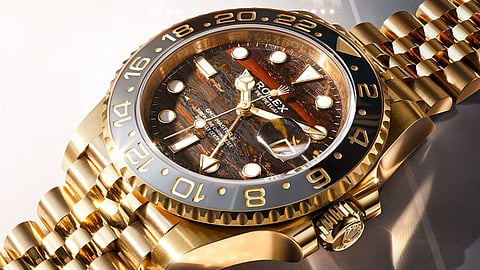
Rolex is known for producing instantly recognisable timepieces across different categories. The Submariner is designed for diving, the GMT-Master for tracking multiple time zones, and the Datejust for everyday wear. Certain steel sports references often have long waiting lists at authorised dealers, while resale prices fluctuate depending on market demand.
Cartier has been a leading name in luxury watchmaking for more than a century. The Santos debuted in 1904, designed for aviator Alberto Santos-Dumont so he could read the time while flying. The Tank followed in 1917, with its rectangular case inspired by the aerial view of a First World War battle tank. Both collections remain among the brand's most recognisable designs.
Omega has a long association with space exploration and professional timekeeping. The Speedmaster earned the nickname "Moonwatch" after NASA certified it for spaceflight in the 1960s, and it accompanied every crewed lunar mission. The Seamaster collection offers a wide range of diving and everyday models across multiple case sizes and movement generations.
Patek Philippe is regarded as one of the world's leading traditional watchmakers. The Calatrava remains one of its best-known dress watch collections, while the Nautilus is among the most sought-after luxury sports watches. For collectors, originality, condition and complete documentation are important factors when purchasing vintage or pre-owned models.
Founded in 1755, Vacheron Constantin is one of the oldest watch manufacturers to have operated continuously. The Overseas collection combines sports-watch styling with interchangeable straps, while the Historiques collection revisits archival designs inspired by the brand's heritage.
Jaeger-LeCoultre is recognised for its in-house movements and technical expertise. The Reverso was introduced in 1931 after British army officers playing polo in India needed a watch with a case that could protect its crystal during matches. The Master Control collection offers classic round-case designs with the brand's signature mechanical craftsmanship.
Grand Seiko is known for meticulous finishing and high-precision movements. Case surfaces are hand-finished using the Zaratsu polishing technique, dial designs often draw inspiration from Japanese landscapes, and Spring Drive technology produces a smooth, gliding seconds hand instead of a traditional ticking motion.
The Royal Oak, designed by Gerald Genta and introduced in 1972, helped define the luxury sports watch category with its integrated bracelet and octagonal bezel. On the secondary market, originality and condition are important because refinishing can alter the sharp lines that distinguish the design.
Hublot is recognised for its contemporary approach to watchmaking, frequently incorporating materials such as ceramic, carbon fibre and titanium into bold case designs. The Big Bang collection remains the brand's signature line and is known for its distinctive styling and modern aesthetic.
Founded by Rolex founder Hans Wilsdorf, Tudor shares historical links with Rolex while maintaining its own identity. The Black Bay collection draws inspiration from vintage dive watches and GMT models, while the Pelagos focuses on lightweight titanium construction and professional diving functionality.