
- Entertainment
- Style
- Lifestyle
- Food & Drinks
- Tech & Auto
- Culture

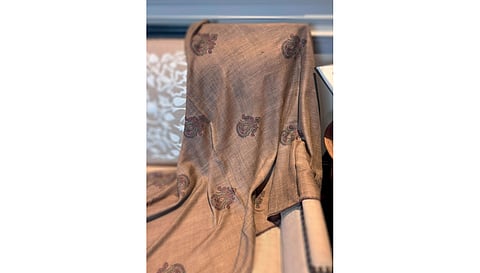
DESIGNER MAYYUR GIROTRA HAS collected many things over a lifetime, spanning villages in Barmer and weavers in Kanchipuram. The one piece that means the most to him, however, wasn’t sourced but inherited. It is his grandmother's shawl, woven from a rare grade of Pashmina. Across its length run Kachnar bootas—small, ancient floral motifs worked entirely in pashmina thread.
“This quality, this yarn, this kind of weaving—it doesn’t happen anymore,” he says of the heirloom that he’s never worn, as it is so fragile and precious.
Collecting was a serious hobby in his Punjabi household in Delhi, and he grew up absorbing words like Gadwal and Kanjivaram, real zari and handloom. He knew what pure Pashmina felt like against his palm before he had the vocabulary to name any of it. “There was no classroom for me. It was literally living and breathing a very refined taste, and that all comes from my family,” says the designer, whose eponymous label was founded in 2009.
Girotra’s work—bridal wear, festive occasion wear, couture and luxury prêt—is rooted entirely in Indian craft: phulkari, patola, ikat, Chanderi silk, bandhani and Mughal miniature embroidery. He understands rarity in a way that goes beyond knowledge. Which is why, of everything he knows to be rare, the shawl undoes him most completely.
His grandmother wore it at home. “She would literally be walking around in it all winter,” he says. After she passed, he recalls: “I used to always joke with my grandmother that I don’t want anything else, but all your shawls are going to be mine.”
Carefully preserved, the shawl is brought into the light only on certain days when the need to be close to it is stronger than the anxiety about damage. “I’m very scared of spoiling it,” he admits. “When I took it out the other day, I realised how delicate it has become. I prefer keeping it preserved.”
A few weeks ago, just before summer arrived and the shawls went away until next winter, his mother wore it once. He watched her move through the room and felt a rush of warmth and familiarity. “It feels like my grandmother is in the house,” he says.
To read more stories from Esquire India's May-June 2026 issue, pick up a copy of the magazine from your nearest newspaper stand or bookstore. Or click here to subscribe to the magazine.