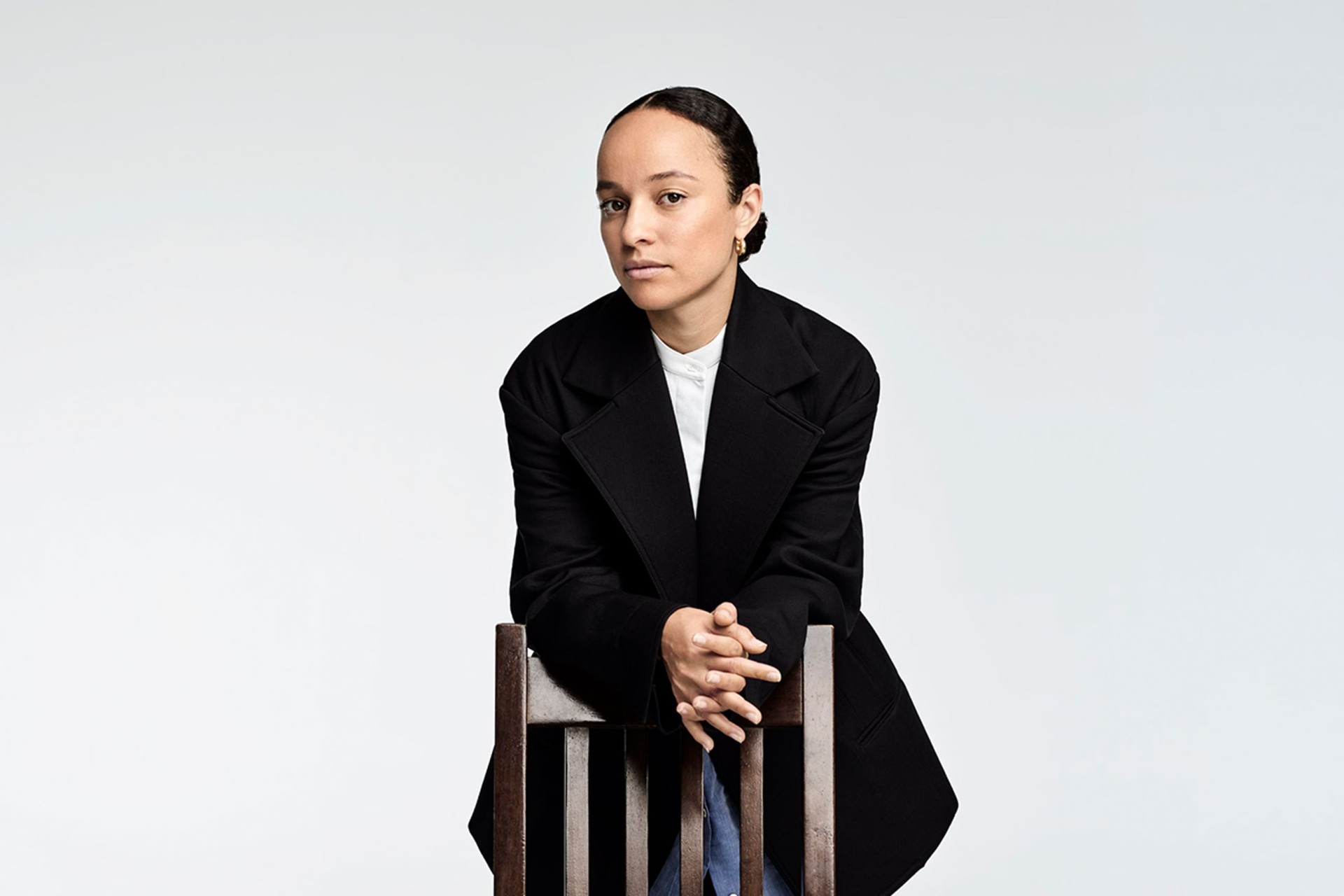
Hermès Has A New Creative Director After 37 Years
The British designer becomes the first Black woman to lead menswear at Hermès, marking a new chapter for the storied French house
It’s official: Hermès — the house that once treated reinvention like a quiet craft — has handed the keys to menswear to Grace Wales Bonner. There were no teaser reels, though. Just a sober press release that, on paper, looks tidy.
In practice, however, it’s a small earthquake. The 35-year-old Brit will take over from Véronique Nichanian, who ran Hermès men’s ready-to-wear for 37 years; Wales Bonner’s first collection for the house is slated for January 2027.
If you want to measure why this matters, start here: Hermès is not Gucci. It doesn’t trade in spectacle or shock. Its mystique is slow—saddlery, stitch-work, familial governance. Which is precisely why the choice of Wales Bonner is so interesting. She’s not an insider who will paste over a lineage with safe updates. She’s a cultural translator — a designer who writes footnotes into shirting and threads history into sneakers — and she arrives with permission to think differently about what refined masculinity can mean.
Wales Bonner’s CV reads like the résumé of the new luxury establishment: Central Saint Martins, an eponymous label launched in 2014, critical prizes, MoMA projects, and a commercial sense sharp enough to turn an Adidas Samba collaboration into a bona fide cultural asset. Her work marries Black diaspora scholarship and literary reference with louche tailoring and street codes — think Baldwin citations folded into a varsity jacket. That mix of brain and beat has made her not just a designer but a cultural operator, and that’s the rub: Hermès has hired a storyteller as much as a cutter.
There’s a historical tally to the appointment too. By most accounts, Wales Bonner becomes the first Black woman to hold such a creative design role at a major European fashion house — a milestone that is both overdue and emblematic of a wider churn at the top tiers of luxury. The industry has, famously, been a rotating door of high drama hires — Demna, Blazy, Anderson — but it has rarely been a space where Black women ascend to these editorial-level posts. Hermès’ move is therefore significant on paper and seismic in practice, because symbols shift markets as surely as product does.
“I am deeply honored to be entrusted with the role of Creative Director of Hermès Men's Ready-to-Wear," Bonner said in a press release. "It is a dream realized to embark on this new chapter, following in a lineage of inspired craftspeople and designers. I wish to express my gratitude to Pierre-Alexis Dumas and Axel Dumas for the opportunity to bring my vision to this magical house."
So what does this mean for Hermès’s menswear?
First: don’t expect instant streetwear-meets-skate-chaos. This is Hermès; it will be measured. The timeline tells you as much — a 2027 debut gives Wales Bonner time to learn the archives, sit with the ateliers, and build something durable rather than viral. But the house has also signalled it wants to widen menswear’s cultural bandwidth. Ready-to-wear and footwear are obvious levers; Wales Bonner’s sneaker credibility and proven ability to turn collaborations into revenue will be useful tools as Hermès courts younger, culturally literate clients without alienating its wealthy collectors.
Second: the real task isn’t to modernise Hermès — it’s to expand the definition of what Hermès can be. That means translating Wales Bonner’s layered research practice (think: literature, music, diasporic histories) into the house’s language of texture, colour and craft. A Hermès varsity jacket in navy croc? Probably not though. The opportunity is to make “quiet luxury” feel less beige and more intellectually capacious.
Finally, this is a generational hand-off. Nichanian’s 37-year run is almost anachronistic in today’s churn; the business model of luxury has shifted. Audiences want provenance, yes, but they also want stories that include them. Wales Bonner brings a vantage point that is at once scholarly and streetwise, and that might be precisely what Hermès needs to remain vital as demographics and tastes evolve.
Hermès didn’t pick Wales Bonner to disrupt for clout. It picked her because her discipline can sit next to Hermès’s craft without undermining it — and because the house seems to understand that survival isn’t about shouting louder; it’s about deepening resonance. When her first collection drops in 2027, expect subtle tectonics: not a demolition of the Hermès man, but a recalibration of his vocabulary. Quiet luxury, under Wales Bonner, could get a new dialect — literate, global, and quietly insurgent. And that, in fashion at least, is a revolution you can wear.