Cartier Is Reinventing Itself This Year
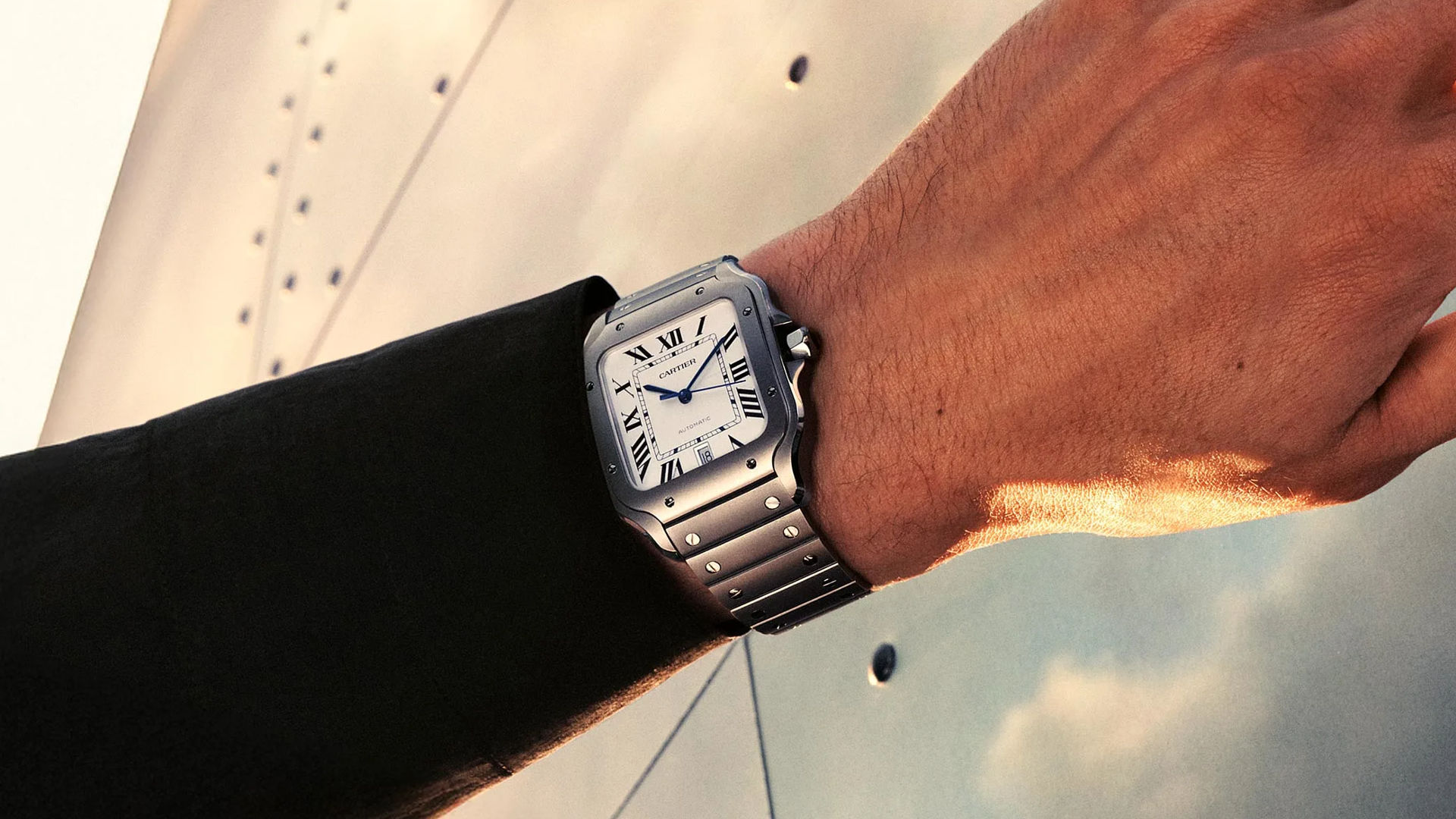
Cartier is redefining its classics with the fluid Love Unlimited and the light Santos Titanium
There’s something almost subversive about a house built on permanence learning to flirt with fluidity. And that’s exactly what Cartier’s been up to lately – The new Love Unlimited and Santos Titanium definitely breathe differently. The screws are still there. The codes are still there. Only now, everything feels… looser.
This isn’t the Cartier of stiff collars and security screws. It’s the Cartier that’s been watching Jacob Elordi lean against a fire escape in a Sofia Coppola haze, pretending New York is still romantic.
Love, Unlocked
The Love bracelet used to be a manifesto. When Aldo Cipullo designed the Love Bracelet in 1969, it was both radical and romantic. I mean it was a bangle that literally locked onto your wrist. A shackle disguised as jewellery. You needed a screwdriver—and commitment—to wear one. In the late ‘60s, that was radical; in 2025, it’s a little overdone.
So Cartier did something very un-Cartier: it let go. The new Love Unlimited bracelet trades rigidity for movement — 200 interlinked gold pieces that shift and breathe with the wrist. The screws remain, but more as punctuation than prison bars. You can even take it off yourself now — imagine that.
Apparently, over a hundred prototypes were developed to achieve that second-skin flexibility. It’s great craftsmanship and the detailing is spectacular.
The campaign is a whole mood. Directed by Sofia Coppola and fronted by Cartier’s new ambassador Jacob Elordi, it looks like a film you half-remember from the early 2000s — all lazy mornings, soft light, and Elordi in a sexy lazy T-shirt. His sister Isabella shot the behind-the-scenes stills, making the whole thing, so that’s a plus.
A Watch That Floats
Then there’s the Santos de Cartier. Originially designed in 1904 for aviator Alberto Santos-Dumont, the Santos is one of watchmaking’s great icons – square, architectural, and unmistakably Cartier.
This year’s version reimagines that form in Grade 5 titanium, a material usually associated with aircrafts and not jewellery ateliers. But maybe the choice is more philosophical – Titanium makes the watch significantly lighter (under 100 grams) and gives it a matter, almost industrial texture. I mean, in all honestly, titanium has been a buzzword this year with even Apple making a move towards titanium. (Have we come into some titanium treasure?)
However, it’s a Santos built for today’s pace – technical and confident. It’s light, matte, and stripped of the usual Cartier sheen. No mirror polish, no fuss, no flash.
The brand has introduced two new Large Model Santos references: a steel version with a black, luminescent dial, and the full-titanium Santos.
The Santos with the steel black dial (Ref. CRWSSA0096) carries a vertically brushed dial core surrounded by sunray-brushed periphery, Roman numerals and hands coated in Super-LumiNova (a first for the Santos line). The case measures 39.8 mm x 47.5mm, with a slim profile of about 9.3 mm, powered by the 1847 MC automatic movement (42h reserve).
The full-titanium model is made of grade 23 titanium. The surfaces are bead-blasted matte, with polished bevels and screws for contrast. The bezel, unusually, is also matte—an almost industrial choice for a brand so associated with sheen. The crown swaps Cartier’s usual blue spinel for black, reinforcing the monochromatic look.
Priced at USD ~11,500 (compared with USD 8,500 for the lumed steel variant), the Santos titanium is slated for availability beginning November.
The Art of Reinvention
What connects these two launches is not just novelty, but a shared willingness to question Cartier’s baseline. A bracelet that used to lock has become fluid and a watch known for polish has become more austere. Is the brand leaning into the tension between heritage and reinvention? We don’t know. But also, should the brand be reinventing the classics?
In luxury circles, reinvention is often risk. But Cartier seems to be pulling it off.
With the bracelet, the screws are still there, sure. But the symbolism has changed. You’re not locking yourself in anymore; you’re opting in — and maybe opting out, when you feel like it.
With the watch, well, what can go wrong with the Santos in titanium?
So, if your morning ever starts with a red box, you’ve maybe unwrapped a question: what do timeless things look like now? And maybe Cartier is looking for that answer.