
- Entertainment
- Style
- Lifestyle
- Food & Drinks
- Tech & Auto
- Culture

AI generated summary, newsroom reviewed
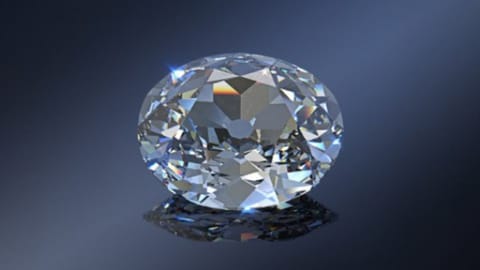
New York City mayor Zohran Mamdani recently is in the news again, this time for urging the British monarch to return the Kohinoor. It’s a big political statement, just as much as the stone itself. But infamous as it is, the Kohinoor and it’s colonial past is only a part of a much larger historical story: this one begins in the riverbeds and mines of Golconda, a region that once supplied the world with the most iconic diamonds ever known.
Before diamonds became known by their mines in South Africa or Australia, Golconda was the centre of the diamond universe. Now depleted, the Golconda mines produced stones that were so large and clear that even today, diamonds from newer deposits rarely achieve the same optical purity. And this purity came from the stones being largely free of nitrogen. This is a rare composition for any diamond, placing them in the coveted Type IIa category (for context, less than two percent of natural diamonds worldwide can be classified as Type IIa).
Of course, the most famous of the Golconda diamonds is the Kohinoor, now housed among the British Crown Jewels in the Tower of London. But it’s only one among a constellation of Golconda diamonds that have travelled through empires, wars, and private collections, each carrying its own mythology. The Hope Diamond, for example, now displayed at the National Museum of Natural History, is as famous for its supposed curse as it is known for its deep blue hue. Marilyn Monroe wore the Moon Of Baroda in the music video of Diamonds Are a Girl's Best Friend. The Regent Diamond passed through the hands of Napoleon Bonaparte and French monarchs before settling in the Louvre, while the Daria-i-Noor remains one of the largest known pink diamonds, preserved within Iran’s royal treasury.
Other stones have taken on an almost mythical status precisely because of their disappearance. The Florentine Diamond, once part of the Austrian Crown Jewels, has been lost to history, while the Nizam Diamond vanished from Hyderabad in the chaos following 1948. The Great Mogul Diamond, believed by some to have been recut into the Orlov, sits today in the Kremlin Armoury. Others have been auctioned off and sit in private collections, lost to the world.
Sure, many of these diamonds, like the Moon of Baroda, were gifted by Indian rulers to the European statemen, rulers and jewellers. Others, like the Hope Diamond, were obtained by traders and jewellers and made their way to the crown jewels of some of the most famous rulers in history.
Golconda diamonds were not just traded, in fact; they were narrated, coveted, stolen, and reinterpreted across continents. They appear in travelogues, royal inventories, and even folklore, with tales like Sindbad’s valley of diamonds drawing directly from the mystique surrounding India’s gem-rich landscapes.
But that’s not all there is to the story. In many cases, these diamonds stay closed of to India and Indians themselves. Of course, we know about the Kohinoor, but the Patiala Necklace, for example, made headlines last year because Cartier declined to loan out the necklace to Diljit Dosanjh for the Met Gala.
To speak of Golconda diamonds, then, is to speak of a time when India was an active source of the global luxury economy. In revisiting them today, through debates like Mamdani’s, the discourse is about giving India its due place in the luxury world, especially in an era where appropriation of Indian art and handicrafts is all too common.