- Entertainment
- Style
- Lifestyle
- Food & Drinks
- Tech & Auto
- Culture

AI generated summary, newsroom reviewed
There’s a common cliche in movies where the protagonist’s best friend or mentor is revealed to be the main villain. An age-old trope, it still pays off emotionally: the person who is supposed to protect you, and ensure your well-being, becomes the one plotting against you all along. This weekend, we saw that play out in real life in the fashion world with Prada’s Kolhapuri-inspired sandals.
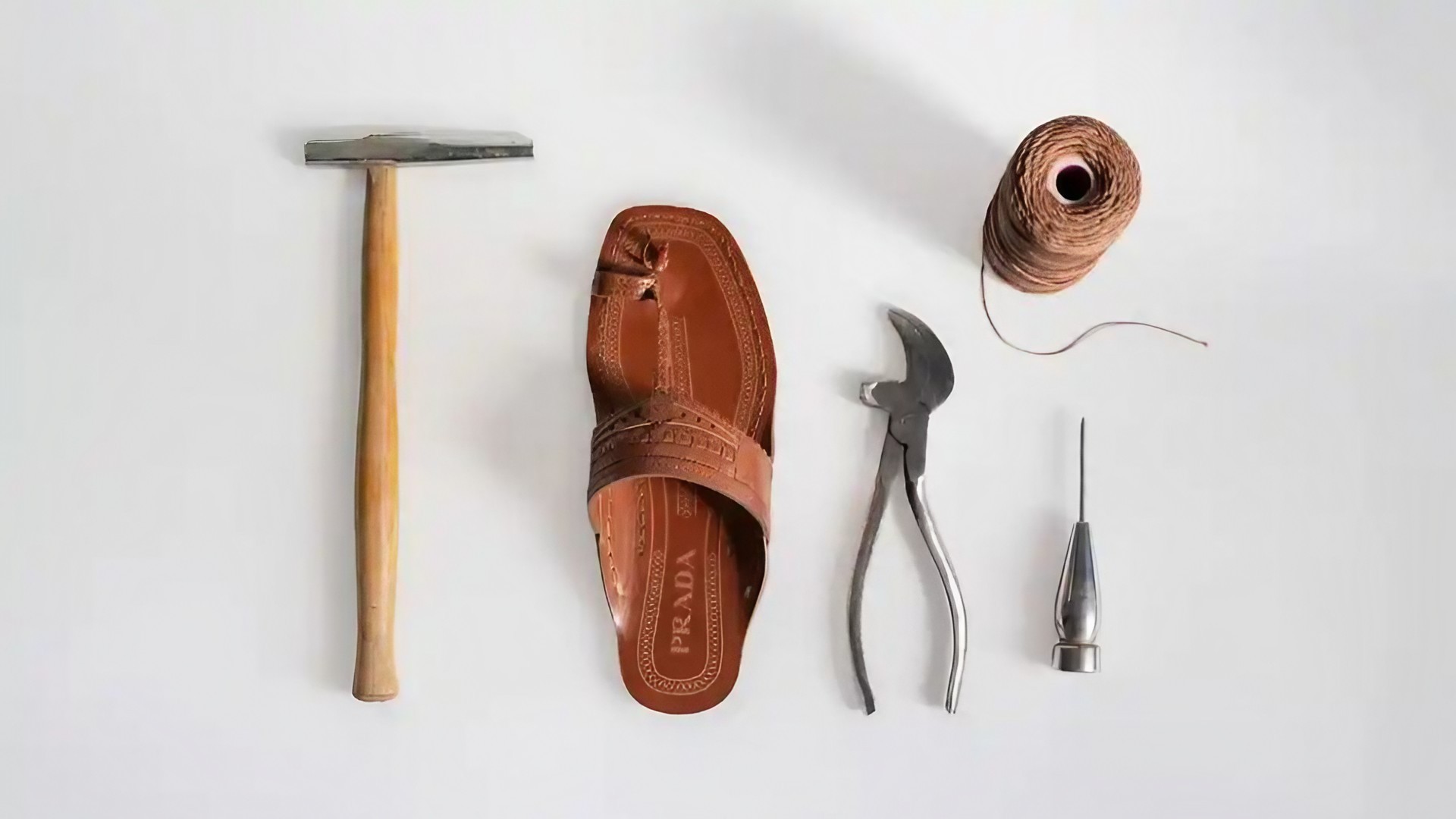
To give you a quick refresher, Prada sent a pair of T-strap, toe-loop leather sandals down its Spring/Summer 2026 runway in June 2025. The house called them “leather sandals.” In India, Kolhapuri wearers and artisan communities that have been making the chappals for generations recognised the form instantly and called it out. Uproar followed on the internet, along with petitions, legal murmurs, and even political involvement.
Prada, to its credit, took action. In December 2025, at the Italy-India Business Forum in Mumbai, the brand signed a Memorandum of Understanding with LIDCOM and LIDKAR, the state-backed bodies responsible for safeguarding the Kolhapuri craft. This time, they promised, the sandals would be produced in Maharashtra and Karnataka, by artisans from the very regions tied to the craft’s identity. A training programme, tied to the collection’s proceeds, would upskill around 180 craftspeople over three years. Perfect, right?
Except that the shoes that Prada promised are now out for sale. Yes, they’re made with the artisans involvement. Yes, India is credited this time (three full posts on Instagram, can you imagine?). And yet, Prada isn’t calling them Kolhapuris. Or, more like, it can’t call them Kolhapuris.
Why? Because, by simply being a fashion bigwig and using their ecosystem to distribute and design the shoes (albeit with the artisans involved this time), they made Kolhapuris that the law would not recognise as such.
Kolhapuri chappals have held a Geographical Indication tag since 2018 under India’s Geographical Indications of Goods (Registration and Protection) Act, 1999. The GI does one very specific thing: it ties a product’s name to its place of origin and a defined production framework. Only footwear made within eight designated districts across Maharashtra and Karnataka, using recognised methods, can be sold as “Kolhapuri chappals.” The law also prohibits misleading associations and the casual use of terms like “style” or “kind” alongside a protected GI.
Prada’s new collection seems to meet those conditions. The sandals are being handcrafted in those very districts. They involve registered artisans under the government-backed bodies. They draw directly from the traditional design language of the Kolhapuri. So why stop at “inspired by”?
Because a GI is not just about where something is made. It’s also about how it is positioned, controlled, and brought to market.
Despite the manufacturing compliance, Prada’s supply chain does not sit within the GI framework. The design decisions, the Prada branding, and the final commercial identity are all part of Prada’s ecosystem, thus disqualifying it from the tag of a legal Kolhapuri chappal. Even if the physical act of making happens within the right geography, the product itself is not recognised as originating from that system in a legal sense. The GI is meant to protect these deeply local arts and crafts from being stolen or appropriated (we all saw how that went), but it doesn’t have provisions to take that craft global, especially through a third party brand.
Sure, people are back to criticising Prada over the legal loophole, but the shoes that the house made this time aren’t made for Indians in the first place. It’s Indian culture repackaged, without the dirt and grime that the country is often stereotyped with. Sanitised perfectly for a culturally concerned Western audience. Each pair retails for over Rs. 80,000, with limited stock because, hey, limited editions are almost always more valuable.
Prada could have just dropped the axe on the shoes once and for all. But now it gains a compelling story: heritage craftsmanship, a responsible course correction, and a product that carries the aura of authenticity without the regulatory limitations of a GI label. They can claim that they did their bit, and you can’t really hold them wrong if they do. Besides, the craft itself gains attention from the controversy, which could translate into broader demand over time.
The artisans, meanwhile, gain participation and skill development, but there is little public clarity on how much of the retail price flows back to them as income. Given usual industry practices, they’ll probably only be paid a tad bit more than what they are usually paid for a pair in India, if not the same.
And yet none of this is illegal. None of it even qualifies as outright exploitation in the current legal system. But it does expose the limits of that system. A GI tag can protect a name within a defined geography; it cannot guarantee equitable value distribution once a global luxury brand enters the equation.
Which brings the conversation back to the name itself.
Prada cannot call its sandals Kolhapuris because the law draws a hard line around what that term represents. But by operating just outside that line, it can still buy everything the name stands for: history, cultural weight, and now even the pride of having the original Kolhapuri artists make their priceless Kolhapuris without having to call them so.