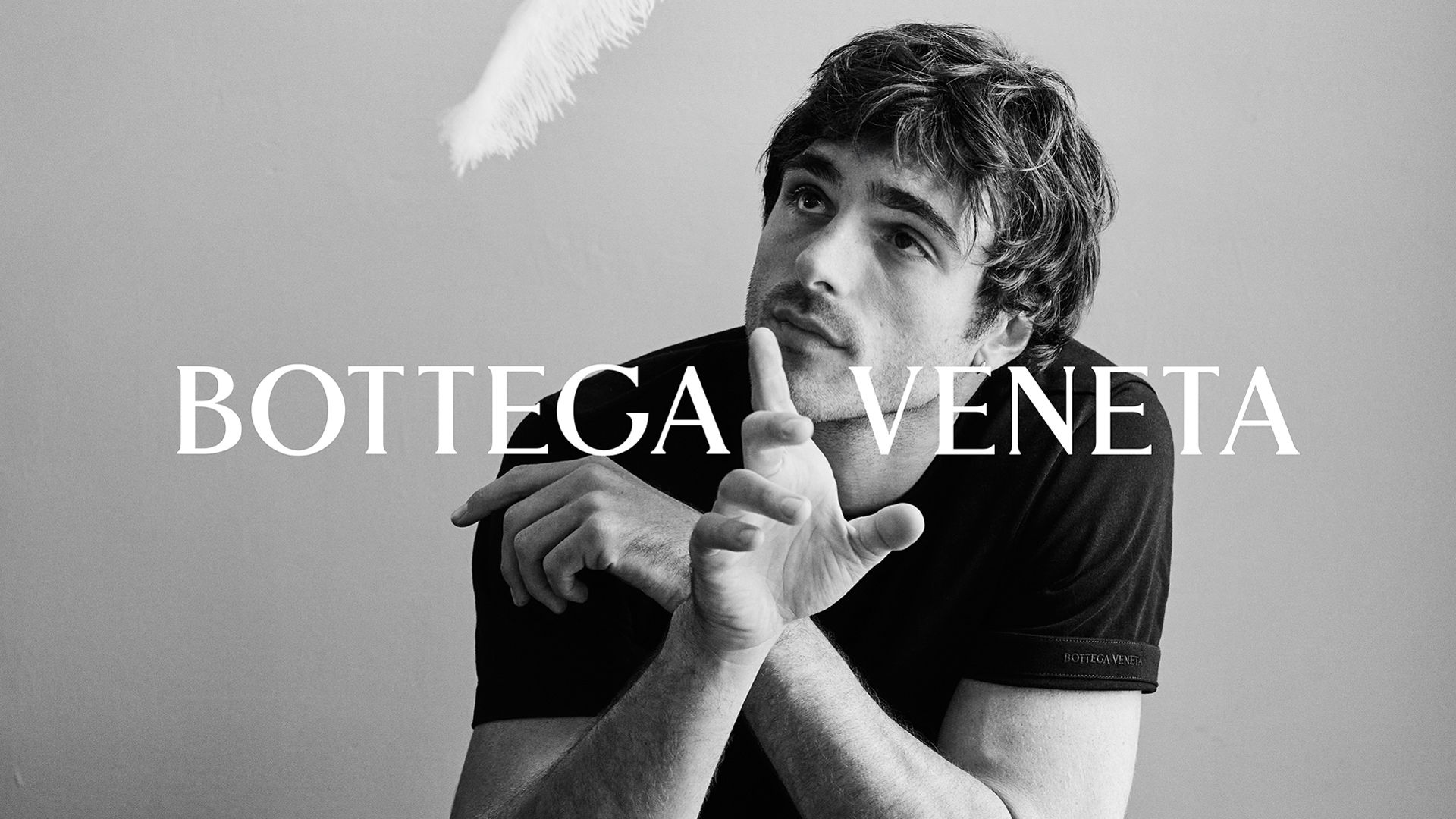
Jacob Elordi Stars In Bottega Veneta's New Dreamlike Campaign
In What Are Dreams, Bottega Veneta and Jacob Elordi blur the line between cinema and surrealism
Somewhere between airport sightings and Milan fashion weeks, Jacob Elordi became the new face of Bottega Veneta. You’re seen him: tall, brooding, clutching a Bottega Veneta Andiamo like it’s an extension of him.
By the time Bottega made it official in May 2024, naming him brand ambassador, the relationship already felt inevitable. Elordi had been living in Bottega – the way most of us live in our worn-out denims. Every paparazzi shot this year – the coffee runs, the airport fits, always looks like someone walking out of an Antonioni film – looked like unpaid movie stills. And voila, the brand that made Intrecciato iconic had found its new poster boy.
But Bottega isn’t just cashing in on another celebrity moment. Under creative director Louise Trotter, the brand has been quietly rewriting its playbook — slower, moodier, more cinematic. Instead, there’s narrative: the romance of motion, texture, and solitute.
Which brings us to What Are Dreams, Bottega’s latest campaign — and perhaps its most introspective yet.
The Dream Sequence
In Bottega Veneta’s new campaign What Are Dreams, Elordi is like a mirage — a figure suspended somewhere between sleep and cinema. Shot in black and white by the cult photographer Duane Michals, the brand sells you a feeling.
Michals, 92, is the godfather of the surreal image — a man who’s spent six decades turning photography into poetry. His pictures are part dream diary, part ghost story. And now, inside his New York home, he’s captured Elordi the way only he could: multiplied, blurred, both looking and being looked at. There’s a feather, a mirror, a puppet — props that shouldn’t mean much, but in Michals’ hands, they throb with something primal.
In the short film, Elordi recites Michals’ 2001 poem of the same name:
“Dreams are the midnight movies of the mind / where the sphinx recites his riddles to the blind…”
The words hang in the air like smoke, his voice measured and melancholy. Michals’ surrealist props — part poetry, part provocation.
Elordi lingers. He stares into distorted reflections, his face doubled, inverted, disappearing. Michals directs from behind the camera, like a philosopher, letting the images bleed between the real and the imagined. The result is eerie, sensual, and hypnotic — a meditation on beauty, desire, and the way men learn to perform both.
The Perfect Convergence
The collaboration marks a generational collision: Michals’ surrealist eye meeting Elordi’s golden-age movie-star sensuality. One made art out of ambiguity; the other has built a career out of it. There’s something almost decadent about watching them work together — a shared fascination with duality, restraint, and the unspoken.
For Bottega, this isn’t an aesthetic choice; it’s a strategy. As other luxury houses drown in maximalist branding and viral hooks, Bottega leans into the anti-sell. It’s building myth through texture and mood. By working with Michals — who last shot for Bottega back in 1985 — Trotter nods to the house’s past while reimagining it for a generation raised on hyperclarity.
And then there’s Elordi. He represents that sweet spot where classic cinema and contemporary culture meet — part Brando, part Tumblr nostalgia. Fresh off Priscilla and now stepping into Guillermo del Toro’s Frankenstein, he brings a kind of bruised elegance that feels tailor-made for Bottega’s world.
Bottega’s previous Going Places campaign — a cinematic road trip shot by Alec Soth across Utah and Nevada — already hinted at this shift: travel as emotion, not consumption. What Are Dreams takes that idea deeper, turning it inward. It’s not about where you go, but what lives in your head when you get there.
The Brand Angle
Luxury has always been about control. But perhaps what Bottega and Elordi are doing here is letting go — leaning into the blur. The result is hypnotic. It’s not fashion trying to be art; it is art, disguised as a dream sequence.
Elordi once joked that he’s “just a guy who likes big bags.” Maybe. But in What Are Dreams, he’s something else entirely — the vessel through which Bottega reminds us that the most powerful images aren’t the ones that explain, but the ones that haunt.