In Conversation With: Diptyque CEO Laurence Semichon
In a world of images, scent remains intimate, invisible and profoundly personal. At least, that’s what Laurence Semichon, CEO of Diptyque believes
LATELY, WHILE WANDERING THROUGH MY FAVOURITE corners of the internet (specifically Pinterest and Fragrantica), I’ve been drawn to the elusive clean-girl aesthetic. All linen shirts, old books, lemons in alabaster bowls and tote bags from niche bookstores—a world that smells faintly of fresh grass, paper, and palo santo burning quietly in the background.
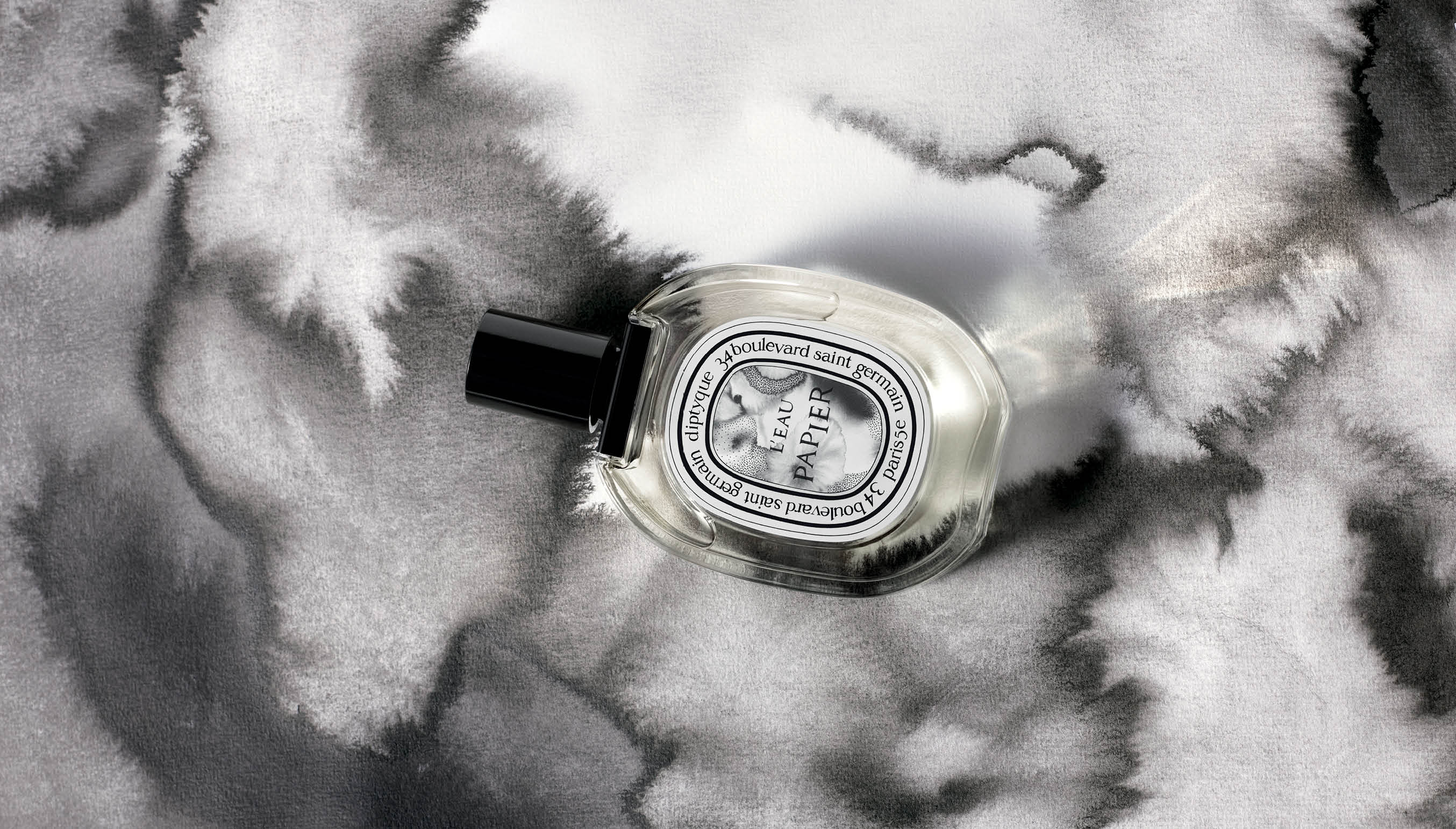
And in almost every post, without fail, there it is: Diptyque. Specifically, L’Eau Papier. An evocation of ink on skin. The scent of the Pinterest dream itself.
This evolution—the personification, almost canonisation, of scent—is something Laurence Semichon, CEO of Diptyque, finds both inspiring and deeply familiar.
“This shift in culture—where scent is used to define mood, memory, even character—is a natural continuation of what Diptyque has always believed: that fragrance is a narrative. And today more than ever, we see our creations—whether a perfume, a candle, or a room diffuser—as ways to live with poetry every day,” she says, adding that the maison’s perfumers work closely with illustrators to craft the story that surrounds each creation on its iconic oval label.
The house’s scents are known to be deeply intimate and nongendered—and they are deliberately kept so. In doing so, their perfumes become part of the wearer’s personal myth. It evokes memory while becoming one itself. Take Do Son, for example. The tuberose and jasmine-forward scent was born from a memory of Yves Coueslant, one of the maison’s founders, who spent his childhood summers in Ha Long Bay, Vietnam. Or the popular Philosykos, which carries the scent of a Grecian memory—frolicking in a grove of wild fig trees, like initiates of the Eleusinian Mysteries.
For Semichon, perfumes are not just designed to impress but to evoke, to accompany, to resonate with their wearer’s view of the world. In conversation with us, she spoke about how cultural ideas of masculinity affect the fragrances we choose, the shift to fragrance wardrobes, and why scent may be one of the last intimate luxuries.
What changes have you seen in the way men engage with home fragrance and grooming rituals?
Men are embracing fragrance as a multi-sensory experience—one that accompanies both the body and the space around it. At Diptyque, we see many men adopting daily rituals: lighting a candle while working, applying a body mist after a shower, using a home diffuser in their living space. They are drawn not only to the scent but to the stories, the craftsmanship, the sensations behind it.
In a culture where everything is documented and shared, is fragrance one of the last intimate luxuries?
Absolutely. Fragrance is invisible, intangible, and deeply personal. It doesn’t clamour for attention or seek to be captured on a screen. While much of today’s culture is centred around the visible and the immediate, perfume resists that pull. It lingers on the skin, in the home, in the air—evoking not what is seen, but what is felt. A candle flickering in a room, a diffuser breathing out notes of fig tree or amber—these are sensory gestures meant not to be shown but lived. Our founders—an artist, a theatre designer, and an interior architect—saw fragrance as a form of expression, an art of living.
That philosophy remains at the heart of the maison. Fragrance is intimate precisely because it doesn’t need an audience. It’s a private language, spoken only to those close enough to listen. In that sense, it may well be one of the last true luxuries—not just because of what it costs, but because of what it offers: an unfiltered, unshared moment with oneself.
How do cultural ideas of masculinity affect the kind of fragrances men choose? Do you think those ideas are shifting?
Fragrance, historically, has been deeply gendered—yet scent itself has no gender. At Diptyque, this has been our philosophy from the beginning. None of our creations are ‘for men’ or ‘for women’. They are olfactory landscapes, and everyone is invited to walk through them. Our earliest clients—whether in Paris or abroad—were already mixing and layering, choosing scents based on instinct rather than identity. Today, that freedom has become more widespread, and we see men increasingly drawn to notes like rose, iris, tuberose, or fig alongside woods, leather, or spice.
Diptyque’s Summer Fruit Garden collection celebrates art and fragrance. In a visual culture, how important is packaging and illustration to storytelling?
Visual imagination is part of our DNA. Our founders were illustrators and set designers before they were perfumers. Since 1961, each product has told a story not only through scent, but through the drawing, the font, the label, the paper. This spirit lives on in everything we do. Each collaboration is carefully chosen, like our recent Summer collection imagined with artist Marie-Victoire de Bascher, who brought to life a fantastical orchard of fruits and flowers in vivid, surreal tones. This attention to imagery allows us to connect not only through scent but through story.
Tam Dao is said to be Shah Rukh Khan’s favourite. What makes this scent so magnetic?
To know that Tam Dao has found such an iconic admirer is deeply meaningful to us. This fragrance has always held a special place in our collection. It was born from the personal memories of one of our founders, Yves Coueslant, who spent part of his childhood in Vietnam. He was deeply moved by the sacred forests of sandalwood—by their serenity, their sacredness. Tam Dao pays homage to that emotional landscape. Centred around Mysore sandalwood—one of perfumery’s noblest and most spiritual ingredients—it is warm, dry, comforting, and quietly powerful.
For men in hot, humid climates like India, what scent families or ingredients do you recommend?
In tropical and humid climates, clarity and lightness are essential—but without sacrificing depth. We recommend fresh citrus notes (bergamot, orange blossom, mandarin), green facets (ivy, fig leaf ), and airy florals like neroli or cyclamen. Spices and woods can also perform beautifully when used in a transparent, radiant structure. Fragrances such as Eau des Sens, which fuses bitter orange, angelica root, and patchouli offer both freshness and complexity. Philosykos, with its green fig leaves and creamy woods, is a perfect companion to hot weather. And Eau Mohéli, built around ylangylang and pink pepper, captures that tropical luminosity.
To read more stories from Esquire India's November 2025 issue, pick up a copy of the magazine from your nearest newspaper stand or bookstore. Or click here to subscribe to the magazine.