At AMIRI, Counterculture Is Hot. So Are Nonchalant Men In Florals
After all, they're too busy making pop-culture history to care for your judgement
As Esquire India made its way into the Carreau du Temple in Paris for the AMIRI showcase on 22nd Jan, the first thing to catch our eyes, of course, was the sprawling library backdrop and cozy armchairs that made up the set. Sure, being a nerd is the hottest thing in fashion right now, but it’s not like Mike Amiri to give up his signature L.A. cool for the sake of trends.
Which is why, for the Fall-winter 2026 co-ed collection, the creative director chose the middle path and turned his focus to the peak of West Coast erudition: the counterculture movement of the ‘60s and the ‘70s. For the unversed, the counterculture movement in America was a way of breaking away from traditional narratives of what art and literature should be. It ran hand-in-hand with the anti-establishment hippie movement, explored aspects of society that were too crude for, say, “respectable academia” to pick up, and held the government answerable for its actions (read, the Vietnam war, Civil Rights era norms, and so on). Anyway, enough of the history lesson.
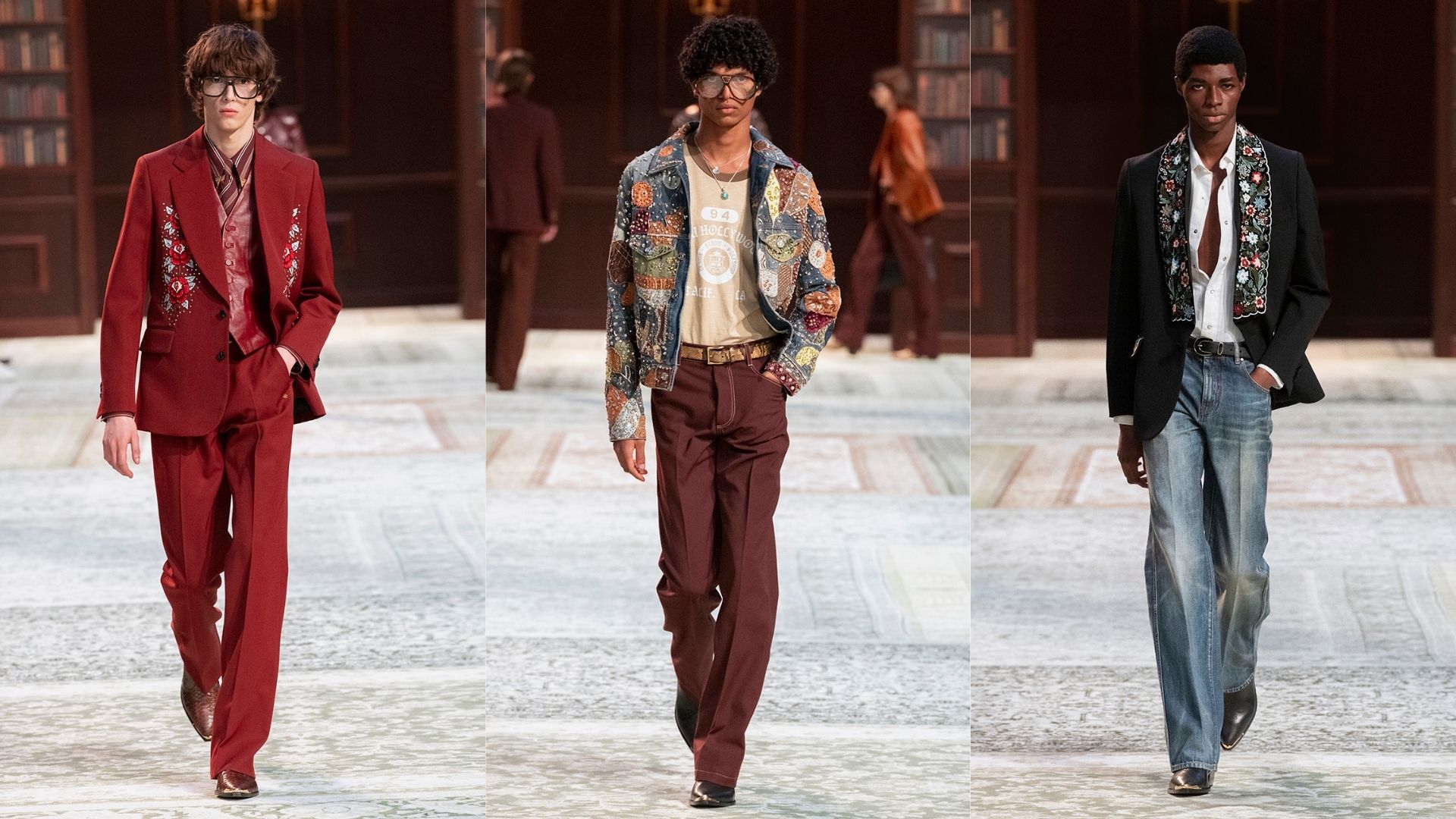
This set, in particular, was an homage to Laurel Canyon, which housed the crème de la crème of cinema, art and music in LA’s Golden Age. Models walked down in pointed patterned boots brightly hued in shades of gold and red, wearing western style suits with shiny embellishments reminiscent of the 70s musicians’ touring costumes. “I love the idea of artists wearing tailoring in an informal way,” enthused Amiri, “a blazer over a Henley, boots instead of dress shoes."
Informal nonchalance dripped down every look in the show. Denim was dressed up to fit for evening wear, while leather and velvet jackets made their way into office wear. Boyfriend suits were taken by girlfriends, and design elements most commonly seen in womenswear made their way into men’s fashion (menswear, in general, seems very excited with the idea of florals this fashion week). The AMIRI man questions culture, makes his own art and wears rich burgundy jackets and carries a clutch to sign the grand deal with the big studios of yore. He’s too cool to care about what you think of him.
Cherry red, oranges and sage, minty greens were spread generously across the show, as black, for a while, took the backseat, lending the spotlight to the embroidery. Thick framed glasses were all the rage, and elaborately designed ties show up, too, bringing a touch of personalisation to what would otherwise be a basic suited look.
Yet, for a menswear tradition that often frowns on colours and flowers as too feminine, the collection manages to be extremely nostalgic to the eras it harks back to, while being structured enough for its menswear looks to be just as masculine. It’s opulent, self-indulgent, and very personalised in a way you would imagine a creative to wear even today, but not so much that it falls into theatre costume territory.
“Clothes that feel like an extension of who you are. That balance is the sweet spot for Amiri,” ruminated the designer on his collection, “something that can exist on stage but also walk right off into real life. It shouldn’t feel like a costume or performance.”