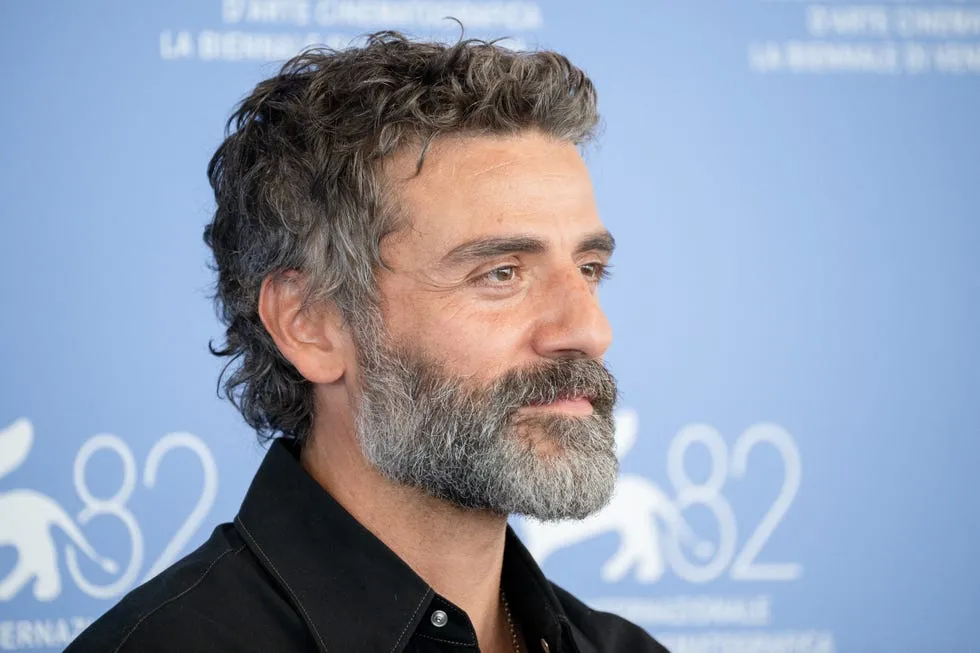
The Mullet Is Back To Being A Respectable Hairstyle
From Jacob Elordi to Connor Storrie, the mullet has found new authority.
During the pandemic, the mullet came crawling back through bathroom mirrors and kitchen scissors. With salons shut and boredom setting in, people started experimenting. If the front looked uneven, it could pass as texture. If the back grew too long, it only made the silhouette more pronounced. And the logic was simple enough: if you messed up the front, nobody would see it on Zoom anyway. Why not experiment a little?
Fast forward to now, and the haircut that once symbolised lockdown boredom has been rehabilitated. You see it on red carpets, press tours, and magazine covers. Ishaan Kishan has been rocking the cut since ages. Paul Mescal wore his cropped and controlled at the Golden Globes this year (we're calling that look a baby mullet now). When Oscar Isaac appeared with a collar-grazing version during the Frankenstein press tour, it confirmed the haircut had crossed fully into the mainstream of respectable leading-man territory. Jacob Elordi and Harry Styles followed, with the latter keeping it like a natural extension of his already fluid grooming choices.
But this isn’t the same haircut your punk-fanatic uncle had in 1987. The modern mullet has been cleaned up and rebranded itself.
What actually counts as a mullet today?
Despite its many variations, the mullet still follows one essential principle: the back remains the longest point. That length at the neckline creates the silhouette, regardless of what happens elsewhere. Beyond that, almost everything is negotiable.
Some mullets are barely perceptible, with minimal difference between the front and back. Others incorporate heavy layering to create volume and separation. There are versions that borrow from shags, versions that taper into fades, and versions that sit somewhere in between. The modern mullet isn’t a single haircut. It’s a framework for a whole set of different cuts. There are faded mullets, soft mullets, cropped mullets, baby mullets... The list goes on. The common denominator is shape; the back is always doing more than the front.
This flexibility explains why figures across industries have embraced it at different moments. In earlier decades, athletes like André Agassi and musicians like Rod Stewart made the mullet synonymous with excess and spectacle. Today, actors like Pedro Pascal and Glen Powell wear versions that feel controlled and deliberate, aligning the haircut with professionalism rather than defiance.
How To Get The Look Right
If you want one, bring reference photos. Even pinterest collections work. They allow your barber to understand exactly how subtle or pronounced you want the contrast to be. After all, words like “short” and “long” mean different things to different barbers.
If you prefer to describe it, focus on proportions. Specify how tight you want the sides and how much length you’re comfortable keeping at the back. These two points determine the overall effect of the look. Everything else flows from here. Shorter sides create sharper definition, while longer sides soften the transition and make the haircut feel more safe.
Equally important is choosing the right barber. Mullets depend on layering, weight distribution, and balance. A barber accustomed only to uniform, conservative cuts may remove too much structure, flattening the shape entirely. Someone experienced with textured, scissor-heavy styles will understand how to preserve movement while maintaining control.
But should you cut it yourself? See, the pandemic proved that people can cut their own mullets, but it didn’t prove they should continue doing so. Mullets rely on controlled imbalance. Achieving that balance requires an understanding of how hair falls naturally and how layers interact with each other. Removing too much weight from one area can distort the silhouette, leaving it uneven in ways that are difficult to correct quickly.
How To Style It Properly
Part of the mullet’s renewed appeal lies in its relative ease. It doesn’t demand constant maintenance, but it does benefit from basic care.
Because the back is longer, conditioning becomes essential. Longer sections are more vulnerable to dryness and damage, which can make the haircut look unkempt rather than purposeful. Regular conditioning preserves softness and movement.
Styling itself should remain minimal. Lightweight products that enhance natural texture tend to work best. The goal isn’t to immobilise the hair but to guide it. Movement is what gives the mullet its character. Overworking it defeats that purpose.