The Return Of The Dire Wolf
Just because we can, should we?
It’s 1993. You’re sitting in the movie theatre and watching John Hammond use ancient dino DNA, spliced with that of modern-day frogs, to bring back the creatures that hadn’t walked the Earth in 65 million years. It was visionary, yes. It was also famously catastrophic.
Now, swap the Isla Nebular for a high-tech facility in Texas. It’s 2025. Replace Hammond with Ben Lamm, CEO of Colossal Biosciences—a biotech firm valued at $10 million—and the dinosaurs with dire wolves. The premise is strikingly familiar: use ancient DNA, stitch it together with some contemporary genetics, and there you have it: extinction as just a technical hiccup.
Earlier this week, Colossal announced the birth of three puppies—Romulus, Remus, and Khaleesi—created from dire wolf DNA that’s been dormant for over 16,000 years. They used CRISPR, they used cloning, they used dogs as surrogates. And just like that, the most metal headline of 2025 was born: “Dire Wolves Have Been Resurrected.”
They howl differently. Their skulls are broader. Their gait is heavier. And yes, they’re also beautiful. But let’s slow the applause for a moment. Because while the pups are adorable (I mean, so were the Brachiosaurus), we’ve seen this film. We know how it ends. And in the spirit of that iconic Ian Malcolm line: “Your scientists were so preoccupied with whether they could, they didn’t stop to think if they should”.
You May Also Like: Hidden Safari Stays To Check Into This Summer
So, somewhere we have to ask ourselves: Did we just bring something back to life—or did we just create a really cool dog? And is it really worth it?
How They Built a Wolf from Scratch
Resurrecting an Ice Age apex predator isn’t as simple as defrosting some DNA. DNA erodes. Time erodes. It’s not a miracle, it’s meticulous science.
The dire wolf—Canis dirus—went extinct around 10,000 years ago, and despite leaving behind some beautifully preserved bones, its genetic blueprint is fragmented at best. What Colossal had were fragments—genetic breadcrumbs left behind in fossilised remains. So they did what most tech disruptors do: they filled in the blanks.
Using CRISPR gene editing, they engineered embryos with chunks of dire wolf DNA spliced into a modern canine genome. These embryos were then implanted into domestic dogs, who carried the pregnancies to term. The result of that are puppies that are genetically part-wolf, part-dog, and part-Pleistocene fantasy.
Technically, it’s impressive, but biologically speaking, what you get may not be what you think you’re getting.
Is It Even a Dire Wolf?
Here’s where the branding and the biology part ways.
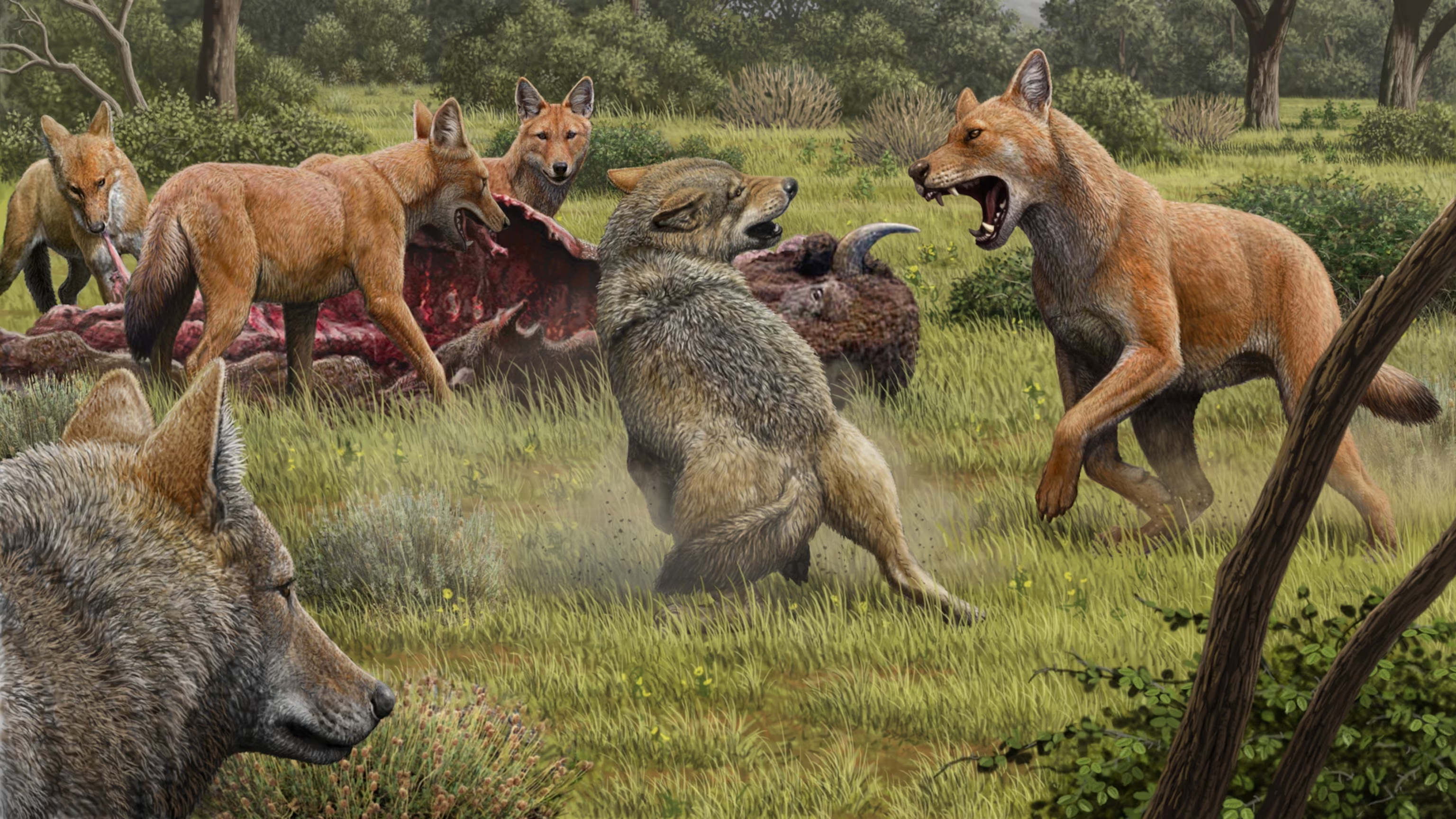
The dire wolf (Canis dirus) was not just a big dog with attitude. It was an apex predator of Ice Age North America, roaming the continent alongside mammoths and giant ground sloths. Its body was built for brutal efficiency: massive teeth, crushing jaws, pack instincts tuned for megafauna takedowns. It lived in an ecosystem that no longer exists.
These pups aren’t clones. They’re not purebred dire wolves. They’re genetic approximations—lab-grown interpretations based on available data and educated guesswork. The puppies carry some of the dire wolf’s traits—stronger jaws, different vocalisations—but their genome isn’t a 1:1 match.
So why call them dire wolves at all? Part branding, part aspiration. Colossal’s mission is de-extinction—bringing back species lost to time—but what they’ve really achieved is a hybrid that resembles a dire wolf in select ways. It’s impressive, but it’s not resurrection. It’s reinvention.
You May Also Like: The Best Destinations for Adventure Travel
Maybe It’s Time to Let the Sleeping Dogs Lie
The problem isn’t the science—it’s the priorities.
While Colossal builds Frankenstein pups in glass enclosures, real-world biodiversity is collapsing. We’re losing species we know how to save. Orangutans, rhinos, pangolins, bees—the list is long and growing. And extinction isn’t something that happens in the distance anymore. It’s right here. Right now. Accelerated by climate change, deforestation, and unchecked greed.
So why funnel billions into bringing back a predator we can’t rewild, can’t reintroduce, and can’t truly understand? The short answer: because it’s sexy. De-extinction makes headlines. It offers the illusion of control in a world that feels increasingly unmanageable. It’s Jurassic Park with better branding—and fewer consequences, or so we think.
You May Also Like: 5 Incredible Routes to Try For Your Long Weekend Getaway Plans
So yes, the dire wolf is back—sort of. It’s big, it’s fluffy, it’s Insta-famous.
Romulus, Remus, and Khaleesi might be marvels of science—but they’re also warnings. That if we’re not careful, we’ll keep looking backwards until there’s nothing left to save ahead.