The World Is Not Your Moodboard
As cities from Tokyo to Ladakh grapple with the fallout of mass tourism, what we’re really seeing is the erasure of everyday life — and a growing global pushback
In 2024, a street in Fujikawaguchiko, Japan, became globally famous for the wrong reason. Not because of Mount Fuji’s snow-capped grandeur (that was always there, even before we showed up) — but because of a massive black screen locals were forced to erect to block the view. The problem? Tourists. Or more precisely, influencers and tour groups clogging the roads, trespassing on property, and turning a convenience store parking lot into a makeshift photoshoot set.
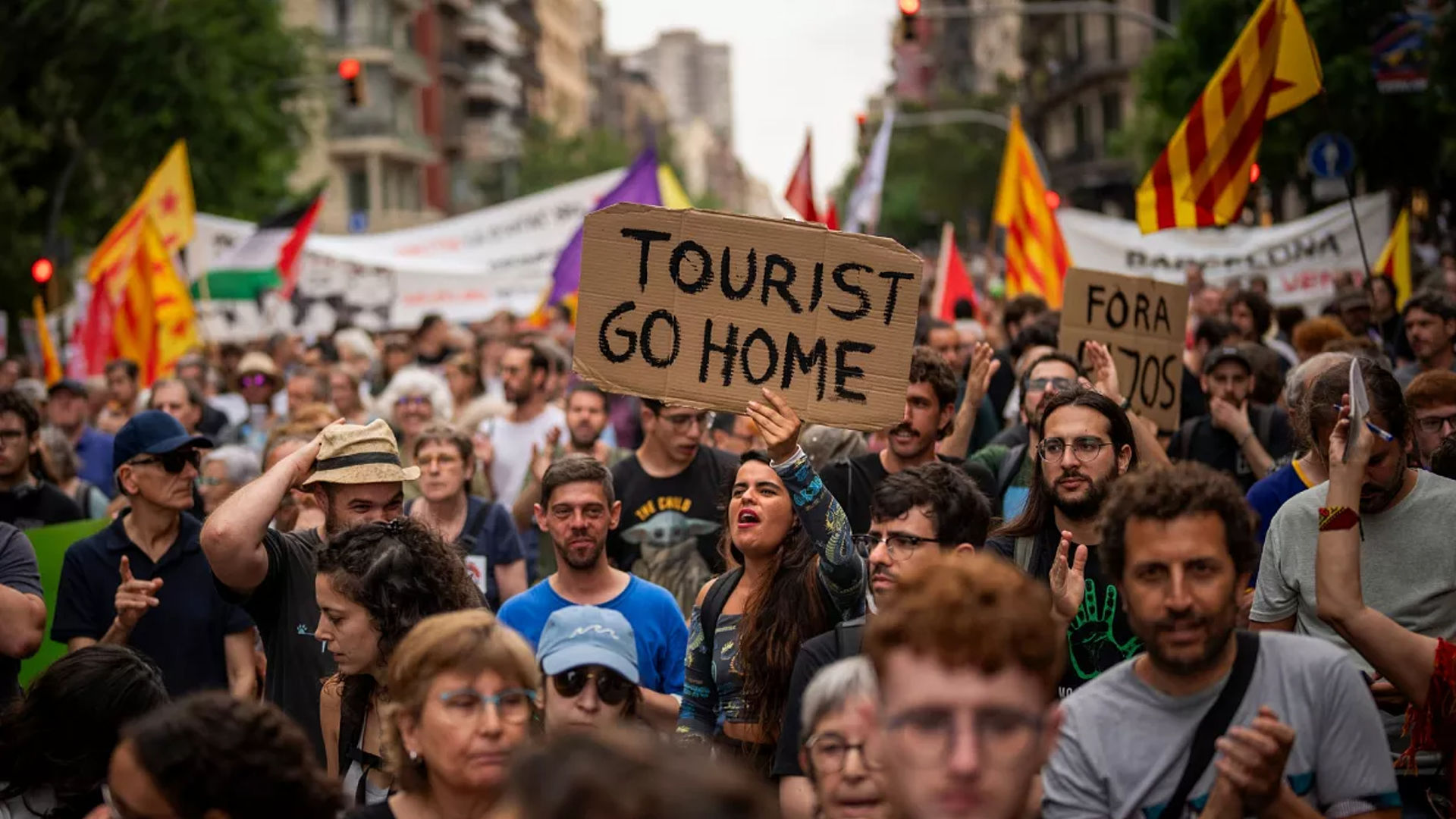
What happened in that quiet Japanese town is not an anomaly. It’s the new normal. From Notting Hill residents painting their pastel homes black to Venice taxing day-trippers, a global backlash is underway. But underneath the headlines about water guns in Barcelona or Louvre staff walkouts is a more unsettling question: What happens when everyday life is constantly disrupted by people who think they’re just “passing through”?
The Myth of Harmless Travel
Tourism has long marketed itself as a benign force. A cultural exchange. An economic boost. A celebration of curiosity. And at a macro level, all of that can be true. Tourism contributes over 10% to global GDP. It keeps small businesses afloat, funds heritage conservation, and generates millions of jobs. For countries like Thailand or Morocco — or closer home, Goa and Himachal — it’s a lifeline.
But that’s the industry narrative. What’s missing from the picture is how the “tourist economy” quietly alters the DNA of a place — not just environmentally, but socially, economically, and architecturally. When demand surges, the first things to go are often the most essential: affordable housing, functioning public transport, local businesses. They’re replaced with boutique homestays, cocktail bars with QR codes, and “authentic” experiences designed for people who’ll never return.
It’s not that visitors are unwelcome — it’s that the scale and behaviour have become unsustainable. Not because of one individual tourist, but because the system is rigged to prioritise their presence over the people who actually live there.
Overtourism Is an Economic Restructuring
Take the Louvre. It shut down because its staff — overworked, understaffed, and battling a crumbling infrastructure — said they couldn’t cope. But that strike wasn’t just about crowd control; it was a protest against a model where institutions are measured by footfall, not function.
Or look at Goa. Over a crore tourists visited in 2024 — but the number of international visitors is down, replaced by short-term domestic rushes that strain local services and overwhelm fragile ecosystems. The money flows in, yes. But where it lands is uneven. The cost of renting in Anjuna or Morjim has skyrocketed, while public waste systems remain neglected. Meanwhile, in Ladakh, tourism’s boom after 3 Idiots turned Pangong Lake into a destination so crowded it now requires waste regulation policies just to keep up.
These aren’t just stories of crowds or queues. They’re stories of displacement — of how cities and towns are reprogrammed to serve outsiders at the expense of insiders.
The End of the Neighbourhood
The most unsettling aspect of overtourism is its subtle erasure of local life. The Airbnb-ification of city centres hollow out communities. Stores stop selling bread and start selling souvenirs. Rent control laws are side-stepped. Homes become content studios. Every house with good light becomes a potential “set.” In places like Notting Hill or Amsterdam’s Jordaan, residents now strategise how to avoid tourists outside their own doors. Some have literally moved.
And this isn’t just a European crisis. In Indian metros like Jaipur or Varanasi, tourism’s visual economy has changed what heritage even looks like — what gets preserved, what gets cleaned, and what gets commodified. It’s not preservation, it’s curation — often with the tourist’s gaze in mind.
The result? Neighbourhoods are no longer built for the people who live in them. They’re redesigned for the people who pass through.
Rethinking What It Means to Visit
The uncomfortable truth is this: tourism, as it currently operates, doesn’t just take up physical space — it colonises cultural space. It decides what’s worthy of notice and what isn’t. It tells communities what parts of themselves are valuable. It creates economies around performance, not participation.
That’s why the protests are getting louder. From Seoul to Santorini, from Lisbon to Leh, cities are no longer interested in being curated for your feed. They’re asking a more radical question: what if we made our cities liveable again — even if it meant making them a little less “visitor-friendly”?
So… Now What?
Maybe it’s time to stop romanticising “being a local” and start respecting the people who actually are. Maybe travel isn’t always about “doing it for the plot”—maybe the plot has already been written, and you’re not the main character. Maybe we all need to calm down, step back, and remember that not every street corner is a shoot location. Some are just streets. Some doors are just doors. And sometimes the most respectful thing you can do on holiday… is nothing at all.
Because at the end of the day, if the world really is your moodboard, you have to ask: what’s the mood we’re leaving behind? Exhausted. Angry. Ungrateful. Aesthetic, sure—but absolutely over it.