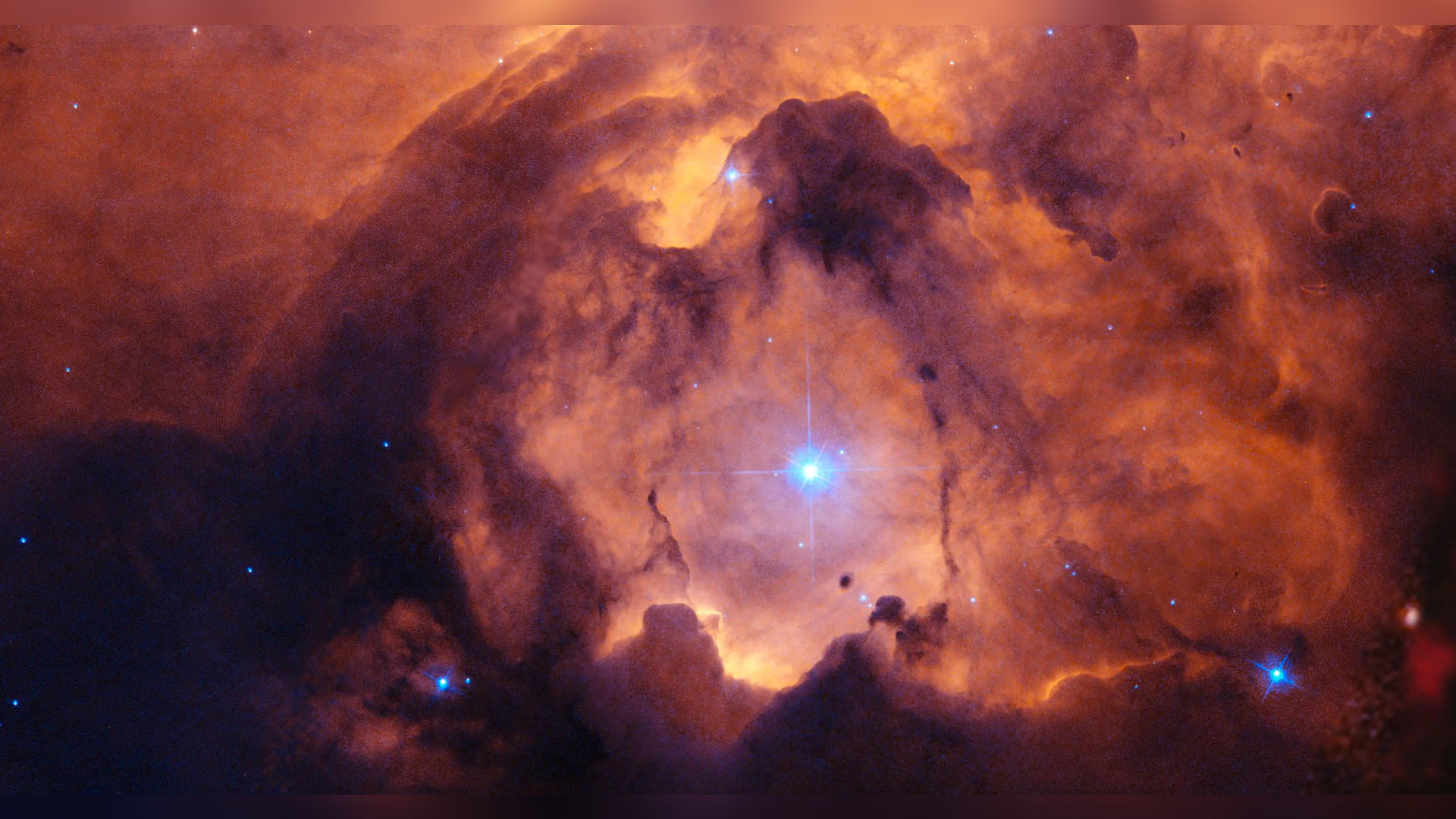
NASA Just Gave Us A Photo Of A Star Cluster
The Webb Telescope just snapped a star cluster being born
Every now and then, space reminds us of its sheer power. And to prove that case, NASA’s James Webb Space Telescope just aimed its million-mile stare at a patch of sky and came back with a photo of star birth, raw and radiant, 5,500 light-years away.
It’s not fantasy. It’s not CGI. But a star cluster being born in real time, and it’s fabulous.
What you’re looking at is a young star cluster, Pismis 24, blazing inside the Lobster Nebula in the constellation Scorpius. Think of it as a cosmic maternity ward, except the newborns here are hotter, heavier, and far more dramatic than anything our own Sun could dream of being.
Cosmic Chaos
Front and centre is Pismis 24-1 — once thought to be the single most massive star in the galaxy. Turns out, it’s actually at least two stars, each more than 60 times the mass of our Sun. They’re bright, brutal, and busy blasting radiation so intense it sculpts the very clouds around them. Entire mountains of gas and dust, some five light-years tall, are being carved into sharp ridges and spires by these stellar tantrums. Out of that chaos? More stars. Cosmic destruction doubling as creation.
“Captured in infrared light by Webb’s NIRCam (Near-Infrared Camera), this image reveals thousands of jewel-like stars of varying sizes and colors. The largest and most brilliant ones with the six-point diffraction spikes are the most massive stars in the cluster. Hundreds to thousands of smaller members of the cluster appear as white, yellow, and red, depending on their stellar type and the amount of dust enshrouding them,” NASA said in a statement.
Webb’s Near-Infrared Camera slices through the haze and shows the whole scene like never before. Thousands of stars glitter across the image — the brightest ones spiked like diamond studs, the smaller ones glowing white, yellow, and red depending on their dust coats. And behind them all are tens of thousands more stars from the Milky Way, photobombing the frame.
The Universe, in HD
The color map reads like a designer’s palette – Cyan is superheated hydrogen. Orange is dust — literal smoke from the fires of creation. Deep red is cooler, denser hydrogen, the raw stuff of tomorrow’s stars. Black marks the densest gas, so thick not even Webb’s eyes can pierce it. Put together, it looks less like science and more like a universe-sized mood board.
What makes this cluster special is its proximity. At 5,500 light-years away, it’s practically next door in cosmic terms. That makes Pismis 24 one of the best labs astronomers have for studying how massive stars form, live, and eventually explode. But you don’t need to be an astrophysicist to get what you’re seeing.
NASA’s latest drop isn’t just a pretty picture, but literal proof that the cosmos doesn’t need effects. The Lobster Nebula is out there right now, glowing, birthing, burning. And thanks to Webb, we get to watch the drama unfold in high definition — a reminder that space isn’t just vast, it’s fabulous.