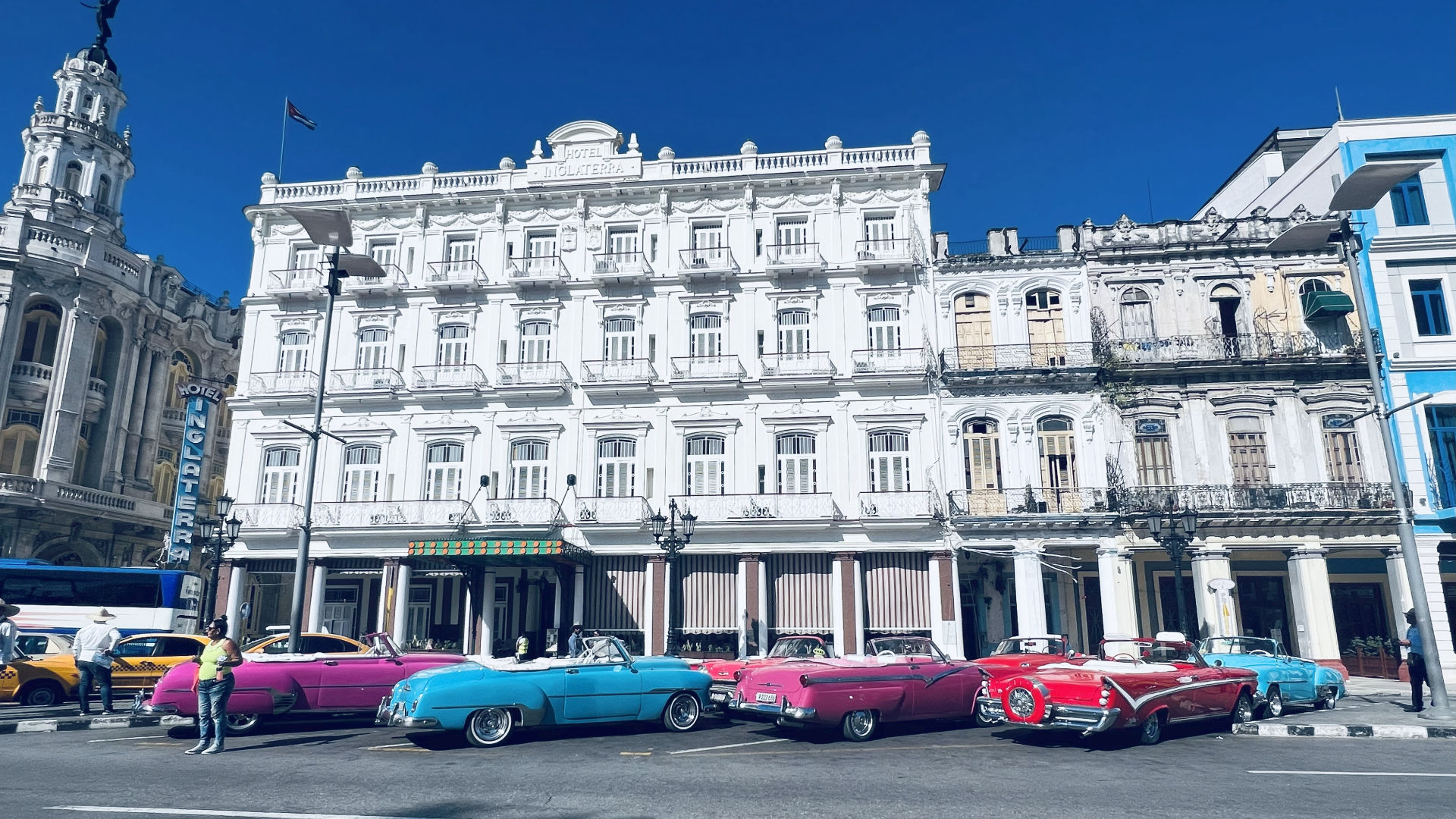
My Journey Through Cuba: Where Time Stands Still
From Havana’s broken baggage belt to Trinidad’s pastel plazas, Cuba reminds you that the pause is the point
Cuba isn’t just a destination. It’s a time capsule—one that unapologetically clings to the 1960s while the rest of the world scrolls through life in 5G. Here, patience isn’t optional; it’s initiation. And every delay, every detour, pays you back in stories you’ll replay long after you’ve left.
This is a country where a tour guide earns more than an engineer. Where improvisation beats credentials, and survival itself feels like performance art. Absurd? Perhaps. Remarkable? Absolutely.
Havana: Where Time Refuses To Move
I landed in Havana braced for chaos. Immigration was quick, but the baggage belt wasn’t working. Instead of panic, staff casually hurled suitcases onto the belt one by one while passengers ticked off their names and collected their bags. It was equal parts inefficient and charming. In Cuba, who knew that even breakdowns arrive with composure.
The airport Wi-Fi didn’t work either. A stranger lent me her phone to call my driver. Luis waited patiently outside, as though delays were part of the itinerary. On the way to my hostel, Lionel, a local contact, checked in to make sure I was safe. Already, the lesson was clear: when systems fail, people step in here.
My first room in Havana was tiny, windowless, and hilariously missing a bathroom door. “You booked the cheap one,” the staff shrugged. Irritating? Yes. But by the next day—after a few polite protests—they upgraded me to a junior suite with a balcony and loft. Lesson two: in Cuba, patience is currency.
The next morning, I joined Daniella and Natalia, a Portuguese–Venezuelan couple, for a Viñales tour. We drove through rolling greens and sky blues, stopping at a tobacco farm where I lit a cigar and chased it with a piña colada. Later, we floated through a silent cave, and by evening, found ourselves standing before the world’s largest mural, grinning like old friends.
Trinidad: Freedom in the Slow Lane
The drive to Trinidad played out like a black-and-white film: an elderly driver, a car running on fumes, and no internet to bail us out. At three different stations we found no fuel. Eventually, our driver siphoned petrol from a container in the trunk. I sat, anxious and awed in equal measure.
At one stop, I tried to buy chips and coffee. They only accepted Cuban cards. No tap-to-pay, no quick fix. Just “no.” Outside the window, the countryside blurred into poetry: we drove past the towns of Manicaragua, Villa Clara, and Limones. Flowering trees splashed the landscape in colours I’d never seen. The drive was messy, frustrating, unforgettable. That’s Cuba’s secret.
Trinidad itself is frozen in pastels: cobblestones, faded plazas, art spilling out of doorways. At Iberostar, Wi-Fi worked, the staff smiled, and a chef whipped up a vegetarian dish just for me. Small gestures feel outsized in Cuba. I bought paintings, lingered in galleries, wandered at my own pace.
But the best decision was skipping a tour and heading for the beach. At the Sea Breeze bar, I sipped rum, danced in the waves, and met a Brazilian stranger who made the sunset even brighter. At one point, tipsy and laughing, I lost an AirPod to the ocean. I even tried searching for it, as if the sea would give it back. Dinner was predictably chaotic, wrong orders, a final pizza compromise, but by then, nothing could dull the glow of the day.
Here, everything takes longer. Nothing works quite as you expect. But maybe that’s the beauty. Cuba teaches you to live inside the pause, to notice the small victories: a working Wi-Fi signal, a stranger translating for you, a dance by the ocean at sunset.
It’s frustrating. It’s enchanting. Sometimes both in the same breath.
Cuba may be stuck in the 1960s, but that’s what makes it timeless. It forces you to surrender, to let the inconveniences become part of the story. And when you do, you realize every struggle was worth it.
Here, everything takes longer. Nothing works quite as you expect. But maybe that’s the beauty. Cuba forces you to live inside the pause, to celebrate the small victories: a Wi-Fi signal that actually works, a stranger who translates for you, a dance in the waves at sunset.
It’s frustrating. It’s enchanting. Sometimes both in the same breath. Cuba may be stuck in the 1960s, but that’s what makes it timeless. The imperfections are the memories.
The Itinerary (For the Faint of Heart)
Days 1 and 2: Havana
Getting there is deceptively simple: a short one-hour-fifteen-minute hop from Miami–Fort Lauderdale drops you straight into Havana’s organised chaos. Spend your first couple of days in the capital, checking into either a casa particular—a private homestay that lets you live like a local—or a boutique bolthole in Old Havana. The city is best explored on foot, wandering through Plaza Vieja and Plaza de la Catedral, before hopping into a cycle rickshaw or a vintage Chevy to soak in the “1960s freeze-frame.” In the evenings, chase rooftop cocktails at El del Frente or dinner at La Guarida, and then finish with mojitos at Hemingway’s old haunt, La Bodeguita del Medio. When the sun goes down, there’s nowhere like the Malecón—where salsa spills into the salty air—and no better nightcap than a few hours at Fábrica de Arte Cubano (FAC), the city’s eclectic warehouse-turned-art hub.
Day 3: Havana to Trinidad (via road)
From Havana, brace yourself for the long but hypnotic drive south to Trinidad. It takes five to six hours, with zigzagging roads and small towns—Villa Clara, Manicaragua—offering raw snapshots of Cuban life along the way. Keep snacks, water, and cash handy, because foreign cards are more a myth than a method of payment. Brace yourself: the 5–6 hour drive is beautiful and unpredictable.
Days 4 and 5: Trinidad
Once in Trinidad, check into Iberostar Heritage or a family-run colonial inn, and give yourself over to its cobblestone rhythm: pastel-hued plazas, art galleries spilling onto the street, and the sense that time really did stop here. A visit to the Che Guevara Mausoleum is both sobering and symbolic, while afternoons are best spent at Playa Ancón, where turquoise waves and the Sea Breeze bar become their own kind of religion. At night, visit paladares (private family restaurants) and order simple dishes!
Day 6: Trinidad
Carve out a day for Topes de Collantes National Park, where waterfalls and mountain air offer a sharp contrast to the city’s languid pace. In the evenings, come back to the city and browse local art markets. Trinidad is famous for its vibrant paintings and ceramics.
Day 7 and 8: Trinidad to Varadero (or back to Havana)
When the road calls again, push onwards to Varadero—six hours east, with twenty kilometres of Caribbean beach stretched like a finale. Resorts like Meliá Internacional make for a softer landing after Cuba’s quirks. Return to Havana for one last Malecón stroll and a final glass of rum before you fly home.
Travel Tip Box
· Internet: Buy a Cuban SIM card if you can. Wi-Fi is patchy and sold in hourly cards.
· Cash: Bring Euros or USD in cash. ATMs and cards are unreliable.
· Language: Spanish goes a long way, download an offline translator app.
· Patience: When in doubt, smile and sip a mojito.