- Entertainment
- Style
- Lifestyle
- Food & Drinks
- Tech & Auto
- Culture

AI generated summary, newsroom reviewed
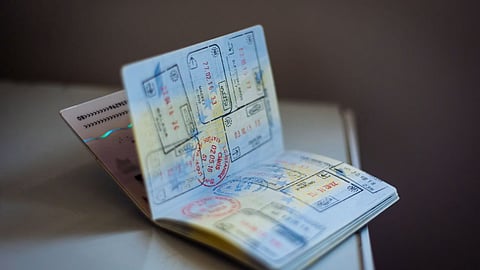
Getting into India could soon become simpler for international travellers. The new India Visitor Visa replaces the old Tourist Visa and covers holidays, wellness retreats, short business meetings and medical consultations. It is part of a wider overhaul that reduces the country's main visa categories from 13 to nine. This means travellers can combine sightseeing with activities such as a short yoga programme or a business meeting under the broader Visitor Visa category, subject to eligibility.
The changes also cover Medical, Student and Business visas, while application forms will have 65 to 70 per cent fewer fields, making the process less cumbersome. Check out what the new rules mean for different types of travellers and when they are expected to come into effect.
The new Visitor Visa has two categories. The V-1 visa is valid for 30 days with multiple entries and covers tourism, short yoga programmes, wellness retreats, medical consultations, business meetings and short courses in Indian languages, music, art and craft.
The V-2 visa is meant for longer visits and offers validity of one, five or 10 years, depending on eligibility. It covers the same activities as V-1, along with mountaineering. Foreign visitors travelling for mountaineering can also apply for a separate six-month multiple-entry provision.
Business travel now moves in two lanes. B-1 is for those putting down roots, such as founders setting up industrial or commercial ventures. B-2 handles short, contract-based work: conferences, sports, cultural performances, film shoots. Foreign engineers and specialists hired by Indian companies for installation, commissioning, maintenance, IT and ERP work or training can travel on a Production Investment Business Visa under B-2, applied for through the e-visa platform. That role was earlier filed under the e-B4 label.
For patients, the change is a quiet kindness. M-1 covers treatment outside the AYUSH systems, while M-3 covers AYUSH therapies, and both, including their e-visa versions, default to one year with multiple entries. Attendants have their own permits: M-2 for those accompanying an M-1 holder, M-4 for an M-3 holder. Anyone returning for follow-up consultations or staged procedures no longer needs to reapply each time, which sits comfortably with the government's 'Heal in India' vision.
Study permits now sit under two headings. S-1 covers school, graduate and postgraduate education, while S-2 takes in PhD scholars, visiting faculty, internships, exchange programmes and scientific expeditions. Students admitted through the Study in India portal may receive an e-S1 valid for up to five years or the length of their course, whichever is shorter.
India's e-visa facility is currently available to citizens of 172 countries. The Ministry of Home Affairs is updating its systems to introduce the new visa rules, with the revised categories expected to come into effect by the end of 2026. The new framework will have nine categories: Business, Diplomatic, Work, Journalist, Medical, Official, Student, Visitor and Miscellaneous. The government has also reduced the number of fields in visa application forms by 65-70 per cent, making the application process simpler for foreign travellers.