The Best Travel Tips For Your Upcoming Trip To Hong Kong
Here's a smarter way to do Hong Kong
Look, every city has its tourist version and its real version.
You can absolutely come to Hong Kong, do the whole loop — ride the Peak Tram, wait in hours-long lines to get a glimpse of Victoria Harbour, hit up some of the big-name shops in Tsim Sha Tsui, and sure you’ll have a perfectly fine trip. But you’ll also have missed a few things that make Hong Kong really, really cool (and especially underrated).
The first time I visited Hong Kong, I did the classic bucket list. However, it was only on my second trip that I truly learned what I had missed out the first time.
The hidden Hong Kong isn't hiding in plain sight so much as it's hiding in plain noise. It's in the sweaty, no-nonsense dai pai dong kitchens where they'll literally scold you for sitting too long. It's in the basement watch dealers on side streets where serious collectors quietly close six-figure. It's behind doors that look like public toilets, leading into some of the best cocktail bars in Asia. It's in the fact that the cheapest, most efficient way to move around the city isn't some app or hack.
So, this is a list of obscure things designed to make you feel like an insider; the stuff locals swear it and the spots they actually eat and drink at. Some of it will save you money. Some of it will save you time.
Mostly, you'll go into the city, armed and prepared.
Here are some things you need to know before you visit Hong Kong.
Hong Kong Is a Hidden Gem for Authentic Pre-Owned Watches
While tourists line up at Peninsula Hotel boutiques, serious collectors know that Hong Kong is one of Asia's best markets for pre-owned and vintage timepieces—often at prices that undercut European and American dealers. The real action happens at Champagne Court on Kimberley Road in Tsim Sha Tsui, where Union Classic Watch alone stocks thousands of pre-owned pieces across multiple floors. For vintage Rolex and rare finds, head to The Vintage Concept in Central.
Cash is king here—dealers prefer it and you'll get better deals. With Hong Kong's retail market in a slump, sellers are more willing to negotiate than ever, so really don't be shy about haggling. However, of course you need to be careful. Don't forget to ask to see papers, check serial numbers, and if you're dropping serious money, consider bringing a loupe or having the watch authenticated at one of the independent watchmakers in the area.
Don't just walk into a watch store with zero knowledge and let them take advantage of you, please. Spend the first day scanning stores, reading up on them, and then once you know what you're looking for, go attack!
Use the Octopus Card Like a Local
One thing I had to learn the hard way, with suitcases by my side and no Hong Kong currency, was that you don't actually get Octopus cards at MTR stations. You need to buy them at 7-Eleven, Circle K, or convenience stores.
No matter the effort, the card is actually amazing. It's almost like Hong Kong's secret weapon: it works on the MTR, buses, trams, ferries, and even the Peak Tram. You can also use it at convenience stores, supermarkets, coffee shops, bakeries, and even some restaurants.
Load it with HK$200-300 to start. When you're leaving, return it at any MTR station for a full refund of your deposit plus whatever balance remains (minus a small admin fee if you've had it less than three months, but still worth it). Also, please tap it on the reader when entering AND exiting MTR stations, or you'll get charged the maximum fare.
Cha Chaan Tengs and Dai Pai Dongs Are Where Real Hong Kong Eats
Anthony Bourdain once said, "your body is not a temple, it's an amusement park. Enjoy the ride."
It's often a pity to see many tourists come, go to safety net cafes and fancy diners and then go home. The real Hong Kong food culture lives in cha chaan tengs (tea restaurants) and dai pai dongs (open-air street food stalls), and they're rapidly disappearing (thanks to our obsession with fancy "hidden" fancy spots).
Want a fantastic meal? I'd start with the Australia Dairy Company in Jordan, which is legendary for their impossibly fluffy scrambled eggs and thick slabs of buttery toast. The service is famously brusque, though. They'll literally scold you if you linger too long. That's the ritual, and locals love it.
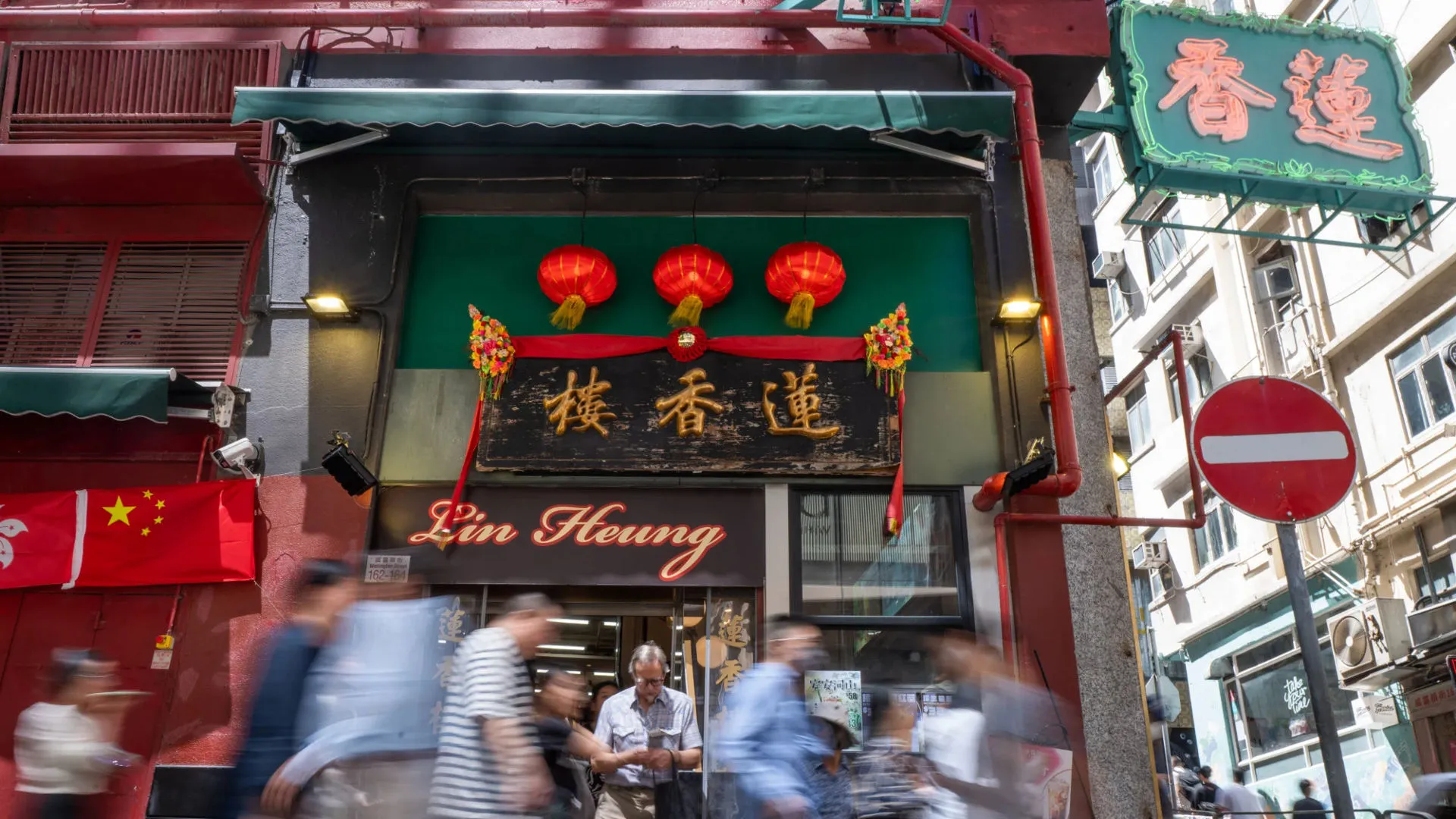
For dai pai dong culture, I'd advise you to hit Sing Heung Yuen in Central—a 60+ year old institution serving al fresco under colorful umbrellas right on the street. Try their lemongrass pork with rice for lunch or sweet and sour pork for dinner. Another favourite of mine is Lin Heung Lau in Central. It can be a bit confusing ordering food here, but trust me there isn't no experience like this one.
These open-air licenses can't be renewed or transferred, meaning only 17 remain in all of Hong Kong. Once they're gone, they're gone forever.
And here's the etiquette: never tip at these spots. You'll get weird looks. Service is fast, cheap, and no-nonsense.
The Secret Speakeasies Have the Best Entrances in Asia
Hong Kong takes its hidden bars seriously. Lockdown in Central wins for sheer audacity—you enter through what appears to be a public toilet door. Yes, really. I even wrote about it once.
For something more theatrical, Foxglove on Duddell Street disguises itself as an umbrella shop. Walk in, find the right umbrella, and the secret door slides open to reveal a sprawling 1950s-themed speakeasy across multiple floors. Hit their happy hour from 5-8 PM Monday through Saturday for half-price cocktails.
Other insider spots I loved: Quinary for molecular mixology, and The Old Man (ranked among Asia's best bars) for Hemingway-inspired drinks. Penicilin is dressed like a lab with an obscure door. Reservations aren't always required but are strongly recommended for weekends.
Dragon's Back Hiking Requires Strategy So Please Plan Properly
Dragon's Back consistently ranks among the world's best urban hikes, but timing is everything. The first time I went here, I was severely underprepared and had to give up halfway due to the lack of water. You need to start early, at least around 6:30am if you want to beat the crowds and the brutal Hong Kong sun after 11am. Also, once the tour groups arrive, you're pretty much done for. To get there, I suggest the bus: take bus 9 from Shau Kei Wan MTR station to To Tei Wan, then follow the well-marked trail to Big Wave Bay.
The hike takes about 2-3 hours, but it does reward you with panoramic views of the South China Sea, Shek O peninsula, and Hong Kong Island's dramatic coastline. The first bus back fills up fast, so either walk uphill to catch the minibus or plan to relax for a bit.
Tipping Culture Is Completely Different Here
Most restaurants automatically add a 10% service charge to your bill, which goes to the house, not your server. Local etiquette is to leave a few coins—HK$5-10 in small change—on top of that, not percentage-based tips. At cha chaan tengs, dai pai dongs, and casual dim sum spots, don't tip at all.
Do tip hotel bellboys (HK$20-50 for handling luggage), delivery drivers (HK$10-20), and taxi drivers by rounding up to the nearest HK$10. When in doubt, watch what locals do and follow their lead. It's never bad to ask locals questions, you might even make a friend or two!
You Need To Visit The Happy Valley Racecourse (On Wednesday!)
Okay, it might sound gimmicky and something straight out of Tripadvisor, but I actually had a lot of fun here. This is a new Gen-Z heavy trend where every Wednesday, the Gen z elite (from finance bros to exchange students) gather here to genuinely unwind over beers, betting, and a DJ blasting music while horses thunder past at full speed. It sounds touristy, but it's anything but.
It's not one of your Peaky Blinders era-type race courses. There are no dress codes, no racing etiquettes, it's literally just a post-hangout place which has now become Hong Kong's most authentic social ritual.