In His Tracks: Dharmendra Khandal on His Enduring Bond with Valmik Thapar
Under Valmik Thapar’s guidance, the forest became more than a cause. It became a place of joy, awe and quiet magic
I’VE WALKED ALONGSIDE VALMIK THAPAR IN THE Ranthambore jungle for 24 years. To me, he was a man of rare courage and honesty. His fearlessness wasn’t about facing tigers — it was about speaking up against what was wrong, and doing everything he could to change it.
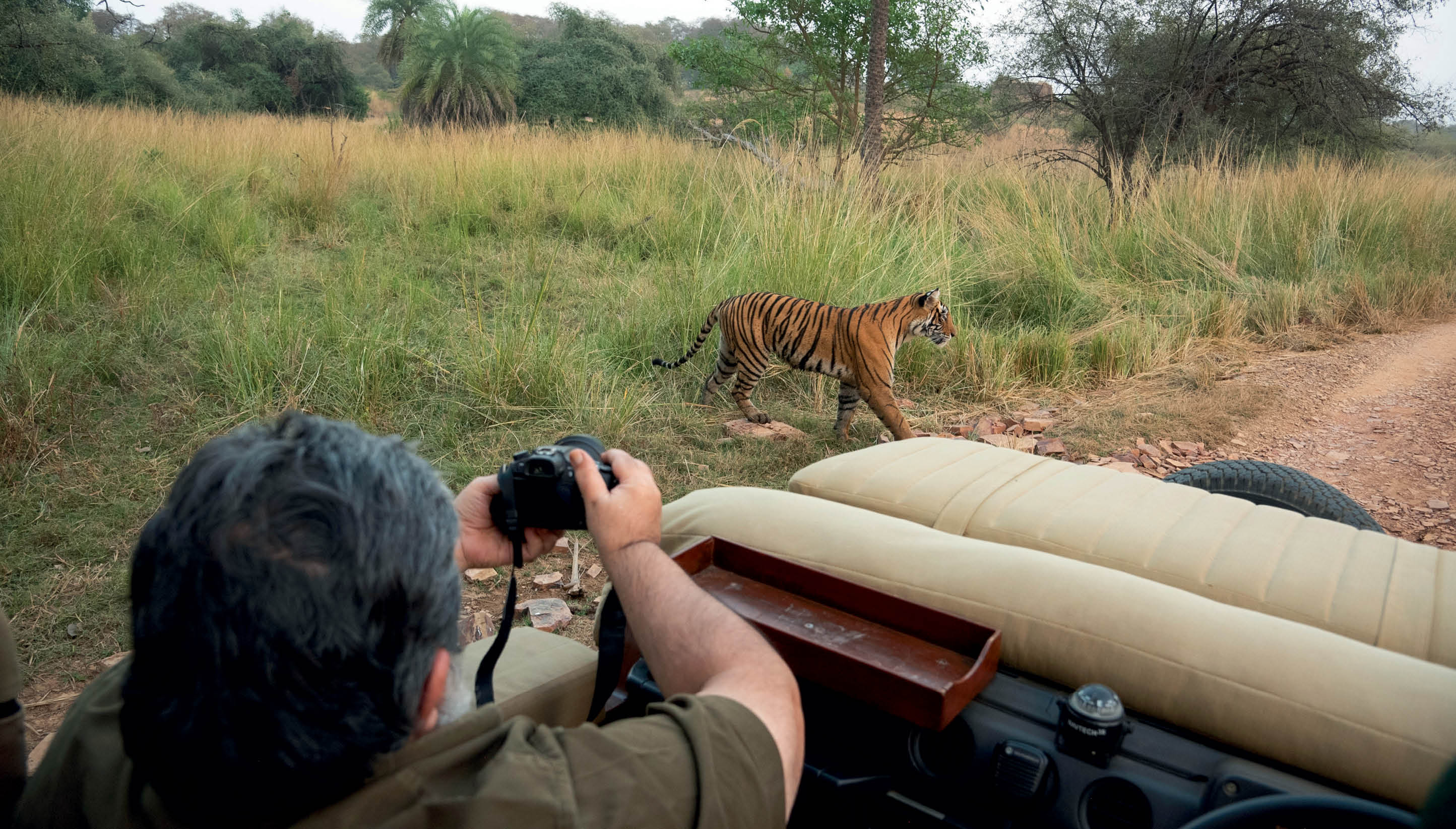
When I started out, I treated tiger conservation as a duty — part of Save the Tiger project work, not something to enjoy. But being with Valmik changed all that. I began to truly love being in the forest. He showed me that working for the tiger wasn’t just about responsibility, but also about wonder, beauty and joy.
The world knew him as the 'Tiger Man'—but at heart, he was deeply family-oriented. His wife Sanjna, daughter of actor Shashi Kapoor, always accompanied him on his visits to Ranthambore. The two of them spent their days exploring, enjoying and working to protect the ecosystem they both loved, and he was always mindful of her suggestions. Their son, Hamir, was a regular visitor too. As a child, he would accompany Valmik and learn the language of the forest — until his education made visits less frequent. Valmik was a tough teacher. Even when it was 47 degrees, he would still take Hamir into the jungle to track tigers. Every year, the three of them made a long trip to Africa to learn more about big cats there.
Valmik kept a tight circle. He was a true friend to those close to him. He loved good food, and even more, he loved sharing it. He often hosted dinners—and sometimes invited himself over in such a charming way that no host could say no. Those were joyful occasions, where he brought people together through laughter and conversation.
He had many friends who shared his love for the tiger, the jungle and all its inhabitants. One was Aditya “Dicky” Singh, a brilliant tiger photographer who passed away two years ago. Others included Arijit Banerjee, now head of forests in Rajasthan, and Ajit Singh, the former DGP of Rajasthan who led a historic anti-poaching operation in Ranthambore. Because of his efforts, we still have tigers in this state. More recently, Valmik introduced me to Kairav Engineer—Director at Astral Pipes—a passionate supporter of conservation and a keen photographer. The list is long. Valmik had a gift for bringing like-minded people together.
I have so many memories with him, but one stands out. We were on safari tracking a young male tiger—T-120, whom Valmik had named “Charger.” He predicted the exact time and place the tiger would be active, and he was spot on. Over 12 or 13 days, we saw more than 30 charges and two spectacular sambar kills. We remained stationed in the same area for all those days. Watching a tiger chase a herd and splash through water while Valmik offered real-time commentary was unforgettable. Later, when he wrote about that time in Tiger Gold, he made me co-author.
That time in the forest marked a turning point for me—I became addicted to tiger-watching. I went on to do more than 100 safaris.
Over the years, we worked closely. He guided and trained me to handle the more complex aspects of conservation. He helped get me appointed to the Rajasthan State Wildlife Board and, during his tenure, ensured that meetings were held regularly to drive major policy decisions for the betterment of wildlife in the state. He didn’t just support me morally—he helped raise funds for some of my conservation activities. He believed in me.
As a friend, he could be a little bossy—a “handle-with-care” kind of person. But he was unfailingly loyal. As a family man, he was deeply caring—especially toward Sanjna and Hamir. Interestingly, it was Sanjna who first introduced him to birdwatching and helped him appreciate wildlife beyond tigers. Until then, his focus had been singular.
The last time I saw him was in March. We had lunch at his home, in the room he used as an office and retreat. He gifted me a copy of his latest book, which included a photo of the two of us. He seemed peaceful, confident. Just two weeks before he passed, he sent me some work related to another upcoming book. On 13 May, I called him for advice before a high-level meeting in Rajasthan. On the morning of 18 May, he sent me a voice message informing me about his illness. Even in that two-minute message, his voice was booming with strength. He told me he didn’t have much time left, that he would spend his remaining days at home. He ended with, “All the very best to you.” He passed away on 31 May.
I will miss his presence. But more than that, I will miss the way he trained and inspired so many of us to carry the work forward. His nephew Jaisal Singh is one of those people—full of passion and understanding for conservation. Today, all of us who were mentored by Valmik are standing in the outer circle, ready to carry forward what he began. His legacy lives on in each of us.
Because Valmik’s legacy isn’t just about saving tigers. It’s about keeping them alive—in our forests and in our hearts. He worked like a hundred people in one body. The beautiful thing is, he trained hundreds more to keep that work going.
Conservation biologist Dharmendra Khandal is Executive Director of Tiger Watch. He spoke to SHASHI SUNNY
To read more such stories from Esquire India's July 2025 issue, pick up a copy of the magazine from your nearest newspaper stand or bookstore. Or click here to subscribe to the magazine.