What to Know Before You Plan That Antarctica Trip: An Insider’s Guide
Esquire India recently travelled to the seventh continent, which has seen a steady rise in tourists. Here's how to keep your prep solid
Until not too long ago, Antarctica was the last truly uninhabited wilderness on earth—a continent with no indigenous population, no permanent civilian settlement, no government. Travel here was the preserve of explorers and scientists well into the latter half of the 20th century, when the first commercial voyages tentatively began in the 1960s. In the decades since, with expedition operators refining the logistics of sailing to one of the most inhospitable places on the planet, the white continent has slowly crossed over from wild fantasy to dream destination. Visitor numbers have grown steadily—IAATO recorded 1,07,270 tourists in the 2024-25 season alone, a figure that would have been unthinkable a generation ago. Esquire India travelled to the continent recently aboard Quark Expeditions' Ocean Explorer, courtesy Ibex Expeditions. If you're planning a trip, here's what we'd like you to know.
HOW TO GET THERE
Arrive: In Buenos Aires via Addis Ababa. The modern Argentina capital is a city made for 48-hour lists but if you’ve got just a day, spend it close to the Aeroparque Internacional Jorge Newbury (the airport for domestic flights to Ushuaia), in the Recoleta neighbourhood. Known for its wide, tree-lined streets, mansions and, of course, the Recoleta Cemetery, it has a relaxed, European vibe and some special places for an empanada lunch.
The End-of-the-World Stopover: From Buenos Aires, travellers fly down to Ushuaia, the capital of Tierra Del Fuego, where cruise ships depart for the continent. A couple of days in this southernmost city in the world help acclimatise to the approaching change in weather conditions The frontier town offers hiking trails into Tierra Del Fuego National Park and Beagle Channel (Ibex Expeditions organises pre-trips), a look at the historic town’s penitentiary past and the opportunity to buy any gear you might have forgotten about.
Drake Passage: From Ushuaia, you sail through the calm Beagle Channel, watching Magellanic penguins and albatrosses. On the second day, the vessel enters the turbulent, open waters of the Drake Passage, considered the most treacherous ocean crossing on the planet. We were lucky to sail through a ‘Drake Lake’ on our journey, with waves not exceeding nine feet. However, a ‘Drake Shake’ might produce waves as high as 60 feet and violent winds. Historically a dangerous sea route, this 48-hour crossing sees modern ships sail routinely in the tourist season.
Fly-cruise: Afraid you still haven’t got the sea legs for it? Fly-cruise options are increasingly available with operators. Flights go into King George Island, where passengers board the ship already in Antarctic waters.
Who to book with: Esquire India travelled with Quark Expeditions through Ibex Expeditions, a boutique travel company with years of experience conducting luxury adventure trips.
The cost: An Antarctic expedition is one of the higher-end travel experiences you will spend money on. Berths on expedition ships typically begin at $8,000-10,000 per person for a basic cabin on a peninsula crossing. Also factored in are the flight costs, comprehensive travel insurance that must include emergency medical evacuation and gratuities for the expedition staff. And all of it is worth the experience.
GOOD TO KNOW
Arrive in Ushuaia a day early: Flights from Buenos Aires to Ushuaia are short but frequently delayed or cancelled due to weather. Missing your departure because of a domestic flight delay is not a situation you want to be in. Build a buffer.
Basic mobility training: Contrary to what most believe, modern expeditions don’t need you to be super athletic. But for things getting in and out of rocking zodiacs and navigating slippery, mossy ground and gravelly beaches with gear on needs a basic at-home mobility training. Step-ups and step-downs, balance work and planks in the days leading up to the travel can help build it into your routine.
You’re travelling to a place like nowhere else: Being mentally prepared for the vast silences punctuated only by the rawest sounds of nature, is key. For long periods of time, you will have the chance to be away from the constant noise and overstimulation of social media and streaming.
WHAT TO PACK
Layers. Your tour operator will provide you with an exhaustive list of essentials but understanding your own tolerance of cold will help you avoid overpacking. Cruise ships are temperature-controlled, and except for the deck and other outdoors areas where freezing subantarctic winds hit you in the face, walking around in one warm base layer is usually sufficient. Invest in merino (a few light base layers) and lightweight fleece-inner windcheaters. Quark, the Antarctic tour operator we travelled with, provided take-home parkas with a wonderful removable lightweight puffer jacket that can be used as a liner.
Waterproof pants: If you’re shopping at Decathlon or Columbia, ask specifically for an Antarctic-grade pair because those are different (not water-repellant ones). For frequent adventure travellers, it’s totally worth investing in a pair of lightweight waterproof trousers—they usually cost more but they get the job done.
Anti-seasickness meds: Better to take them preventatively because once the Drake gets to you, ginger candies take a long time to help. In the recent years, scopolamine patches have been revolutionary.
A zoom lens: If you haven’t yet, invest in a telephoto with 100-500mm and practice shooting on it. There’s a lot of wildlife to see in Antarctica and a lot of it is done perched on the pontoon of your zodiac.
Sunscreen: We know you know how important it is by now—but the Ozone layer above the part of the world you’re headed in is especially thin. During the Austral summer, the days can be sunny—and the sun is reflected by the ice, snow and water.
Dry bag: On-board boutique shops, like the one we had on the Ocean Explorer, often have good-quality dry bags in different sizes, but always good to carry your own just in case.
Swimsuit: A polar plunge in Antarctica is the equivalent of receiving a second birth. Baptism by ice. And you want to be decked out in your finest.
Sunglasses with straps: You’re on an adventure trip and will be leaning a lot over zodiacs, going for sea kayaking or paddling excursions. Having your sunnies snug around your face is one less thing to worry about when you're out and about, contorting yourself in all sorts of (safe!) positions to get a view of the seal disembowelling the penguin.
A Notebook: We know, sounds a bit twee, but you’re going to want to write. Take notes. Or draw. Or write a poem. You can make all that possible by packing a handy little journal and a pen.
THE BEST TIME TO GO (IT MATTERS MORE THAN YOU THINK)
Knowing that you are travelling in the “austral summer” isn’t enough. The window within that window matters—do try to get it but if not, do not give up a berth because not everybody gets the opportunity.
November: First ships of the season, pristine snow, penguin courtship and nest-building. Fewer footprints, literally and figuratively.
December-January: Penguin chicks hatching, maximum daylight, warmest temperatures. The “classic” Antarctica experience.
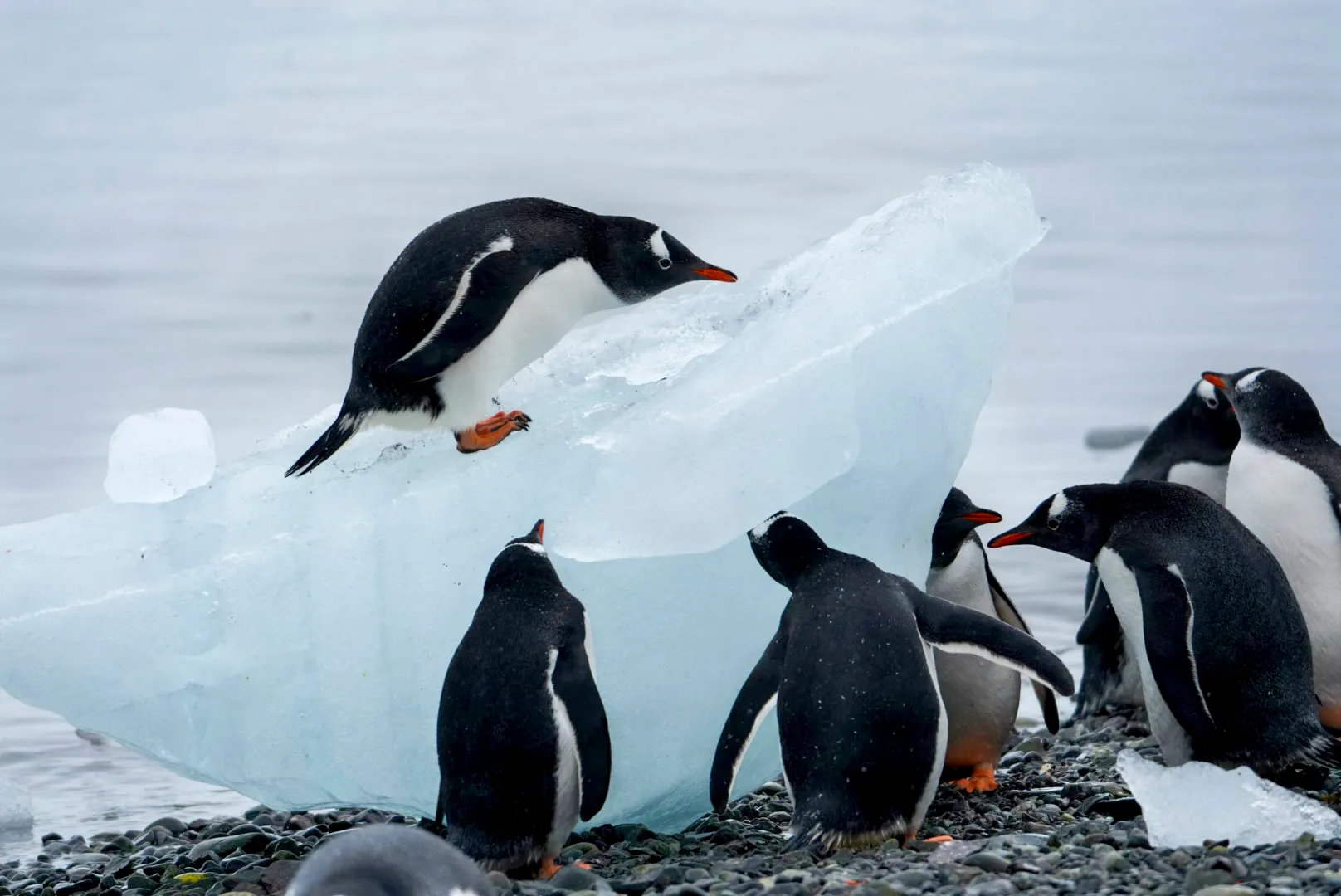
February-March: Whale activity peaks dramatically. Penguin chicks are moulting and learning to swim. The light turns golden and melancholy. Some say this is the most beautiful month, like we experienced.
THE ANTARCTIC READING LIST
From India, it’s a, give-or-take, 40-hour journey till the time you get on the ship. On long-haul flights and stretches where you picture yourself doing nothing, why not get into the spirit of the thing and start Endurance: Shackleton’s Incredible Voyage by Alfred Lansing? We read Bruce Chatwin’s In Patagonia and The Worst Journey in the World by Apsley Cherry-Gerard. Quark’s historian-in-residence onboard, Ross Day recommends Madhouse at the End of the Earth, the thrilling tale of Belgian commandant Adrien de Gerlache and his Antarctic expedition that went famously awry. Sarah Wheeler’s humorous and heartfelt Terra Incognita: Travels in Antarctica is just the kind of book you need to feel the continent’s stark white beauty in your bones.