100 Pipers Travel Gear Is Redefining Goodness For Today’s Generation
Seagram’s 100 Pipers Travel Gear’s latest campaign celebrates those who are remembered for good
Goodness used to be something you talked about. Today, it’s something you do. For a generation that’s allergic to posturing and performative campaigns, the idea of “doing good” isn’t a virtue badge — it’s a way of showing up in the world. Whether that means changing how we consume, how we build, or how we give back, this generation has turned goodness into something active, participatory, and real.
And recently, that’s exactly where the brand Seagram’s 100 Pipers Travel Gear found its footing. The brand’s long-standing philosophy, Be Remembered for Good, has evolved into an invitation to create legacies that outlast trends.
Its latest campaign sharpens that lens by spotlighting changemakers who are actually walking the talk. The idea is simple but powerful: legacy isn’t about what you leave behind, but about what you build while you’re here.
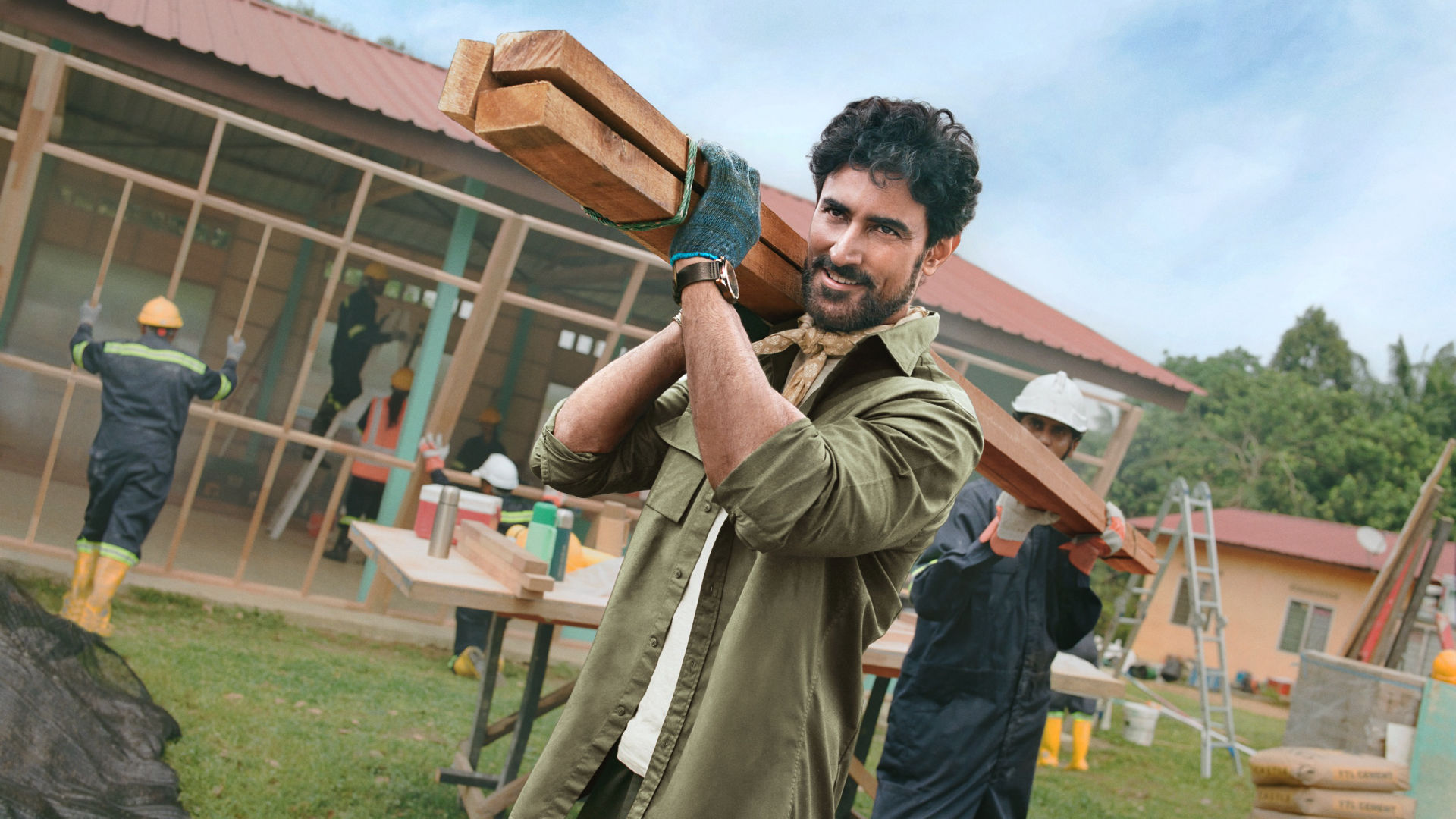
Keeping in line with that motto, 100 Pipers Travel Gear has anchored the campaign around four individuals whose work embodies purpose in motion — Bhumi Pednekar, Kunal Kapoor, Anand Malligavad, and Taran Chhabra. Each of them represents a different facet of what “good” looks like today: active, tangible, and inspiring.
Together, they form the backbone of a film and a philosophy.
The Champions of Good
The campaign film stitches their journeys together—less glossy montage, more lived texture. These aren’t stories you can fake with good lighting and a rousing voiceover. They’re messy, ongoing, and rooted in real stakes.
Pednekar has made a habit of turning her platform into a loudspeaker for climate justice. She has backed WeWork India’s sustainability drive, and she recently advocated for climate change and gender equality at the World Economic Forum in Davos. “I believe in doing things not just for a good life but for the greater good of our world,” she said about the campaign. “That's why I'm excited to partner with Seagram’s 100 Pipers Travel Gear for this campaign to inspire people to make a positive impact on society.”
Similarly, actor and social entrepreneur Kunal Kapoor has successfully created a crowdfunding platform, Ketto, for social and creative causes and has raised more than Rs. 1,100 crores from donors. Kapoor’s career has followed an unconventional arc. He’s played the leading man, but his biggest role might be the one he carved outside the spotlight. With Ketto, he’s managed something extraordinary in India: medical bills paid, schools funded, millions of lives turned around.
His philosophy is blunt: “With great power comes great responsibility.” Not in the Marvel sense—though Kapoor delivers it with the same gravitas—but in a way that reminds you that power is not just about celebrity.
Meanwhile, some legacies are measured in square kilometres of water. Malligavad, a former tech professional, began restoring Bengaluru’s dying lakes in 2017. The work was granular—mobilising communities, cleaning ecosystems, pushing bureaucracies—and the results tangible. More than a hundred lakes later, his moniker, “The Lake Man,” feels apt.
Malligavad’s inclusion grounds the campaign in physical change. It’s easy to talk about “impact” in abstract terms; it’s harder to point at a once-dry lake now brimming with life. He represents the campaign’s most literal answer to its central question: if you want to be remembered, leave behind something you can stand on, or better yet, drink from.
Chhabra, meanwhile, built Neeman’s around responsibility. Shoes made with recycled plastic and merino wool aren’t exactly a marketer’s safe bet—but the gamble has paid off. Neeman’s has become one of India’s most recognisable sustainable labels, proof that consumers will buy into responsibility if it doesn’t compromise design.
For the campaign, Chhabra embodies the idea that business itself can be a form of activism. “I have transformed plastic into steps towards a better world,” he says. It’s a neat metaphor, but also a blueprint for the kind of incremental change the campaign is trying to spotlight.
For a brand, this is a rare move: letting real legacies shoulder the message, instead of trying to invent one out of thin air. And it leaves the reader with an uncomfortable but necessary question: if remembrance is inevitable, what will yours be for?