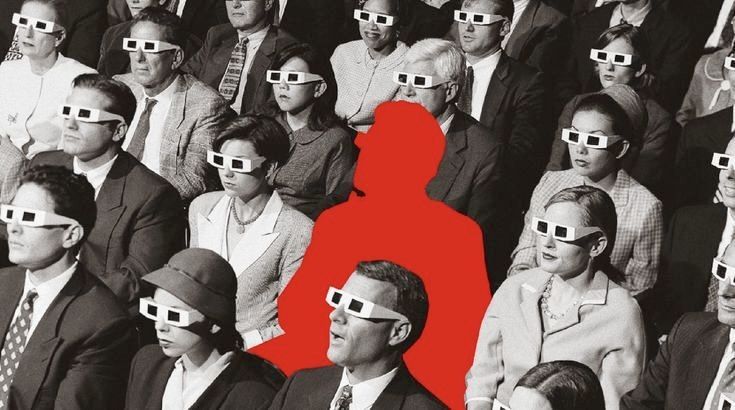
Are You an Otrovert?
Or something else entirely?
Lately, a new term has been making the rounds online “otrovert.” You’ve probably seen the memes: “Not an introvert. Not an extrovert. Just an otrovert.” Catchy, right? For anyone who’s ever felt stuck between two rigid personality boxes, the label offers a kind of relief, a place to finally "fit".
But before you slap this trendy title onto your bio, it’s worth asking: is “otrovert” a meaningful psychological category, or just a clever buzzword born from social media and pop psych quizzes?
Worse, it is a classic case of the Barnum effect at play?
What Is An Otrovert?
“Otrovert” appears to be a portmanteau of “other” and “vert” (from introvert/extrovert), suggesting a person who is neither strongly introverted nor extroverted. Some social media users equate it with ambiversion — a term that has been used in psychology to describe individuals who exhibit traits of both introverts and extroverts, depending on context.
However, it’s important to note that “otrovert” is not a scientifically recognised term. It doesn’t appear in peer-reviewed psychology literature, and no empirical studies have been conducted under this label. Its emergence is more cultural and linguistic than clinical. It gives voice to people’s frustration with binary personality labels — a genuine sentiment carried in the 21st century— but its foundation in science is lacking.
To understand why labels like otrovert resonate, we have to consider how personality psychology has been popularised. If you have attended Psychology 101, you must be familiar with the rise of the Myers-Briggs Type Indicator (MBTI), the Enneagram, and online personality quizzes that have created a cultural fascination with categorising ourselves. People crave self-understanding, and personality labels provide a narrative — a story we can tell ourselves about who we are and why we behave the way we do.
Unfortunately, these systems often fall prey to the Barnum effect.
What is the Barnum Effect?
The Barnum effect, named after the showman P.T. Barnum, refers to our tendency to accept vague, general statements about ourselves as highly accurate, even when those statements could apply to many people. Iif you read: “You sometimes feel shy around new people, but open up once you’re comfortable,” for example, you might think, “That’s so me!”
In reality, it’s so everyone.
This effect is a cornerstone of how horoscopes, fortune telling, and even some personality tests work. When a personality description is general enough, we interpret it through the lens of our own experiences, filtering out what doesn’t fit and clinging to what does.
So, is there a connection here?
Let’s revisit the “otrovert.”
What does it mean to say someone is not fully introverted or extroverted, but somewhere in between? That’s actually true of most people.
Research in personality psychology suggests that introversion and extraversion exist on a spectrum. A 2011 study published in Personality and Individual Differences found that a large number of people fall in the middle. They’re neither exclusively one nor the other. These are what Carl Jung, the father of analytical psychology, might have considered “ambiverts,” though he didn’t use the term himself.
So when someone reads a description of an “otrovert” and thinks, “Finally, a label that fits!” — they’re likely responding to a general description that most people identify with. In other words, it’s the Barnum effect doing what it does best.
Why It Still Matters
Just because a term isn’t scientifically validated doesn’t mean it’s worthless. Language evolves to meet psychological and social needs. People are increasingly resisting binary thinking, and terms like “otrovert” reflect a desire for more nuanced self-expression.
However, it’s important to remain critical. Embracing a catchy new term can feel satisfying, but it’s no substitute for evidence-based self-awareness.
The term “otrovert” may not be grounded in scientific psychology, but its popularity speaks volumes about how people feel boxed in by traditional personality categories. At the same time, its vague, all-encompassing nature makes it a prime candidate for the Barnum effect.
So, before you add “otrovert” to your bio, ask yourself: is this really who I am, or just a convenient label that feels accurate because it could apply to almost anyone? Either way, the search for self-understanding continues and maybe that’s the most human trait of all.