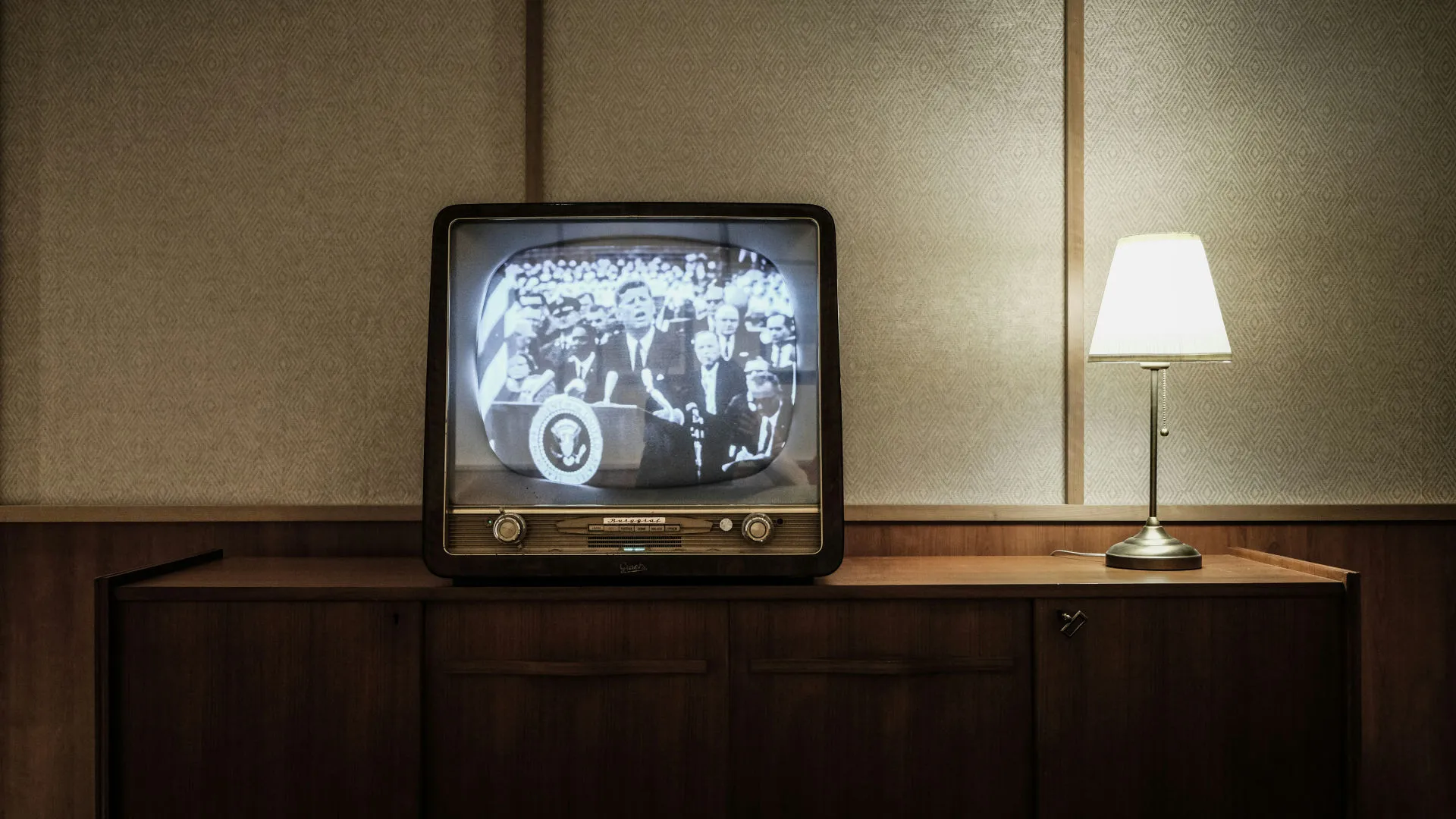
The Boys Monitoring The Situation Is The New Roman Empire
Men have now found a new group activity
It’s 1:47am on a Sunday. My brother, a product manager in Bangalore, has work at nine. However, he has sunk into the couch and his boys group chat is fired up. They’re collectively tracking the flight paths of Israeli F-35s over Iranian airspace on FlightRadar24, cross-referencing with a liveblog on Al Jazeera, and sharing missile interception videos with everyone around him.
In the words of the Twitter men, they’re monitoring “the situation”.
***
Welcome to 2026's defining male behaviour. Forget the Roman Empire — that was last year's meme. The new thing, documented in excruciating and hilarious detail across X and Reddit since June 2025, is this: monitoring the situation.
The meme took off last summer when an X post saying "Men will literally monitor the situation instead of going to therapy" racked up thousands of likes almost instantly.
It spawned hundreds of variations: men monitoring the situation on company time, men monitoring the situation from the couch while technically "watching something together," men who have seven tabs open including one live updating map of Strait of Hormuz traffic. The phrase captured something that had no name before: the compulsive, mildly absurd, strangely satisfying male need to track unfolding global chaos, even when you are a product manager in Bengaluru who can do absolutely nothing about it.
The timing of that meme was not accidental. It exploded in June 2025, directly following the IDF's Operation Rising Lion strikes on Iran. Now, eight months later, with the United States and Israel having launched coordinated attacks on Iran on 28 February 2026 — triggering an unprecedented Iranian retaliation across nine countries, with several people killed and missiles intercepted over Dubai, Bahrain, and Tel Aviv — the boys have never had more to monitor.
The Psychology of the Monitor
According to Ayesha Sharma, a psychotherapist and founder of Dialogue Mental Health, anxiety is about uncertainty and the discomfort that comes with not knowing what'll happen next. "In that sense, compulsively gathering information can absolutely be an anxiety response. The mind tries to create stability when the future feels uncertain, through prediction. Information becomes a way of feeling in control, knowing what is unfolding how," she said.
"In stress psychology, we often talk about fight, flight, freeze and fawn responses. Hyper-monitoring looks like a version of the “fight” response: using mental energy rather than physical energy to fight. Instead of fleeing or numbing, there is a push toward action through strategy and analysis," Ayesha adds.
This is, researchers note, not irrational. It is evolutionary. Humans are wired — genuinely, biologically — to screen for and anticipate danger. The problem is that this ancient threat-detection system was calibrated for predators and drought, not for 24-hour algorithmic news feeds that replenish endlessly and reward engagement with escalation.
Research confirms that doomscrolling — the clinical term for what the meme calls "monitoring the situation" — is statistically more common in men, younger adults, and the politically engaged. It is closely tied to what psychologists call intolerance of uncertainty: the uneasy feeling that drives you to keep refreshing the feed "just in case." Recently, another study showed that doomscrolling can actually make people feel worse. "People have a question, they want an answer, and assume getting it will make them feel better... You keep scrolling and scrolling. Many think that will be helpful, but they end up feeling worse afterward.”
Studies published in peer-reviewed journals have linked heavy crisis news consumption to higher levels of anxiety, depression, and something called existential anxiety — a feeling of dread that arises when we confront things beyond our control. Yet we keep going back. Every scroll generates a small hit of the illusion of knowledge, of being ahead. The algorithm obliges. The feed replenishes. The situation updates.
Another psychologist, Dr. Loren Soeiro, said that some male friendships need bonding activities as an engine to keep these friendships fuelled; otherwise, the friendship would die down. "If your friendship is based on activities — on hanging out, playing video games, doing sports, or whatever manly things we're supposed to be doing — then as your life changes... the friendships fall away. Because the material that they were based on is no longer there."
Ayesha also adds that male friendships are usually based around a third object. "A match, a market chart, a geopolitical map or decisions. Even though strong feelings are involved, they are filtered through strategy," she says.
"A war thread at 2am can function similarly to a cricket match: it creates collective witnessing. “Are you seeing this?” becomes a bridge to allow for emotional closeness," Ayesha adds.
There is also the social dimension, which may be the most genuinely interesting part. The group chat is not incidental to monitoring the situation. It is the point. Men who would never text each other "I'm feeling anxious about the state of the world" will, without hesitation, forward a video of missile intercept footage at 2am with the message "bro." It is probably emotional intimacy achieved through the language of logistics.
This is the Roman Empire meme updated for the geopolitical moment. Men thinking about ancient Rome was funny because it was arbitrary and useless. Monitoring the situation is its emotionally evolved cousin — slightly more defensible (there are real stakes!), equally performative in its vigilance, and just as much about finding a reason to be in the room together.
The Sit-Rep Economy
By Sunday morning, Indian Twitter had spawned its own monitoring subculture. There were the aggregators — accounts sharing breaking updates, missile tallies, and intercepted drone footage with the efficiency of a Reuters wire. There were the analysts — men who had clearly not slept, posting threads about the strategic implications of closing the Strait of Hormuz on India's current account deficit. There were the historians — someone always locates the 1980 Iran-Iraq War Wikipedia article within six hours of any new conflict. And there were the tone-setters — the ones posting memes about monitoring the situation while monitoring the situation, aware of the irony, committed to continuing anyway.
There is something almost admirable about it. In a world where most things feel beyond individual control — inflation, geopolitics, the algorithm itself — the dedicated monitor is at least paying attention. He has made a decision, however unconscious, to witness.
The meme is funny because it is honest. "Monitoring the situation" captures something that men rarely admit about themselves: that a significant portion of what looks like engagement is actually managed anxiety, dressed up as vigilance. That the group chat at 2am is not a war room. That nobody is being briefed. That the FlightRadar tab will not change the outcome.
And yet here we are, awake, informed, eyes wide in the blue light, watching the situation unfold in real time — nine million of our countrymen somewhere in the middle of it, oil prices climbing, flights cancelled, rupee softening — sharing updates with people we have not called in months but who, right now, in this specific, terrible, gripping moment, we are absolutely present with.
The situation is being monitored. The boys are on it.