India’s Ancient Martial Arts Cut Deeper Than You Think
From battlefield secrets to cultural treasures—India’s martial arts are more than just combat
Hanumankind's newest track, Run It Up, is making all the right waves on the internet, not just for the music and lyrics but even the video that's caught everyone's imagination. As the beat drops, you're immersed in a whirlwind of fists, swords, and sticks on screen. The music video honours ancient Indian martial arts, a cultural gem that many of us are only beginning to discover.
It's interesting how we typically link martial arts to Bruce Lee's powerful roundhouse kicks or Jackie Chan's incredible stunts. Considering, we, in India, have been showcasing impressive combat skills long before those legendary performances came to be.
You May Also Like: Best Home Workout Gear for Strength, Stamina & Speed
7 Ancient Indian Martial Arts You Should Know
From the ancient temples of Kerala to the rugged terrains of Maharashtra, India's martial arts are as varied as its culinary delights. Let's explore some of the most interesting forms, and believe me, they go well beyond your typical gym class warm-ups.
Kalaripayattu: The Mother of Martial Arts
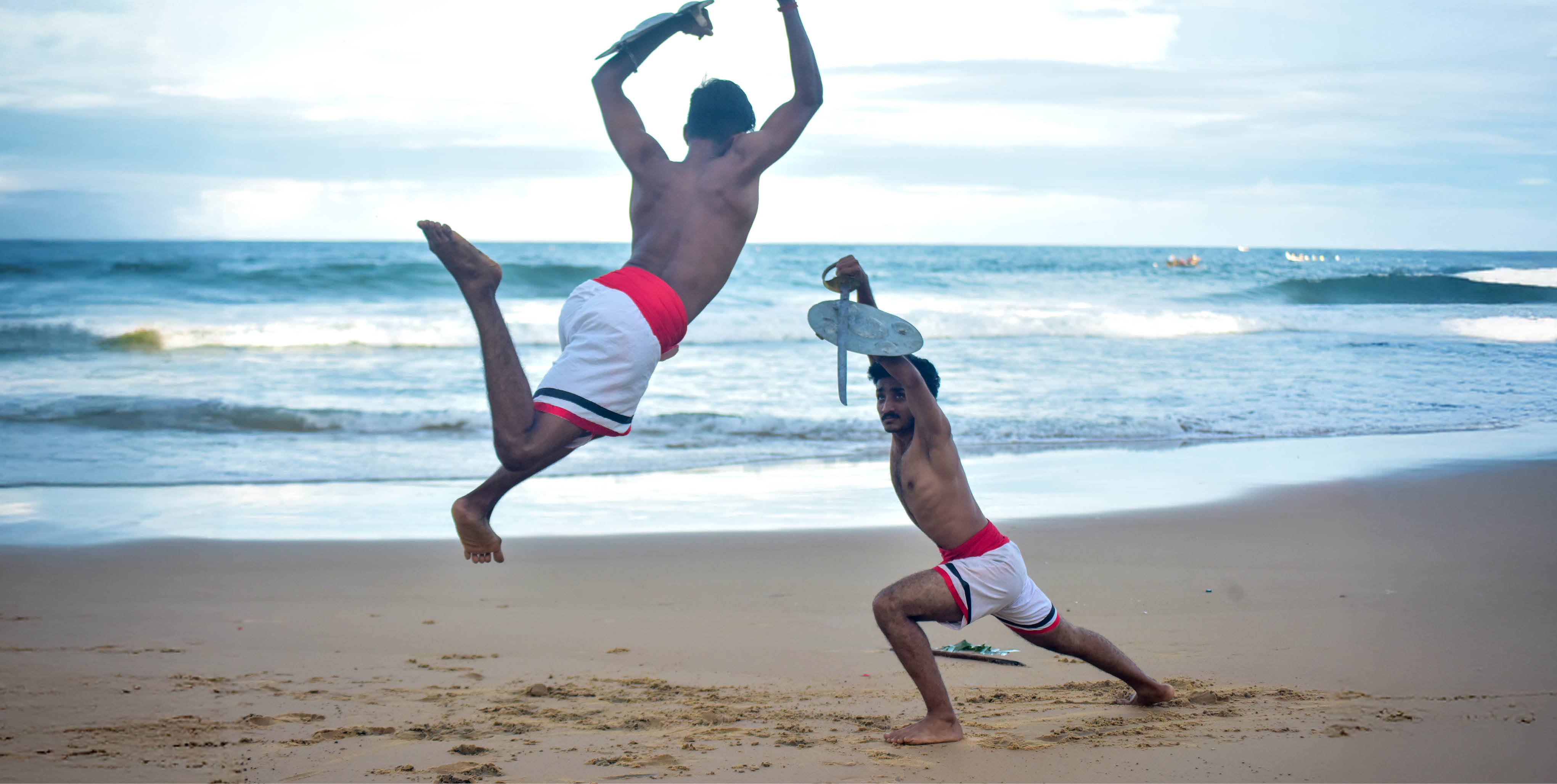
Kalaripayattu, which originated in Kerala, is regarded as one of the oldest martial arts in existence. Often referred to as the "mother of all martial arts," this title is well-deserved. According to legend, Bodhidharma, a Buddhist monk, brought the techniques of Kalaripayattu to China, where they eventually transformed into Shaolin Kung Fu.
Kalari is more than just a form of combat; it resembles a dance. Warriors exhibit animal-like agility, executing movements inspired by creatures such as lions, snakes, and peacocks. The use of weapons like the urumi, a flexible whip-sword, adds to the mesmerizing yet lethal nature of Kalari. If you ever find yourself in Kerala, you’ll discover Kalari schools hidden in dimly lit training pits known as kalari, where practitioners train barefoot on soil believed to help ground their energy.
Mardani Khel: Maharashtra’s Warrior Spirit
If Kalaripayattu is known for its grace and fluidity, Mardani Khel stands out for its raw, direct, and fierce approach. This martial art, which originated in Maharashtra, was crucial on the battlefields during the Maratha Empire. It emphasizes speed, agility, and precision. Practitioners use swords, bamboo sticks, and hand-to-hand combat techniques in this straightforward fighting style. Maratha warriors, particularly women, were trained in Mardani Khel to protect their families while the men were away at war.
Gatka: Punjab’s Battle Ballet
Gatka, developed by Sikh warriors, is a rhythmic and almost hypnotic martial art that blends spirituality with lethal skill. It originated in Punjab as a means of self-defence for the Sikh community during periods of persecution.
You May Also Like: The New Wave Of Wellness in India: What's Trending in 2025
Practitioners use wooden sticks that resemble swords, executing circular movements and rapid strikes. The focus is on footwork, coordination, and timing, which makes it not only visually captivating but also highly effective. Today, Gatka continues to be showcased at Sikh festivals and religious events, serving as a powerful symbol of resilience.
Silambam: Tamil Nadu’s Weapon Mastery
Travel down south to Tamil Nadu, and you’ll encounter Silambam, an ancient martial art that turns a simple bamboo staff into a whirlwind of strikes and spins. Silambam traces its roots back over 2,000 years, where warriors honed their skills not just for battle but also to protect trade routes.
What’s fascinating is how Silambam combines offensive and defensive moves seamlessly; the staff becomes an extension of the body.
Thang-Ta: The Art of War from Manipur
Originating from the verdant hills of Manipur, Thang-Ta is not just a martial art; it’s also a spiritual discipline. The term translates to "Sword and Spear," highlighting its focus on combat. Practitioners of Thang-Ta combine precise sword techniques with agile footwork. What makes it even more intriguing is its deep ties to Manipuri mythology and rituals—each movement is believed to link the warrior with cosmic energy.
Garadi: The Forgotten Gem of Andhra Pradesh
Less known but equally fascinating is Garadi, a traditional martial art from Andhra Pradesh. Initially showcased in royal courts to demonstrate strength and agility, Garadi combines acrobatics, wrestling techniques, and swift strikes. It relies on quick reflexes and explosive energy. Although it may not be as popular today, Garadi continues to be a cherished aspect of Andhra Pradesh’s cultural heritage.
You May Also Like: How To Hit Peak Fitness In Your 40s
Kuttiyattam: The Rare Martial Theatre
Kuttiyattam from Kerala, while not a traditional combat sport, merges martial arts with theatrical performance. Practitioners execute choreographed combat sequences that often narrate mythological stories through their movements and strikes. It’s a blend of storytelling and fighting—like experiencing a movie scene come to life right in front of you.