Chef Will Aghajanian: 5 Dishes That Shaped My Life
American-born chef Will Aghajanian, the man behind Mumbai’s The Table, takes Esquire India across continents and kitchens that reveal the blueprint of his culinary mind
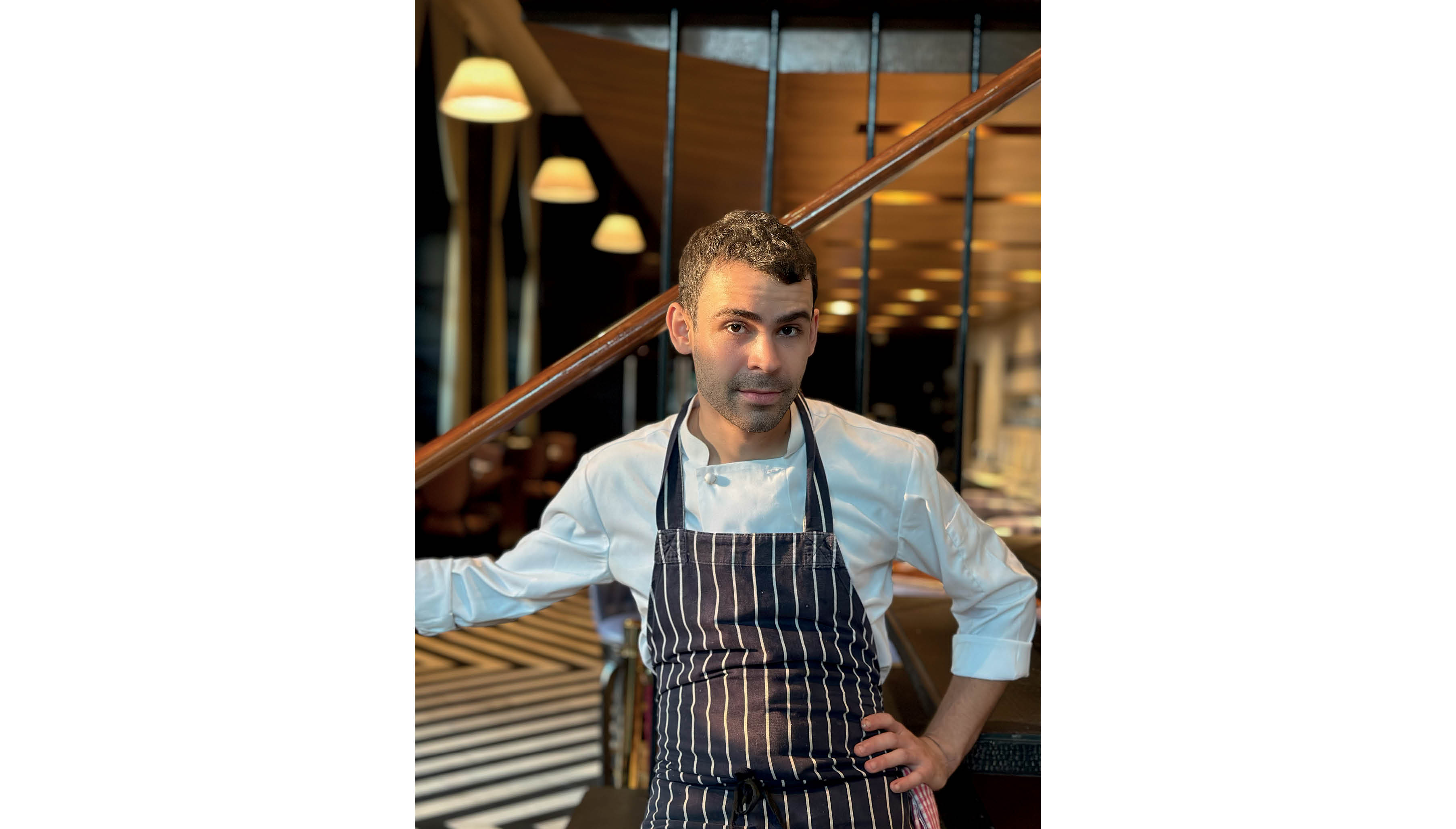
Will Aghajanian's ascent borders on myth. An 11-year-old Washington DC prodigy who talked his way into a restaurant kitchen and immediately found his calling. By 13, he was apprenticing under Eric Ziebold at CityZen; by his twenties, he
was sharpening his craft inside some of the world’s most exacting culinary temples—the avant-garde engine room of Mugaritz in San Sebastián, the precision-driven brigades of Per Se in New York, and formative stints across France, Copenhagen’s new-Nordic frontiers, Tokyo’s disciplined kitchens, and Australia’s produce-obsessed dining scene, before returning Stateside for chapters in Chicago and San Francisco. Now, as Culinary Director of Food Matters Group—the
force behind Mumbai’s The Table, the pioneering, award-winning Colaba institution founded by Gauri Devidayal and Jay Yousuf, Aghajanian channels this global, hard-won pedigree into cooking that is finessed, exuberant and unpretentiously
intelligent. Their collaboration extends naturally to the newest culinary atelier, Kaspers in Bandra, also conceived by Devidayal and Yousuf—a French-Basque fever dream where Aghajanian’s signature interplay of intimacy and cosmopolitan edge comes vividly alive. We sat down with Chef Aghajanian who revisits five dishes that define his story.
OLIVE OIL CUSTARD WITH ESPELETTE BUTTER
At my first job in a professional kitchen, I was on the canapé station at CityZen in Washington, DC. I was 13 at the time, and I remember feeling like I thought I knew everything. They gave me the recipe for these custards and I made them well, I thought. At the end of service, the sous chef, Ron, came up to meand said, “Taste this.” I did, no salt. He said every guest who came to this restaurant had this custard with zero seasoning tonight. That stayed with me to this day. Taste everything, always. PS: I am sorry if you were one of the customers who had the zero salt canapé that night.
SALAD GOURMANDE DE MER
I was working for Eric Ziebold at 14. One of the dishes for the winter menu was this salad. It was based off Michel Guérard’s infamous salade gourmande, but a seafood version. It included sautéed monkfish liver, braised kombu seaweed and Meyer
lemon. It was my first time working with monkfish liver, something barely seen, if at all, on US menus. The original version used foie gras. He had swapped it for ankimo, something that required more technique to make, but if done properly had an equal, if not better result. Eric introduced me to a lot of these ingredients that at the time were barely known; shirako, ankimo, otoro, sea urchin, Japanese Wagyu. Today, because of social media these things seem fairly normal, but back then, around 2007, Wagyu was not allowed to enter the US. I remember the chefs did an event in Tokyo and brought back suitcases of it. I only heard of it at the time and tried the American version, but it seemed very special to taste even the smallest bit. When you are so young and Japan seems so far away, it is pretty cool.
BOUDIN BASQUE
When I was working in the Basque Country, there was one American cook with me, Gabe Bartholdi. We had no money, so on our day off we would just walk for miles, sometimes over the French border into the French side of Basque Country. We
used to go to every butcher in St. Jean de Luz and Hendaye and try their boudin basque. We kind of got obsessed trying to find the best one. Something as simple and humble as a blood sausage could be better and more interesting than an expensive steak.
PEACH MELBA AT CHEZ PANISSE
For me, Chez Panisse is kind of the grandmother of this kind of super simple, ingredient-driven, daily-changing menu restaurant. I remember after the main course, we were presented a half peach with vanilla ice cream, some raspberries and a puff pastry twist. I kind of thought I knew what this would taste like. I took a bite, and it really was shocking. The peach was peeled to order. Maybe the best I ever had. Sometimes less really is more.
MORROS AT IBAI
Ibai was a small restaurant in San Sebastián. When I asked Dani Lasa and Lorenzo, who were two of the head chefs at Mugaritz at the time, what their favourite restaurant was, they did not hesitate. They said Ibai. If you called and did not
speak Basque, they would hang up the phone. I went there alone and practically begged for a reservation. This was in 2011 and the restaurant was unknown outside the region. It was filled with locals rather than the mix of Michelin star chasers
and culinary tourists that you found elsewhere. I asked the brother of the chef, who was one of the two front of house staff, to simply send whatever he wanted. He brought out braised veal snout. Something so humble but felt unbelievably luxurious. The gelatin and richness were incredible. Ibai has since closed and reopened with a new chef, but at its peak, it was truly exceptional.
To read more stories from Esquire India's January 2026 issue, pick up a copy of the magazine from your nearest newspaper stand or bookstore. Or click here to subscribe to the magazine.