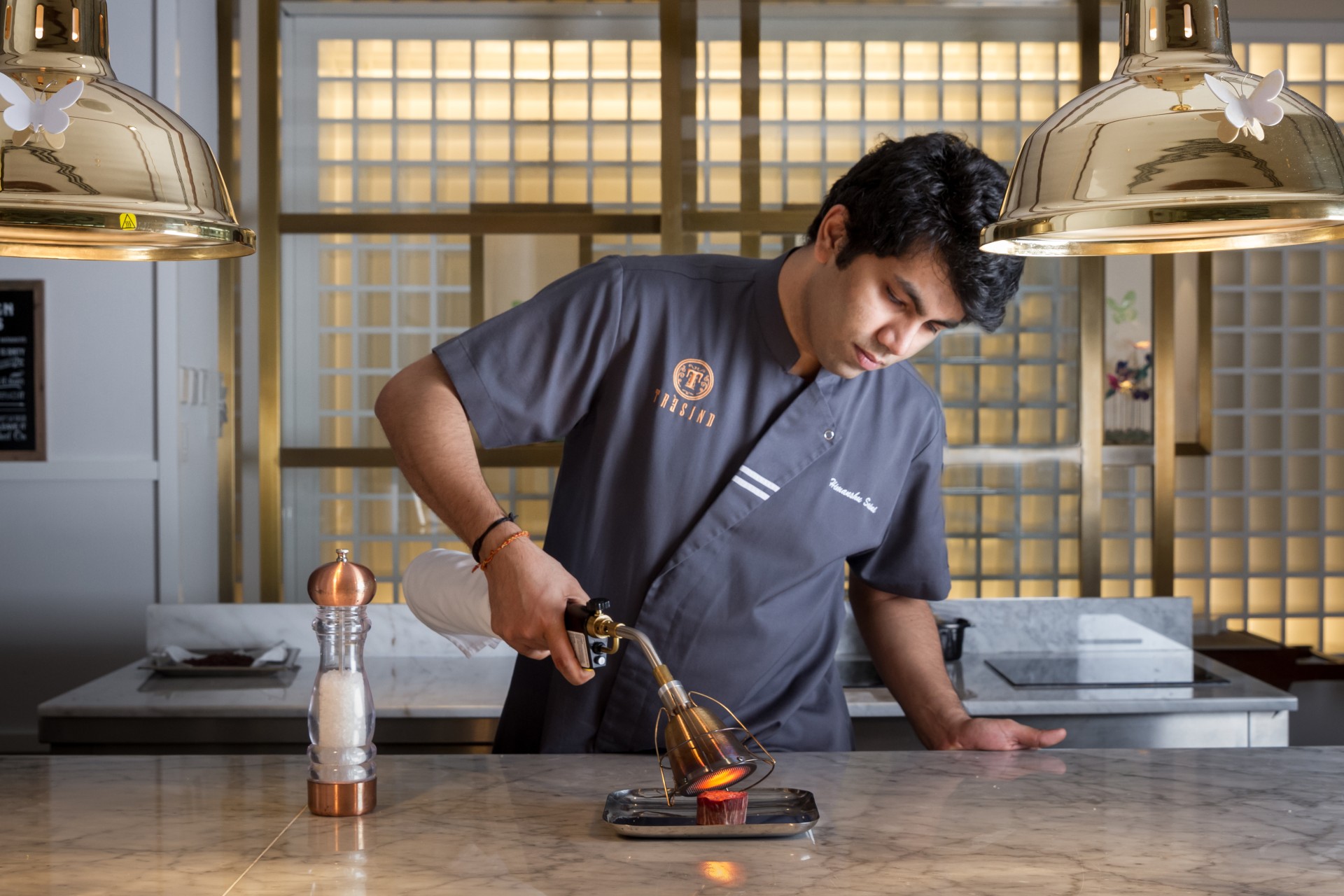
Chef Himanshu Saini: 5 Dishes That Shaped My Life
Nostalgia and flavours on a plate with Chef Himanshu Saini of Trèsind Studio
Khichdi
Growing up, I hated this dish so much that I took it personally and elevated it to a gourmet level (laughs). Also, this dish is a crash course for people to understand India. It has defined what I am doing now with Trèsind Studio in Dubai where we have a menu called Rising India, where we have five dishes each from five geographical regions of India. That idea is derived from khichdi itself. Including khichdi in the menu was probably the game changing moment for the restaurant. You cannot imagine any other dish to have that kind of composition and connect as it is identified across India. The literal meaning of khichdi is a mixture of many things and it makes so much sense then to compile regional components in the dish. It is a proud thing for us to take this dish which has so much love and hatred and turn it into a signature.
Chicken Changezi
I grew up in Chandni Chowk in old Delhi and if you live there, then at least one of the meals of the day has to be a street speciality. My dad and I used to frequent a shop called Chicken Changezi. On the way, he would buy a 100-gm pack of Amul butter from the grocery shop and hand it over to the shopkeeper to use it in making one portion of Chicken Changezi for us. It was delicious! The memory of seeing the dish being prepared in front of us stayed with me. At Trèsind Studio, we make a Kebab Scarpetta which is inspired from that emotion and we serve it with sourdough toast to mop up the curry and a pint of beer that immediately transports one to the streets. That dish is my Ratatouille moment and I get transported back to those days of eating kebabs and curries with roomali roti with my family.
Mushroom Chai
After leaving Indian Accent, I joined Masala Library in 2013 and one of the dishes, which was created purely out of R&D and became really popular, was the Mushroom Chai. It was probably the first dish I created on my own as a chef. It became my reference point going forward and now we make a lot of broths and consommés at our restaurant. I remember following the principles of how we made Mushroom Chai and now we have developed and multiplied that with different ingredients. We developed our own methods of seasoning these broths. They have become our signature. One of the broths we make has the flavours of rasam, while another is a take on a Karnataka style Saaru. Even though I switched kitchens and restaurants, the Mushroom Chai remains my reference point for the broths.
XO Sauce/Asian cuisine
I started my career with Chef Manish Mehrotra working at Indian Accent and I consider him my mentor. A lot of people don’t know that Chef Manish has an oriental cooking background and it surprised me how he used his knowledge of oriental food and adapted it to utilize it in an Indian kitchen. For instance, it was for the first time that I saw Umeboshi (sour, pickled Japanese fruit) in an Indian kitchen. In those days, XO sauce, soy sauce and oyster sauce were not seen in Indian kitchens. Today, if there is a dish which needs a wok to be prepared on - even though it’s an Indian kitchen - it doesn’t stop me from using it. At Indian Accent, Chef Manish would use galangal in a Patrani Macchi and at our restaurant, we have a dish called Not A Nigiri which is a take on the Balchow, where we make the XO using the flavours of Balchow.
Sadhya
Hospitality is part of our culture – something we have grown up seeing at home where the entire family gets together to cook and serve food to guests. In my eyes, the Sadhya from Kerala truly brings out the hospitality part of our culture. Sadhya is served on a banana leaf with 25 food items and it is to be eaten with hand. You mix everything together and eat together as a community. At our restaurant, we have a dish called Inspiration Sadhya where we have different components of Sadhya in one dish. Ten people from the kitchen line up and each of them plates one of the components on the plate, creating it on the table. It is such an emotional moment and we have seen people cry because they are amazed by the precision and the performance of it. I have a lot of chef friends from Kerala who have told me that we have managed to evoke so much nostalgia from one dish. It is a life-changing dish for me.