Best Serial Killer Movies of All Time
This is the deep end
There are crime movies, and then there are serial killer movies—the dirty little corner of cinema where things get personal, primal, and way too close for comfort.
Bank jobs and mob wars? That’s just foreplay. Serial killer films are about the monster next door. The guy bagging your groceries. The woman in the next cubicle. They don’t let you escape into cops-and-robbers mythology—they grab you by the collar and remind you: this could be real.
And that’s why we can’t stop watching. We say we hate them, but we don’t. We’re voyeurs in the world’s worst peep show. These films reflect our obsessions, our paranoia, our cultural rot. They’re not “fun.” They’re not “easy.” They’re unsettling and sticky and sometimes downright ugly—and that’s exactly the point.
So: here’s the canon. The stone-cold classics, the cult weirdos, the movies that crawled into your brain and never left.
Zodiac (2007)
David Fincher has never cared about closure, and Zodiac is his masterpiece of obsession. Jake Gyllenhaal’s Robert Graysmith disappears down a spiral of news clippings and cryptograms that drags us with him. It’s a film that feels deliberately unsolved—meandering, yes, but in the way an all-night conversation with a conspiracy theorist feels meandering. Every scene teeters between breakthrough and dead end, none more haunting than John Carroll Lynch’s Arthur Leigh Allen interview.
The movie never gives you the release you’re waiting for. Fincher wants you to live in that itch that never gets scratched. And it works.
Badlands (1973)
Terrence Malick’s debut is a beautiful horror show—a pastel-colored meditation on young love and murder. Martin Sheen and Sissy Spacek drift through small-town America, racking up bodies with the casualness of a road trip playlist. Malick isn’t interested in gore; he’s interested in why violence can look so romantic until it isn’t.
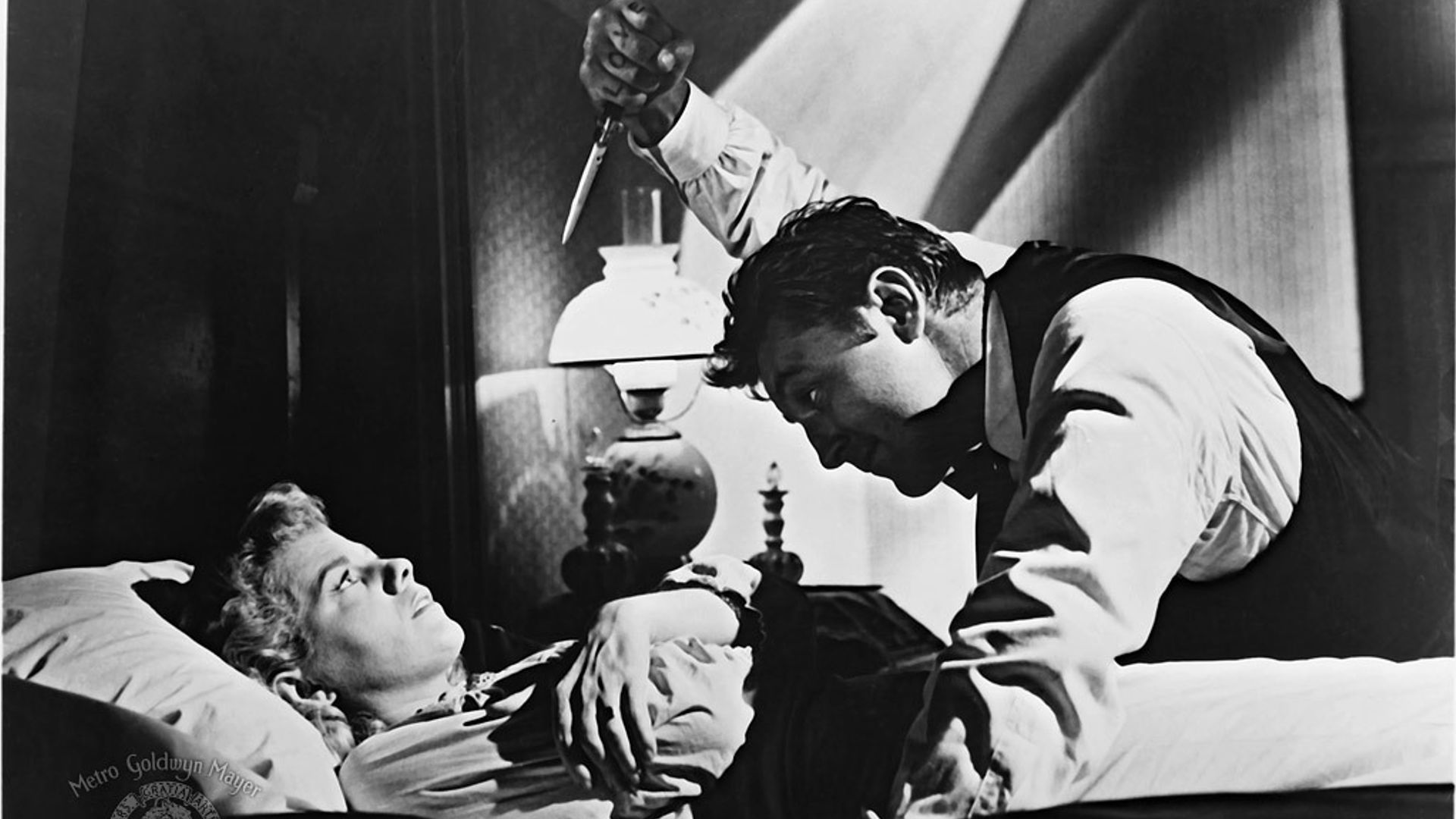
The Night of the Hunter (1955)
Robert Mitchum whisper-singing hymns while hunting kids through cornfields is the kind of nightmare you don’t grow out of. With “LOVE” and “HATE” tattooed on his knuckles, Mitchum invented the charming psychopath archetype—and ruined Sunday school for everyone. Charles Laughton only directed one film, but he went out swinging: half fairy tale, half fever dream, all menace. It’s gorgeous, it’s terrifying, and it’s still one of the weirdest American films ever made.
Scream (1996)
Scream is a self-aware bloodbath, a meta-slasher that toys with horror clichés while still delivering genuine scares. Ghostface is both a joke and a nightmare; and the opening Drew Barrymore scene remains one of horror’s great mic-drops. Nearly three decades later, the sequels come and go, but the original still cuts deep.
The Vanishing (1988)
The scariest thing here is the silence. George Sluizer’s Dutch thriller starts with a woman vanishing at a rest stop and ends with one of the most brutal gut punches in cinema. It’s about obsession, yes, but more than that, it’s about how evil can wear the blandest possible face. If you’ve seen it, you already know the ending is unshakable. If you haven’t—brace yourself.
Peeping Tom (1959)
Michael Powell torched his own career making this, but history eventually caught up. Peeping Tom is the ur-slasher: a cameraman murders women while filming their last breaths. Audiences in 1960 thought it was sick. Today, we’ve learned to appreciate it.
Man Bites Dog (1992)
Belgium’s contribution to the canon is a mockumentary so dark it practically dares you to laugh. A film crew follows a charming killer, and before long they’re not just documenting—they’re participating. It’s funny, horrifying, and deeply cynical about our appetite for carnage. It’s a film that dares you to ask: why are you still watching?
Arsenic and Old Lace (1944)
Frank Capra went screwball with this one: two sweet old ladies “kindly” poison lonely men, convinced they’re doing charity work. Cary Grant spends the runtime in manic disbelief as his family tree reveals root after homicidal root. Murder, but make it hysterical. This movie is proof that serial killer cinema doesn’t always need to be grim, it can be hysterical, too.
Cure (1997)
Kiyoshi Kurosawa’s slow-burn masterpiece is less about the murders and more about the rot underneath. A detective investigates a string of killings, each committed by someone with no memory of the act. Hypnosis? Possession? Or something worse? It’s atmospheric, cryptic, and unnervingly slow, but by the end it has crawled under your skin. Kurosawa asks: is evil contagious?
M (1931)
Fritz Lang’s first sound film is also one of the greatest crime films ever made. Peter Lorre plays Hans Beckert, a child killer whose whistling of “In the Hall of the Mountain King” still chills. But M isn’t content to demonise—it complicates. In its kangaroo court finale, we’re forced to confront whether compulsion absolves culpability. Lang blurs justice and morality in ways that remain disturbingly relevant.
Psycho (1960)
The granddaddy of them all. Hitchcock didn’t tore up the whole serial killer playbook. Killing off your star (Janet Leigh) halfway through? Introducing a killer so meek he hides behind his mother’s persona? Norman Bates (Anthony Perkins) is still the definitive cinematic murderer: soft-spoken, lonely, terrifying. The shower scene alone rewired film language. Everything that came after owes Hitchcock.
Se7en (1995)
“What’s in the box?” remains cinema’s most screamed spoiler, but even knowing the answer doesn’t blunt Se7en’s impact. “What’s in the box?” is maybe the most spoiled line in movie history—and it still lands like a gut punch. David Fincher’s nihilist nightmare pairs Brad Pitt and Morgan Freeman against Kevin Spacey’s meticulous John Doe. Each killing is staged like a grotesque art project, each scene drenched in dread. Sometimes, the villain does win.
American Psycho (2000)
Patrick Bateman cares more about his business card’s font than human life, which is precisely why Christian Bale’s performance works. Mary Harron’s adaptation isn’t just about a killer—it’s about the soulless vacuum of Wall Street culture. Did Bateman actually kill anyone? Doesn’t matter. The point is that his world is so vapid, so shallow, that his madness feels like a logical extension of it.
The Silence of the Lambs (1991)
Sixteen minutes—that’s all Anthony Hopkins needed to make Hannibal Lecter immortal. Jonathan Demme’s thriller blends procedural grit with suffocating intimacy, pushing Clarice Starling (Jodie Foster) into the gaze of a man who sees through her completely. Lecter isn’t scary because he eats people. He’s scary because he sees you.
The Texas Chain Saw Massacre (1974)
Grainy, sweaty, brutal. Tobe Hooper’s masterpiece isn’t just a horror film—it’s an assault. Inspired by Ed Gein, it introduces Leatherface, chainsaw-wielding butcher and unwilling style icon. But beyond the gore (which is surprisingly minimal), it’s about atmosphere: the heat, the noise, the madness of a rural America rotting at the edges. Few films feel this feral, this raw.
The Brave One (2007)
Not a traditional serial killer film, but worth a mention. Jodie Foster plays a woman turned vigilante after a brutal attack. She’s not a cold-blooded predator, but the film plays with the same moral territory—what pushes a person to kill, and whether vengeance makes you any different from the monsters you hunt.
Memories of Murder (2003)
Before Parasite, Bong Joon-ho gave us this genre-bending classic, based on Korea’s first documented serial killings. It’s a procedural, a buddy cop comedy, and a devastating meditation on futility—all in one. Song Kang-ho and Kim Sang-kyung embody two clashing investigative styles: fists vs forensics, instinct vs evidence.
I Saw the Devil (2010)
Most revenge thrillers end with catharsis. This one doesn’t. A secret agent hunts down the killer who murdered his fiancée—but instead of stopping him, he stalks, tortures, and releases him over and over. The result is a vicious cycle of obsession that ends with both men hollowed out. By the end, it’s not clear who the real monster is. Disturbing doesn’t even begin to cover it.
The Honeymoon Killers (1970)
This cult classic follows Martha Beck and Raymond Fernandez, real-life “Lonely Hearts Killers” who conned and murdered women in the 1940s. There’s no glamour, no seductive darkness—just banality and cruelty. That mundanity of it all is what makes it so disturbing.