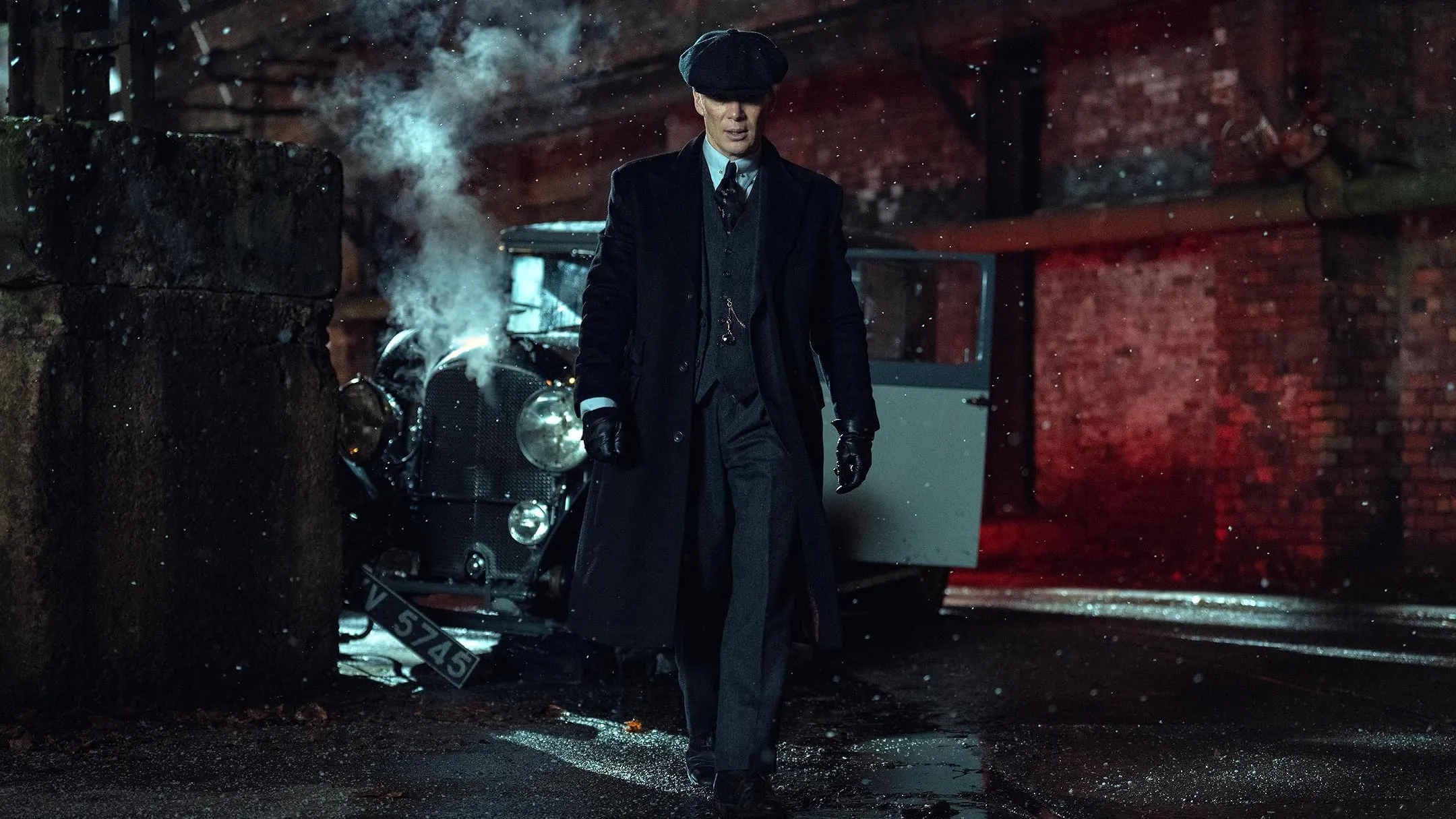
Peaky Blinders: The Immortal Man Movie Review
A bruised, ageing Tommy Shelby returns for one last reckoning and gets the goodbye he deserves
(The text contains spoilers)
There is a moment in Peaky Blinders: The Immortal Man where a soldier, newly confronted with the legend of Thomas Shelby, sneers: "Who the fuck is Tommy Shelby?" It is played for laughs. And yet, Tommy is not smiling.
We all know what happens next. You don’t f**k with the Peaky Blinders.
And yet, it is a crucial question in the movie: Who is Tommy Shelby? After six seasons and thirteen years, tommy Shelby is clearly not just a character. He is a monument. He is a legend. He is torn and crumbling within himself. He’s waiting for his downfall only to rise up. Will he be a martyr? Or will he go down as the nutcase who couldn’t sustain his power? The movie looks into this.
Set in 1940, the film finds Tommy (Cillian Murphy) in the unglamorous business of self-erasure — sequestered in a crumbling country manor, writing his memoirs, haunted by the memories of his daughter (Ruby), shooting pigeons, and doing a convincing impression of a man who has given up. The Birmingham he once ruled is now his son Duke's problem. Duke, played with feral unpredictability by Barry Keoghan, has inherited the flat cap, the criminal enterprise, and apparently every unresolved daddy issue his father left behind. He's fallen in with John Beckett (Tim Roth), a fascist operative running a Nazi counterfeiting scheme through the veins of wartime Britain. Tommy, naturally, is pulled back in.
What We Loved
The father-son axis is where the film earns everything. Their reunion in a pigsty — Tommy tracking Duke down, the two of them brawling in the mud, swinging and staggering like men who don't know any other language for love — is the best scene in the film. Brutal, darkly funny, completely unsparing. Keoghan mirrors Murphy's cold economy while exposing the raw nerve underneath it, and watching them arrive at something like understanding through violence feels, perversely, earned. Duke's arc — seduced by Beckett's fascist father-figure routine, his need for approval weaponised against him — is the film's most interesting idea, even if it isn't always its most developed one.
Murphy, carrying the weight of thirteen years in this role, does something quieter than the show ever asked of him. Having won an Oscar since the finale, he returns here not to remind you of Tommy's magnetism but to systematically dismantle it — the exhaustion is physical, the grief is bone-deep, and when Tommy finally confronts his own complicity in the wreckage around him, including Arthur's death, a morgue hallway confession that crackles with genuine weight, Murphy does it with almost nothing.
His redemption, when it comes, is Tommy doing what Tommy always does — outmaneuvering everyone, dismantling the Nazi scheme, saving Duke from himself and Britain from Beckett. The blaze of glory is real.
What We Didn’t Love
Where the film stumbles is in its relationship to its own mythology. The Immortal Man is frequently so reverential of the Peaky Blinders universe that it forgets to fully inhabit it. Ada's fate — Sophie Rundle delivering a characteristically sharp performance in a role that deserved more runway — arrives with a narrative efficiency that borders on careless. Arthur's arc, resolved largely offscreen, haunts the film more as a wound than a story. And Rebecca Ferguson's Kaulo, the Romani mystic tasked with nudging Tommy toward his destiny, is more plot mechanism than character, which is a shame given what Ferguson can do with a good script.
The film is at its weakest when it leans into the ceremonial — the slow-motion callbacks, the portentous voiceover, the visual grammar of myth-making. Knight's screenplay is not unaware of this trap, but it doesn't always avoid it. The Immortal Man is a bridge film, a glorified send-off episode with a theatrical budget and a feature runtime, and it carries that tension visibly. What it is not, however, is a failure.
Because in the end, Tommy does go out in a blaze — not of glory exactly, but of grace, and grime, and something approaching honesty. Whether that constitutes a proper ending depends on what you came for. For those who have followed Tommy Shelby across a decade and a half of television — the grief, the schemes, the flat cap, the horse — it is, against reasonable odds, enough. He deserved to go out like this. On his own terms, mid-sentence, remembered.
I didn’t know if you cried, I sure did.