Best Foreign Films To Watch
These are some of the best stories and they don't need English to blow your mind
Let’s be honest — we’re a little too comfortable with subtitles these days. Maybe it’s because we’ve been spoon-fed a steady diet of prestige TV, Squid Game marathons, and Bong Joon-ho’s now-iconic “one-inch-tall barrier” speech. But foreign-language films? They still tend to live in that mental folder marked “important, will watch later.” That is, until one completely wrecks you. And it will. Because some of the best stories — the most tender, twisted, wildly inventive ones — aren’t in English. They’re happening elsewhere, and they don’t wait around for global audiences to catch up.
From Ghibli’s pastel nightmares and Godard’s jazzy anarchy to Iranian courtroom chaos and Brazilian favela shootouts, these 20 films aren’t just great foreign films. They’re just great films, period. Language might be a barrier for some, but trust us — the emotion hits loud and clear.
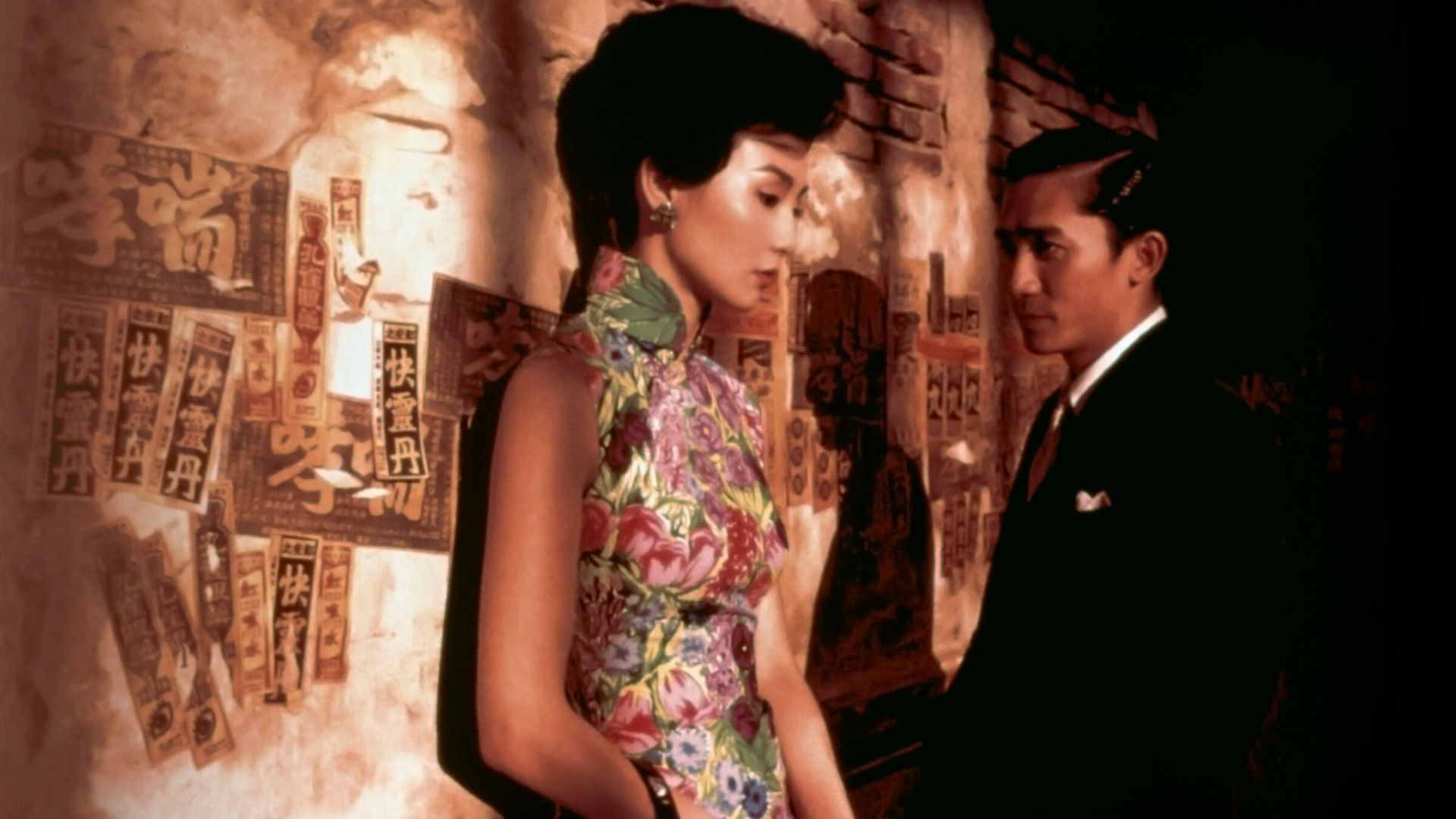
In the Mood for Love (2000, Wong Kar-wai)
There are love stories, and then there’s In the Mood for Love — less a romance and more a slow ache that unspools like a memory you can’t quite forget. Set in 1960s Hong Kong, it follows two neighbours, played by Tony Leung and Maggie Cheung, who suspect their spouses are cheating. But instead of vengeance, they slip into a delicate dance of repression and unresolved longing. But it’s the not-quite, the almost, the slow ache of what might’ve been that turns this into one of the greatest romantic films ever made. Every frame looks like a painting dipped in cigarette smoke and regret. The suits are perfect. The music is sad and slow and endlessly looping. You'll love this movie.
Pierrot le Fou (1965, Jean-Luc Godard)
Pierrot le Fou is Godard at his most deliriously unhinged — a Technicolor anti-road movie where plot takes a backseat to visual anarchy. Jean-Paul Belmondo plays Ferdinand, a bored husband who runs off with his ex-lover (played by the endlessly watchable Anna Karina) and dives headfirst into crime, philosophy, and pop art chaos. But don’t go looking for emotional catharsis here. The film is a beautiful mess — full of literary references, fourth-wall breaks, and the kind of erratic jump cuts that make modern editing look tame. It’s romantic and nihilistic in the same breath, like Bonnie and Clyde.
Amélie (2001, Jean-Pierre Jeunet)
This movie should be insufferable — a pixie dream of Paris, all gnomes and whimsy. But somehow it works. Audrey Tautou’s Amélie isn’t just quirky — she’s deeply lonely, hiding behind little good deeds while avoiding anything real. There’s magic in the visuals, sure. But the real pull is in the longing, in the glances, in the quiet heartbreak of watching someone try to connect. It’s a film about noticing the small stuff, and realising that even tiny kindnesses can crack open the world. For every gnome prank and serendipitous postcard, there’s a reminder of how hard it is to truly be seen. It’s romantic, yes, but never naive.
Life Is Beautiful (1997, Roberto Benigni)
Somehow, Roberto Benigni’s Life Is Beautiful lands as a gut-wrenching backflip. He plays Guido, a Jewish-Italian father who uses humour and imagination to shield his son from the horrors of a Nazi concentration camp. It’s audacious, almost reckless filmmaking — blending slapstick with atrocity, whimsy with death — and it shouldn’t work. But it does. Because the comedy never undermines the tragedy; it elevates the stakes. It’s not about denying pain — it’s about resisting it, weaponising joy in the face of inhumanity. By the time the final scene rolls in, you realise you’ve been holding your breath for two hours.
A Separation (2011, Asghar Farhadi)
No film captures the slow, quiet unraveling of human relationships quite like A Separation. It begins with a seemingly simple decision — a wife wants to leave Iran to give her daughter a better life, the husband wants to stay and care for his ailing father. There are no villains here. No heroes either. Just people trying to do what’s right. What starts as a domestic disagreement becomes a slow-burning moral puzzle. Every new piece reframes the last. Every character is both sympathetic and maddening. Farhadi doesn’t give you answers. He just turns the screws until your sense of judgment collapses. It’s riveting. And it stays with you for days.
Spirited Away (2001, Hayao Miyazaki)
Spirited Away isn’t just a landmark of animation — it’s a portal into another universe. And like all great adventures, it starts with a girl and a wrong turn. Ten-year-old Chihiro wanders into a world of spirits, witches, and faceless creatures, and must work at a mystical bathhouse to save her transformed parents. Spirited Away is a miracle — part ghost story, part dream logic, all Miyazaki. Sounds ridiculous? It is. But it’s also a profound coming-of-age film about memory, loss, greed, and identity. Every creature is weird. Every scene is loaded. It’s tender and terrifying and never explains itself. Which is why it works. It respects your imagination. Rare thing, that.
Ikiru (1952, Akira Kurosawa)
You could write a thousand motivational quotes and none would cut deeper than Ikiru. A minor Tokyo bureaucrat, stuck in the purgatory of paperwork, discovers he’s terminally ill and decides to do one good thing before he dies: build a children’s playground. That’s it. That’s the whole film. But under Kurosawa’s hand, this small act becomes a towering exploration of legacy, meaning, and mortality. Takashi Shimura’s performance is quietly staggering — all hunched shoulders, weary eyes, and a soft, defeated voice that somehow still clings to hope. There’s no grand redemption arc, no last-minute miracle. Just a man trying to matter. The final image — him on a swing in the snow, humming a lullaby — is one of the most haunting, human things ever committed to film.
The Intouchables (2011, Olivier Nakache & Éric Toledano)
The Intouchables proves that empathy doesn’t need a sermon and humour doesn’t cheapen pain. Based on a true story, it pairs Philippe, a wealthy quadriplegic, with Driss, a Senegalese ex-con hired to be his caretaker. What could’ve easily been saccharine or patronising instead becomes electric — thanks to razor-sharp writing and chemistry between François Cluzet and Omar Sy. Their dynamic is more than just buddy-comedy fodder; it’s raw, sometimes inappropriate, always alive. The film never wallows in pity or beats you over the head with life lessons. Instead, it gives you two men changing each other’s lives with dignity, laughter, and, yes, a few dance sequences. You’ll smile, you’ll cry — and you’ll wish more biopics had this kind of pulse.
Seven Samurai (1954, Akira Kurosawa)
Seven Samurai is the blueprint — for action movies, ensemble dramas, underdog stories, you name it. A poor village hires seven ronin to protect them from bandits. That’s the whole plot. But Kurosawa turns that setup into an epic meditation on duty, sacrifice, and the quiet dignity of fighting for something that isn’t yours. Every character gets a moment. Every death stings. Toshiro Mifune’s wild energy, the rain-drenched final battle, the way the camera moves — it’s all still miles ahead of whatever’s playing in your nearest multiplex.
Persona (1966, Ingmar Bergman)
A cinematic mind‑fuck that glues you to your seat. Liv Ullmann and Bibi Andersson play two women whose identities start morphing into one another during an isolated retreat. Surreal, unsettling, and full of psychoanalytic potency—no narrative map required. Bergman tosses in dead lambs, crucifixions, and a random flash of an erection. You’re thinking about it days later.
The Wolf House (2018, Cristóbal León & Joaquín Cociña)
Stop what you’re doing and watch this. A Chilian stop‑motion nightmare that lets the old fairy tale get nasty again—before Disney scooped up all the sugar. It’s Lynchian, it’s grotesque, and it’s living‑house alive. Think Perfect Blue energy, but carved from wood and clay. A brutal redesign of what “animation” can even be.
The Umbrellas of Cherbourg (1964, Jacques Demy)
Everything’s sung in operatic color. Catherine Deneuve floats through this pastel musical heartbreak, with Michel Legrand’s score pulling tears whether you want them or not. It’s heartbreak packaged in candy hues—and it slays.
The Rules of the Game (1939, Jean Renoir)
“This is not a comedy of manners”—begins the film. And yet it kind of is. Underneath its farcical veneer of love triangles and social games, Renoir skewers hypocrisy and class with surgical precision. Ironic yet deeply empathetic—one of cinema’s original subversions.
Only Yesterday (1991, Isao Takahata)
Studio Ghibli without the dragons. A thirty‑something Japanese woman revisits her ten‑year‑old self amid gentle vistas and memories that feel like soft blows to the chest. A rare adult animation that packs grown‑up stakes—100% on Rotten Tomatoes, if that even matters.
City of God (2002, Fernando Meirelles & Kátia Lund)
Rio’s favelas are its own brutal universe, and this savage, kinetic crime epic throws you right in. Raw, ragged, and shot with almost documentary fierceness, City of God spins a gangster fable that’s all pulse and grit.
M (1931, Fritz Lang)
Here’s where horror met sound—and never looked back. Peter Lorre as a child‑killer, first seen as a shadow, then hunted by a vigilante kangaroo court. It’s expressionist, nightmarish, socially searing—and terrifyingly modern.
Roma (2018, Alfonso Cuarón)
Cuarón’s camera just floats through 1970s Mexico City, following Cleo — a housemaid in a wealthy household — as she lives, labours, and quietly holds the family together. There’s no plot in the traditional sense. Just waves of emotion, framed in black and white, every shot composed like a memory you’re not sure you lived. It’s political without speechifying, intimate without intrusion. The film is Cuarón’s love letter to the women who raised him — but it’s also a reminder that behind every “normal” family story, there’s someone invisible doing the real work.
The Hunt (2012, Thomas Vinterberg)
One rumour. One lie. One man’s life ruined. The Hunt is a slow-burn nightmare, powered by Mads Mikkelsen’s quiet devastation. He plays a kindergarten teacher accused — falsely — of abuse. But this isn’t about whether he did it. We know he didn’t. It’s about how fast trust evaporates. About how communities close ranks, how doubt spreads like poison. The mood is cold, tight, claustrophobic. Every conversation feels like a threat. Vinterberg never lets the tension drop, and Mikkelsen — all wounded eyes and internal collapse — holds it together until he can’t. It’s not just a tragedy. It’s an indictment.
How To Make Millions Before Grandma Dies (2024, Hong Kong)
It’s one of the most quietly devastating family dramas you’ll see this year. A dropout grandson moves in with his dying grandmother — initially to angle for inheritance, eventually because, well, love gets in the way. But this isn’t sentimental. Grandma is tough, unfiltered, stubborn. The film sidesteps clichés and goes straight for the gut. The conversations are messy and real. The cinematography is gentle, unshowy. And the line “sons get the goods, daughters get the genes” will haunt you for weeks. Bring tissues — but not for cheap tears. This one earns them.
Parasite (2019, Bong Joon-ho)
You already know this one. But here’s the thing: Parasite isn’t just a smart thriller with a killer twist. It’s a scalpel. A perfectly calibrated dissection of capitalism, class, and the lies we tell ourselves to survive. The Kim family’s infiltration of the wealthy Parks plays like a heist movie — funny, sleek, fast — until the basement door opens and the floor drops out. Suddenly, it’s not a comedy. It’s a tragedy. A horror movie. A blood-soaked morality play. Bong Joon-ho balances it all without missing a beat. And the final shot? A punch to the soul. The dream is dead. And it was never yours to begin with.