What Keeps Rakesh Roshan Going
Bruised but never beaten, Rakesh Roshan gets vulnerable about his failures, the trials of his past and how he willed the universe to act in his favour
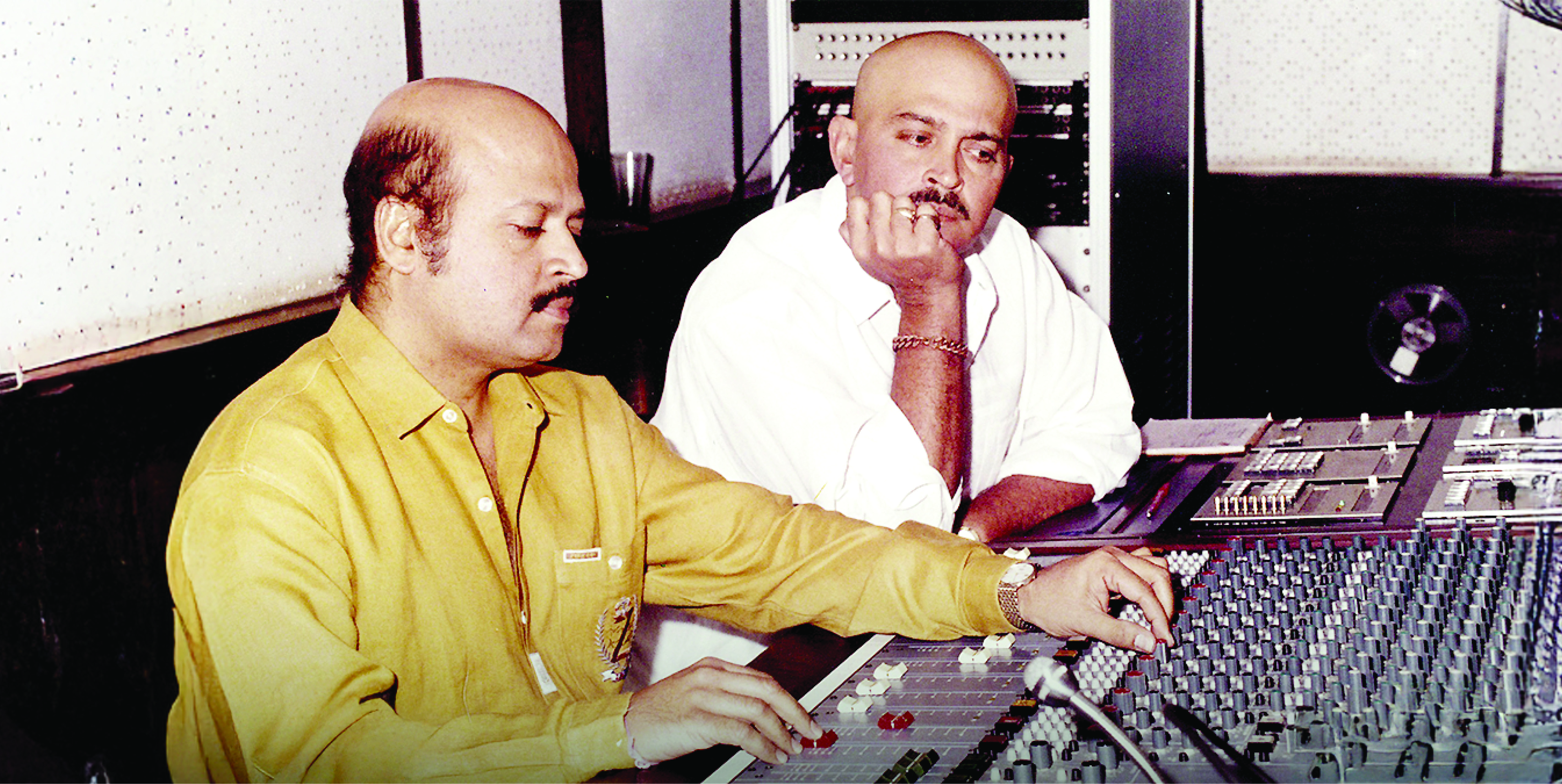
About an hour into Koi Mil Gaya, the film's constantly bullied hero, Rohit (played to perfection by Hrithik Roshan) rails against God for being punished by fate constantly, despite being a good person. "Maa kehti hai ki paap karne waalon ko sazaa milti hai—par maine toh koi paap nahin kiya. Toh mujhe kyun sazaa milti hai?" It's a pivotal moment in the film, right before his life changes forever.
In the recently released Netflix documentary, The Roshans, Rakesh Roshan, the film's director and Hrithik Roshan's father says that this scene was inspired by a moment in his own life. Having lost his father, acclaimed music director Roshan Lal Nagrath (at the age of 18), and battled numerous rejections, fiduciary challenges and professional humiliations, Rakesh was almost a defeated man by the time he turned 27. In 1976, noted filmmaker Basu Chatterjee cast him as a lead in Priyatama and the young Roshan thought that his time had finally come. But it turned out to be another cruel twist of fate.
“One day, the producer called me and said they wanted to replace me because the distributors and the film's heroine had refused to work with me. They believed that if I were in the movie, it wouldn’t sell,” he shares in the documentary. Deeply hurt, Rakesh Roshan went up to his terrace and began cursing God, asking, "I'm working so hard. Why are you doing this to me?"
"It was a grim moment. I went up to the terrace and started shouting in a loud voice. My house help staff came up to the terrace, worried. "What happened, sir?" they asked.
"You see," he says, recalling, "Many people tend to give up. After four or five years of working in the industry, most of my contemporaries were no longer a part of the industry. I was still working, either as a side actor or as a villain. Their careers were over, but I stayed back and said 'No, something good will happen—something has to happen'."
He agrees that this determination to succeed was difficult for him, but he had a family to support and a house to run. What else could he do? Failure was not an option.
"I kept pushing myself. Chalo, yeh nahin hua, so let me try something else—and I became a producer. Even that didn't work, so I became a director, with Khudgarz. I remember going to Khudgarz's premiere and telling my wife that this was my last chance. I had failed as an actor. I had not made it as a producer and now this—being a director—was my last chance. If this had not worked, I don't know what I would have done," he says.
Thankfully, the stars finally did align for him because Khudgarz was a box-office success. This is the Rakesh Roshan we already know, the debonair and successful filmmaker who gave us gems like Khoon Bhari Maang, Khel, King Uncle, Karan Arjun, Koyla and of course, Kaho Naa... Pyaar Hai, the $17.8-million blockbuster that introduced the world to the last great Bollywood debut of the millennium, Hrithik Roshan.
However, what Shashi Ranjan, the director of The Roshans, effectively explores is the eldest Roshan's trials and tribulations, revealing a vulnerable side of the director that has long been in the shadows.
In the third episode, Roshan recounts a particular incident where he and his wife, Pinkie, entered a party with Rishi Kapoor, Neetu Kapoor, Jeetendra and Shobha. The photographers at the venue rudely asked him and Pinkie to step aside—they only wanted a photo of the Kapoors, and Jeetendra and Shobha.
"I looked at Pinkie and felt very bad. But this is nobody's fault because in show business, only success matters," he says wryly.
In the documentary, both Hrithik and Pinkie talk about how Rakesh Roshan is like a soldier. They talk about how he has an armour around him and is always ready for war. This is an image that Roshan has had to create because he feels that he "should not be a weak man".
Yes, even when he was shot at by two assailants or when he was diagnosed with throat cancer. "I (feel that I) should be strong for my family, always. Even in the face of failures, I put on a brave front in front of my family because I don't want them to get dejected, you know? So, I say, 'It's okay, let's forget it, we'll do it again'. Goli lagi hai, koi baat nahin. In four or five days, I'll be alright. They feel that if I'm fine, then they will also be fine," he says.
And in his eyes, you can see the man behind the armour, the one who took everything the fates threw at him and turned his life around through sheer force of will.