Lukas Gage Deserves Every Bit Of Your Undivided Attention
The ‘Euphoria’ and ‘The White Lotus’ Actor talks about his newly released memoir, ‘I Wrote This For Attention’, reinventing himself, and being seen
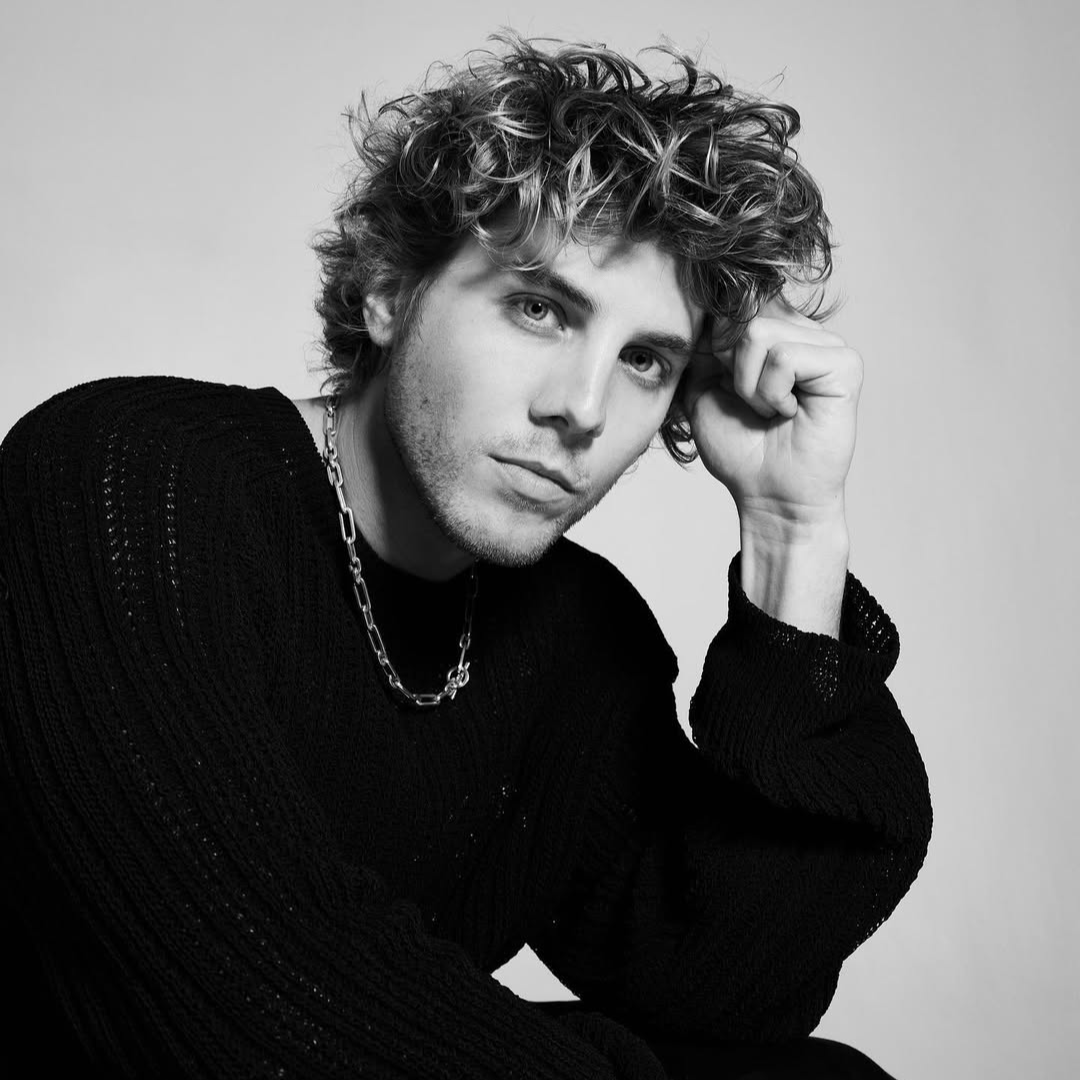
I distinctly remember the first time I saw Lukas Gage. Butt-naked with Murray Bartlett in that viral scene from season one of The White Lotus. I've seen him since in Euphoria, shirtless in a poolside hook-up with Alexa Demie, and in Overcompensating as Benito Skinner’s friend. If it isn’t obvious already, Gage has mastered three things: first, carrying intimate and emotionally charged scenes with remarkable finesse and ease; second, earning exactly the right kind of attention those performances should deserve; and third, being, quite simply put, shirtless, sexy, and effortless in his skin.
With the release of his memoir, I Wrote This for Attention, Gage has made it clear he’s an equally compelling and gifted storyteller – one that deserves more than a passing glance. He writes unapologetically and with great candour about many aspects of his life, including his childhood, family dynamics, STDs, experiences of sexual abuse, and mental health, among others. In our Zoom chat, Gage speaks about how everyone is unique and, whether they believe it or not, has a story to tell. And while that is true, not everyone, celebrity or not, can tell a story well. Thankfully, I Wrote This for Attention isn’t a tell-all, mundane book that would read like a publicity gimmick. It feels very much like a tell-it-like-it-is by someone who enjoys staying in the limelight and knows his way with words. This is a book about Gage, yes, but it is also an opportunity for him to show the world how he has kept the performance alive, even when the lights are turned off.
Edited excerpts:
You choose to open your memoir with a rather powerful and metaphorical scene where the adult you in the book says he ‘killed’ his younger self, the version who was always trying to fit in and earn attention. Was writing about this your way of finally understanding or making peace with your younger version?
Yes, I think, in a way, I had played so many different parts in my life growing up and have killed so many different versions of myself. And by writing this book, I’ve started to have a lot more love and empathy for those older versions of myself. I also think that maybe they all those versions didn’t need to be killed off - maybe they could live on a little bit longer. I have a feeling that there’s some place where all the past versions I tried to kill are hanging out — like a grand party of sorts! All of them are just looking at me and laughing and giggling.
You’ve been remarkably candid in the book about your experiences with mental health, queerness, addiction, and a range of issues. When you were writing this book, at any point, did you ever consciously think about drawing the line between honesty and performance?
I think, to be very honest with you, it was a really hard line to draw for me. In any way possible, I did not want this book to feel overly sentimental or saccharine because anything that feels a little too sweetened can rub off in the wrong way. And so, I choose to narrate things as they were. I have, every here or there, infused them with my way of dealing with things, or what one can call my coping mechanism, which is humour. I think it helps not to dampen the mood or make the book too heavy, because there is also a lot of power in having some lightness and humility in the way you reframe your stories and the way you want to share them with others.
I'm glad that you brought up humour. In the book, you have tackled many difficult issues with this razor-sharp and self-aware humour — the kind that no matter what can’t be used against you because you know exactly what you’re doing. Would you tell me about the role humour plays in your life, and if you see it just as a coping mechanism or more of a survival instinct?
I think it's a bit of both. I have always strongly believed that happiness is a choice. You can choose to be happy. You can choose to view life through a lighter, humorous, and colourful perspective. At the same time, you can also choose to sit in darkness and let life weigh in on you. The choice always lies with oneself. For me, having a sense of humour, or just humour in general, goes a long way, and I have always really been like this. I've had my own share of rough patches and the not-so-great moments, many of which I also go on to share in the book. But ultimately, for me, it's very much mind over matter. It is about how you deal with things. If you don't mind or take everything to heart, it doesn't really matter.
When you write your own story, it must feel very different from performing to be someone else, like you do in your professional career, playing all kinds of characters. And so, what did writing give you that acting couldn’t?
What’s so interesting for me is that, for all my life, I have been playing a character both in my professional and in my personal life. However, this was the very first time that I had to write for myself as a character in my own story. It was a very meta, trippy, almost a little bizarre and yet exciting thing to do. I believe it helped me understand myself better by putting things on paper. It also gave me more empathy for myself, to not be such a harsh critic of those younger version(s) of me.
This is also what you do when you play a character in movies.
One of the things that really stood out to me in the book is how you talk about writing from a very young age, about these journals that you had and those little ‘me-time’ rituals with yourself. I am wondering if the younger Lukas also found any comfort in reading? And if so, what kinds of books or authors were you reading, and what kind of impact did they have on you?
When I was younger, like really young, I loved Ned Vizzini. In retrospect, his book It’s Kind of a Funny Story (2006) was not only funny, but despite being meant for young adults, he talked a lot about mental health and, you know, some really serious things. I don’t recall finding this in a lot of other young adult books, and so it felt very mature to me, and I fell in love with his writing.
Augusten Burroughs’s Running With Scissors (2002), a queer, dysfunctional memoir, was a huge inspiration for a lot of people back then. It dealt with things such as queerness in a way that wasn't very much talked about during those times, and I feel it was very ahead of its time in that way, and what a powerful story at that.
More recently, what I've enjoyed reading is Julia Fox's Down the Drain (2023). I thought there was so much honesty in her prose, and the way that she writes is beautiful. It almost felt like she was having a private conversation with me. It really inspired me, and I wanted my book to feel like that for my readers, too.
You are kind of in the same league of actors as Matt Bomer and Jonathan Bailey: a generation of queer actors who wear their queer identity with a lot of pride and accountability. In this sense, has talking and writing about your queerness changed how you move through Hollywood spaces?
Firstly, I think that's very nice of you to say that! Both Matt and Jonathan are amazing people whom I've looked up to for a long time. They have incredible careers, and their advocacy for the queer community is powerful and amazing. Queerness is definitely a part of me that I love, but it's not the definition of me, at least I hope not. I love that part of me, and I have embraced it and don’t feel ashamed talking about it, but I don't want it to define me or be the only thing people associate me with. Similarly, I have chosen to be quite open and candid about my shortcomings, such as my experience with personality disorder, addiction, and mental health issues, but I hope people don’t just see those when they think of me.
Since the spotlight is currently on your words rather than your screen performances, does it feel any different? And do you like this attention?
Haha, that is the whole thesis of this book, really! I said that I wanted attention, and then I got it. But suddenly, it is a bit too much, I won't lie. It's truly a double-edged sword. And yes, this attention feels different. I'm not talking about a character or a movie or a project that I’m working on. I'm only talking about myself, and that can get a little bit exhausting at times, but hey, I asked for it, so I got it… and I can't really complain, can I?
You’ve spent a life chasing attention, often boldly and unapologetically, even in writing this book and calling it ‘I Wrote This for Attention’. Do you have any piece of advice to give to someone who hasn’t yet found the confidence or the kind of forthcomingness you have?
We are living in a brutal world. My best advice to people who are struggling would be a simple one: just to get to know yourself better. Also, allow those around you to know you. People can be very critical, and you may be taking a risk. I can understand how daunting it may be to try to show people who you really are. But you have got to try. There is no other way.
I think by being as authentic as you possibly can to who you are and not trying to be what anyone else wants you to be, including who you think you should be, can be a great starting point. Remember that there's only one of you in the world. You are special. So, you must give yourself permission to be seen. To let your light shine through.