
- Entertainment
- Style
- Lifestyle
- Food & Drinks
- Tech & Auto
- Culture
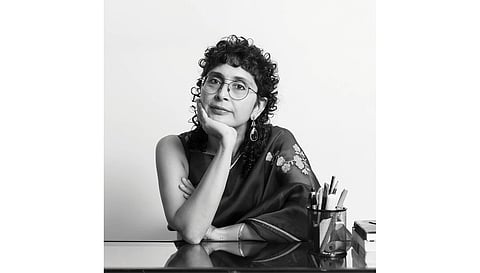
OVER THE TWO DECADES THAT SHE’S WORKED AS A filmmaker, Kiran Rao has cemented her oeuvre as a strong slice-of-life storyteller with deep character authenticity and geographical diversity. Having honed her craft with landmark films such as Lagaan, Monsoon Wedding (2001) and Swades (2004), she went on to direct her maiden film Dhobi Ghat (2011). A couple of years ago, her rural comedy about female agency, Laapataa Ladies (2023),collected international acclaim, besides being chosen as India’s entry at the 97th Academy Awards. We chatted with Rao on stories and emotion, the power of production and immersion into craft. Edited excerpts:
From landing in Mumbai as a 25-year-old filmmaking graduate to producing films that carry much of India’s contemporary cinematic cred in the world today—which is the one quality that you acknowledge as having brought you this far?
If there’s one quality that most people in our field, or any, have in common, it’s probably persistence—which, I think, is another way of saying ‘hope’. Just the quiet ability to keep at it and keep going. I’ve always believed that if you stay curious, keep learning and continue showing up, things have a way of finding you.
Are you instinctive or do you believe in planning?
Both. One has to plan and strategise but leave oneself open to new insights and build on those instinctive ideas. It probably comes from wanting to understand every layer of a story or a situation, and trying to see if it can be bettered. I prepare as much as I can, and then leave room for instinct to kick in.
Talent gets attention; discipline sustains power. What does discipline look like in your daily life when no one is watching?
Reading. Writing. Rewriting. Watching films. Being out in nature. Looking at art. Spending time with my son, parents and friends. Having interesting conversations and being exposed to newness that allows me to learn. Discipline is less about routine and more about remaining deeply engaged with the work I am doing.
What’s your version of emotionality and reaction to feelings—and how can it aid or deter decision-making?
I’m quite emotional, actually. I have always been one to share my feelings and not bottle them up. My emotional response is often what tells me whether a story is worth telling in the first place. So, in that sense, being able to react is a great advantage.
Being a trailblazer means incredibly hard decisions have to be taken, no matter the risk. What was that decision for you?
There’s no one single thing, honestly. As a filmmaker, every decision comes with its own set of risks, you learn to stand by them with conviction. There are always opportunities to make safer choices, to follow trends or repeat formulas. But walking down a beaten path is not for me. Being honest with your work and more importantly yourself is paramount. Be it making Dhobi Ghat or Laapataa Ladies or backing certain films, each one had its risks but it felt right, and I’d do it no differently.
Today, how do you decide when to push, when to pause and when to walk away?
Experience helps. Age helps even more, because it becomes clearer how one wants to spend one’s time. Most often than not, walking away is easier, especially if I am not convinced. I push when I believe something genuinely matters. I pause when I know something needs to breathe or needs more time. There’s nothing better than time to teach you.

What has film production taught you about how power can be used to transform storytelling in our cinema?
With power, comes the opportunity to take risks, to influence, and to challenge the status quo. I believe that once a person achieves a position of power, they should use it to make work that holds up a mirror, starts conversations and shifts perspectives. I have been fortunate to be involved with a lot of work that has been risk-taking and successful at the same time. Making films is a big responsibility given the huge amount of resources that go into it, so it is really important to consider the kind of films we decide to make.
How do you want to be remembered?
By my work. Someone who cared for the stories they told. If my work made someone feel seen or helped them look at the world with a keener lens, that would mean far more to me than any label or legacy.
To read more stories from Esquire India's September 2026 issue, pick up a copy of the magazine from your nearest newspaper stand or bookstore. Or click here to subscribe to the magazine.